
Technology
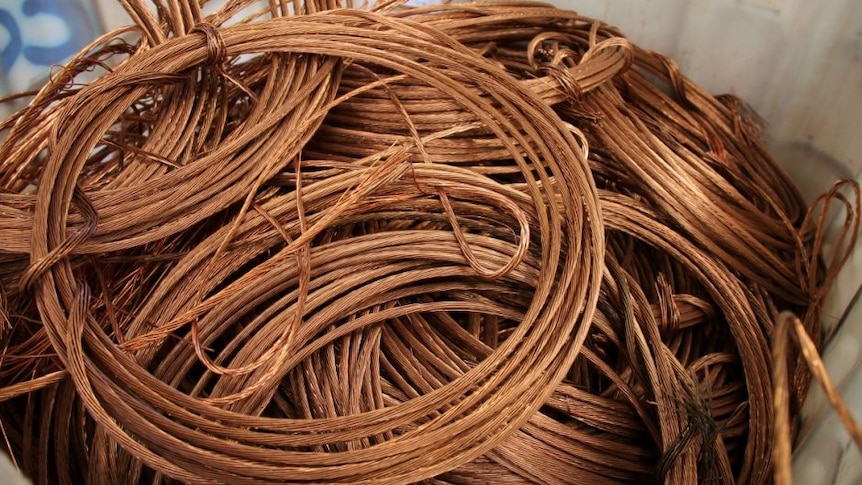
Copper thieves are more brazen and taking exceptional risks, demolition experts say
Key Points
Copper theft on demolition sites now commonplace and costing thousands, contractors say Tue 2 Jun 2026 at 4:49pm In short: Copper theft from demolition sites is now the norm, Perth demolition contractor Steve King says. Thieves appear to be gambling with their health and safety, risking electrocution, falls and asbestos exposure to get the scrap metal. Legislation introduced in 2020 to monitor the sale of scrap copper does not appear to have had much effect on theft.
Copper theft on demolition sites now commonplace and costing thousands, contractors say
Tue 2 Jun 2026 at 4:49pm
In short:
Copper theft from demolition sites is now the norm, Perth demolition contractor Steve King says.
Thieves appear to be gambling with their health and safety, risking electrocution, falls and asbestos exposure to get the scrap metal.
Legislation introduced in 2020 to monitor the sale of scrap copper does not appear to have had much effect on theft.
Rising copper theft is not just leaving Perth roads in darkness as street lighting is stripped, it's also costing building owners thousands of dollars, with increasingly brazen thieves raiding vacant buildings.
The global copper price has skyrocketed in the last ten years, rising from $7.86 per kilogram in 2017 to $20 per kilogram today. Over the same period, scrap copper prices have risen from around $6 per kilogram to around $11.
Steve King, the managing director of a Perth-based demolition and asbestos remediation company, told Nadia Mitsopoulos on 102.5 ABC Radio Perth that the losses from sites his company works on are now huge.
"Over the past five years, on up to about 80 per cent of our demolition sites, people get in and they'll steal copper," Mr King said.
"They'll take brass and other minor items, but mainly copper, water pipes, heater pipes — anything they can get hold of — because it's easy cash."
He said the thieves were moving so fast, it was difficult for authorised demolition crews to get there first.
"We tend to find that they're either there the day after the demolition permit's been issued or even sometimes beforehand if they see it's vacant," he said.
"I know of sites where people have moved out, [the property is] not even being demolished and they still get stripped."
Costs passed on
Those thefts come at a heavy cost, both for Mr King's business and his customers, because they are now no longer able to recoup part of the demolition costs by selling the scrap copper from the properties.
"[In previous years] we actually would allow a value for that copper within our tender prices, so the client would get a partial benefit for the value of the copper," he said.
"Nowadays, we don't allow anything for the value of copper in our projects."
The value of copper ranges from $500 to $1,000 for a typical house to anything from $5,000 to $100,000 for a commercial building.
"Now if it's still there, it's a bonus.
"We try and talk to our clients about getting in early so we can at least try and salvage that for them … but everybody's nervous about doing anything without a demolition permit in place."
Exceptional risks taken on sites
Mr King said the money to be made from copper theft had led to extreme risk-taking on sites.
He said on one site he saw evidence that someone had used metal cutters on a live electricity cable, attempting to get to the copper busbars inside a transformer.
"There was a set of cutters stuck in a live cable, they cut the cable and obviously got a kick, a big kick," he said.
"We've had people stealing copper from two-storey structures that have fire damage, they're really unstable."
Thieves were also endangering their health long term by mishandling asbestos.
"We've had a job recently where they've gone into the basement of a building, they've stripped out all the lagging off the copper pipes, that lagging is all friable asbestos, and that's the worst asbestos you can be exposed to.
"They've just exposed themselves to it, I doubt very much they've had any protective equipment on."
New laws not deterring theft
In 2020 the WA state government introduced new legislation governing the sale of copper to scrap metal dealers aimed at combating theft.
Scrap metal dealers trading in copper and copper alloys are required to hold a licence and keep records of all people who sold them or attempted to sell them scrap copper.
These records are reviewed by police at regular intervals.
However, Steve King said the legislation had not had a noticeable effect.
"Unfortunately, the police just don't have the resources to follow it up. It's pretty much seen as a victimless crime, so there's never a priority put on it," he said.
He believes the theft of copper is highly organised, with thieves able to launder the origins of the copper they steal before it is exported overseas.
"There's no taxes on that. There's no GST on that. It's just pure cash," he said.