
Health
Aboriginal woman pepper-sprayed by prison guards during self-harm incident
Key Points
Aboriginal woman pepper-sprayed by guards during self-harm incident at Canberra's jail Tue 9 Jun 2026 at 4:43pm In short: An Aboriginal woman was pepper-sprayed by prison guards during a self-harm incident at the Alexander Maconochie Centre last year. A review by the ACT Inspector of Custodial Services found prison staff responded as if it were a security emergency, rather than a medical one. The ACT Inspector of Custodial Services has made four recommendations, including a ban on the use of...
Aboriginal woman pepper-sprayed by guards during self-harm incident at Canberra's jail
Tue 9 Jun 2026 at 4:43pm
In short:
An Aboriginal woman was pepper-sprayed by prison guards during a self-harm incident at the Alexander Maconochie Centre last year.
A review by the ACT Inspector of Custodial Services found prison staff responded as if it were a security emergency, rather than a medical one.
What's next?
The ACT Inspector of Custodial Services has made four recommendations, including a ban on the use of chemical agents in such circumstances.
Warning: This article contains content that may be distressing to some readers
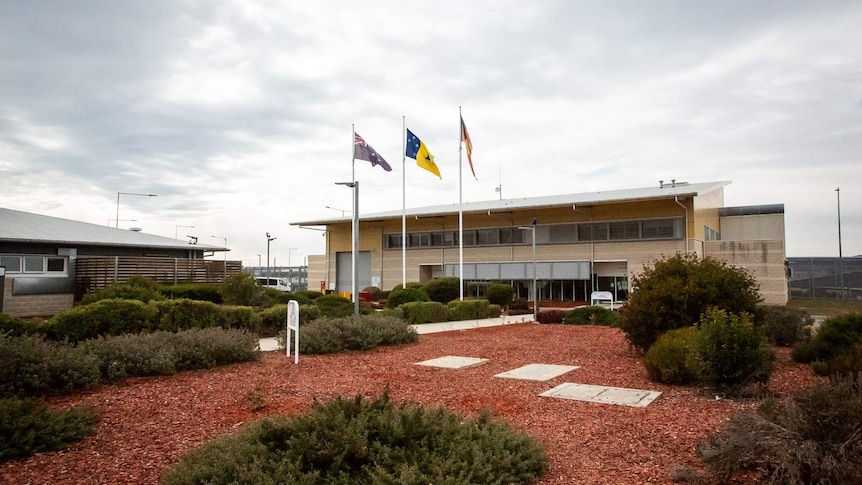
An Aboriginal woman was pepper-sprayed by prison guards during a self-harm incident at the Alexander Maconochie Centre and was not seen by a medical officer until the next day, according to the ACT's prison watchdog.
A review into the incident by the ACT Inspector of Custodial Services found there were "serious gaps" in the way staff responded to the situation, and has recommended a ban on the use of pepper spray in certain circumstances, as well improving therapeutic responses to self-harm.
The woman, in her early thirties, was experiencing "acute mental distress" in the weeks leading up to the incident at Canberra's jail in July 2025, according to the review.
She was denied permission to attend NAIDOC celebrations, and later climbed onto a roof in protest.
She was then placed in separate confinement for 28 days and had her privileges removed.
On 24 July, the woman used the intercom in her confinement cell to request access to an Aboriginal art program, but was refused due to her disciplinary status.
According to the review, she then engaged in "serious self-harming behaviour".
Pepper spray deployed
Correctional officers responded immediately and, after attempts to de-escalate the situation, used oleoresin capsicum (OC) spray and restrained her.
She fell to the ground and briefly lost consciousness.
She was then escorted by 14 officers to the Crisis Support Unit without a health assessment, and was not seen by a medical officer until the next day.
The review also found that the woman was strip searched on entering the Crisis Support Unit without reasonable grounds, and despite an ACT Supreme Court ruling last year that such searches in those circumstances were unlawful.
ACT Custodial Inspector Rebecca Minty said the review's findings revealed the need for therapeutic responses to detainees in distress who do not pose a risk to others.
"Using OC spray on someone who is self-harming and not posing a threat to others is inappropriate and should not happen,"Inspector Minty said.
"Corrections staff did act quickly to intervene, which was important, but the approach taken prioritised control over care.
"That is not consistent with a trauma-informed response."
Review makes four recommendations
In total, the review made 11 findings and four recommendations aimed at improving therapeutic responses to self-harm and strengthening access to culturally appropriate support.
For example, the review found that prison staff activated a Code Black, a security response to the incident, instead of a Code Blue, which is for medical emergencies.
Up to 19 correctional officers responded to the Code Black, contributing to the approach that was inconsistent with best practices, the review said.
To address this, the review recommends ACT Corrective Services strengthen its trauma-informed response to serious self-harm incidents within six months.
This includes mandating Code Blue responses, standing down non-essential staff, and improving trauma-informed practices with additional training.
The review also found the use of OC spray in a situation where there was no threat to others caused unnecessary injury to the woman who was self-harming.
It found ACT Corrective Services' policies and training on chemical agents were not aligned with human rights-based practices.
As a result, it recommended banning the use of OC spray in such circumstances, and adopting a trauma-informed approach, by improving its polices and training.
The review also recommended policies, procedures and training reflect the requirement for urgent medical assistance to be sought in certain self-harm cases.
And it recommended the prison identify a "prevention-focused multidisciplinary approach to reducing self-harm".
'Culture and kin is not an optional extra'
The review identified examples of "systemic racism and implicit bias" in the woman's treatment, but did not find evidence of "overtly racist or directly discriminatory" behaviour.
According to the review, prison staff relied on "overly bureaucratic grounds" and "grossly disproportionate" measures to deny the woman access to cultural support.
It found the initial disciplinary sanction of 28 days' separate confinement and loss of privileges was disproportionate, and would likely have worsened the woman's mental health.
Inspector Minty said connection to culture and kin was critical to the wellbeing of Aboriginal people in custody.
"For Aboriginal and Torres Strait Islander people in detention, connection to culture and kin is not an optional extra,"she said.
"Limiting access to culturally significant activities can have real impacts on wellbeing."
The review also identified gaps in available CCTV footage, which it said revealed ongoing failures in camera management practices at the jail.
The ACT government has been contacted for comment.