
Environment
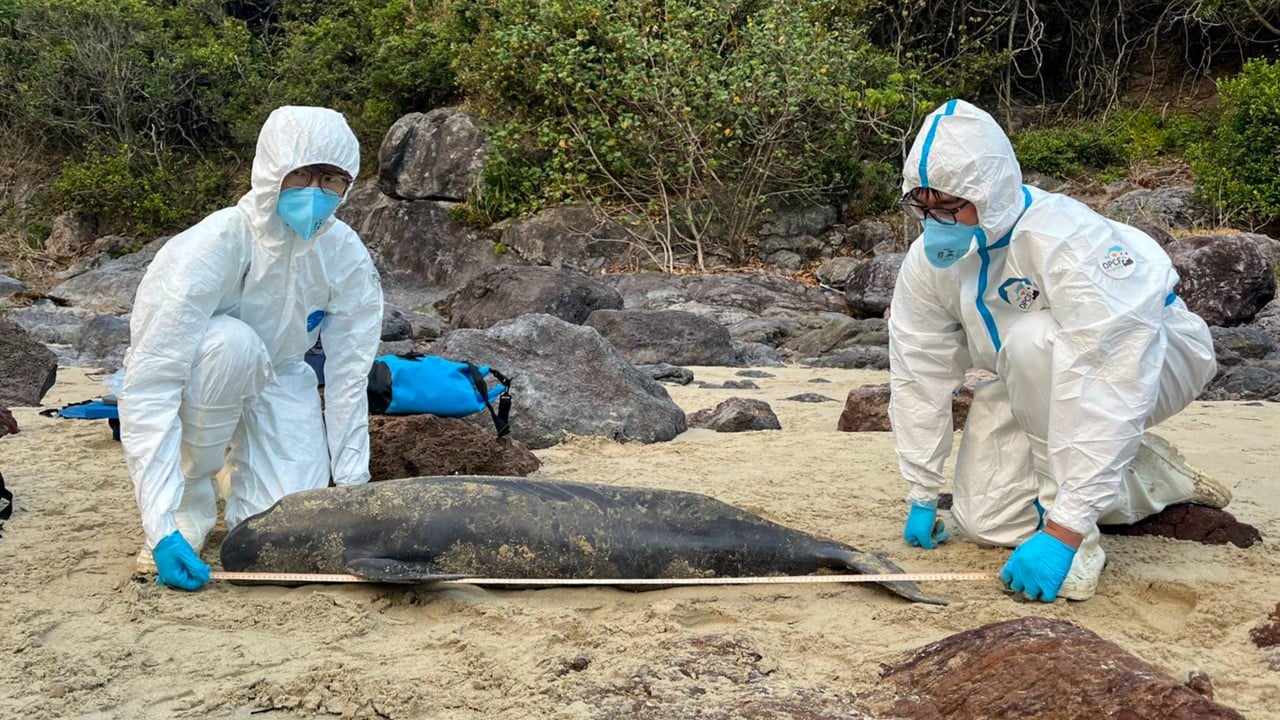
Human activity linked to 4 of 29 cetacean deaths in Hong Kong waters: report
Key Points
Human activity linked to 4 of 29 cetacean deaths in Hong Kong waters: report About 70 per cent of carcasses recorded last year were found too decomposed for diagnosis due to the city’s high humidity and temperatures Four of the 29 whales, dolphins and porpoises that washed ashore in Hong Kong waters last year are suspected to have died from human activity, with an annual report jointly released by the government and Ocean Park also finding an overall decline in strandings. A press statement...
Human activity linked to 4 of 29 cetacean deaths in Hong Kong waters: report
About 70 per cent of carcasses recorded last year were found too decomposed for diagnosis due to the city’s high humidity and temperatures
Four of the 29 whales, dolphins and porpoises that washed ashore in Hong Kong waters last year are suspected to have died from human activity, with an annual report jointly released by the government and Ocean Park also finding an overall decline in strandings.
A press statement with the findings was published on Tuesday for the Hong Kong Marine Life Stranding Report 2025, a collaboration between the Ocean Park Conservation Foundation and the Agriculture, Fisheries and Conservation Department (AFCD), which jointly operated a response team since 2006 to investigate marine life stranding cases in the city.
Since then, the team recorded more than 700 stranding cases involving cetaceans in the city.
Last year, 29 cetacean strandings were recorded, down from 41 in 2024. Of these, four were suspected to be linked to human activity, a slight decrease from six such cases in 2024.
About 70 per cent of carcasses logged last year were in advanced stages of decomposition due to the city’s high humidity and temperatures, limiting diagnostic efforts.
The latest statement did not specify the types of human activities involved, but attributed one anthropogenic death to a suspected bacterial or parasitic infection.