
Weather
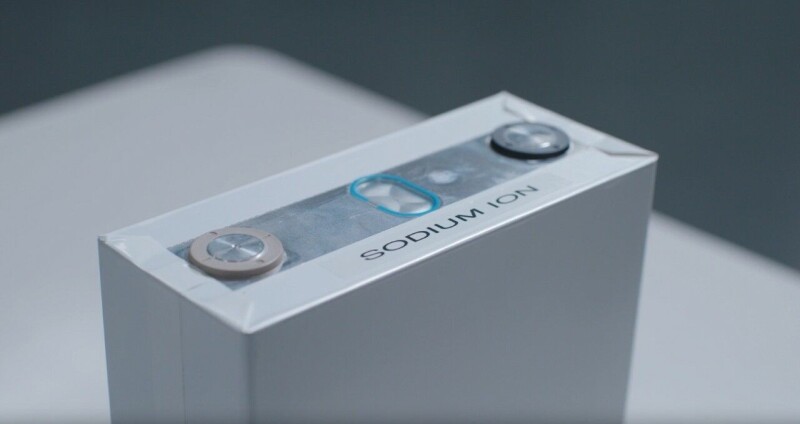
GM gets datacenter fever, decides to build grid-scale sodium-ion batteries
Key Points
The lure of datacenter dollars is a strong one for America’s mega corporations - so strong that even automobile giant General Motors is getting in on the game by turning its battery research efforts toward stationary grid-scale energy storage. GM announced a partnership with energy storage firm Peak Energy on Tuesday that will see the Big Three automaker develop next-generation sodium-ion battery cells designed for grid-scale energy storage. GM will manufacture the cells and Peak will deploy...
The lure of datacenter dollars is a strong one for America’s mega corporations - so strong that even automobile giant General Motors is getting in on the game by turning its battery research efforts toward stationary grid-scale energy storage. GM announced a partnership with energy storage firm Peak Energy on Tuesday that will see the Big Three automaker develop next-generation sodium-ion battery cells designed for grid-scale energy storage. GM will manufacture the cells and Peak will deploy them as part of its own proprietary energy storage systems, Peak said in its version of the partnership announcement. Oh, and GM will be making an investment in Peak too, though the amount wasn't disclosed. For those unfamiliar with sodium-ion batteries, there’s a good deal of chemical similarity between them and the lithium-ion batteries that have come to dominate the world’s portable rechargeable electronics, from massive electric vehicle cells to the tiny batteries in wireless earbuds and hearing aids. Rechargeability and chemical similarities are where many of the comparisons end, though. GM and Peak argue sodium-ion systems can be made simpler, and can operate across a wider temperature range than conventional lithium-ion batteries, potentially reducing the need for the costly, energy-intensive cooling systems often used in grid-scale Li-ion storage deployments. Score one for Na-ions, but while sodium might be stable and abundant, it also doesn’t have nearly the energy density of lithium. If one wants to build a sodium battery able to hold as much energy as a Li-ion one, be prepared to build a larger, heavier pack. That’s not a problem as far as GM is concerned in this case, though: Weight doesn’t matter if the batteries aren’t mobile. “When you’re talking to a utility, a hyperscaler, or other power providers in need of energy storage solutions, their priority is not maximizing range or minimizing weight,” GM VP of battery and sustainability Kurt Kelty said in the company’s announcement. “It is delivering reliable, affordable power over long periods of time in real-world conditions.” Kelty said that GM is perfectly positioned to develop next-generation Na-ion batteries due to “important architectural similarities” with Li-ion cells, meaning “the battery expertise GM has built in cell design, prototyping, and industrialization” is a perfect fit for grid-scale sodium cells. “We believe sodium-ion can become a defining chemistry for grid-scale energy storage in the years ahead,” Kelty added. Peak has already developed its own passively-cooled sodium-ion energy storage systems, which it says can reduce energy storage costs by 20 percent compared to conventional Li-ion systems. According to the company’s own analysis, the US could avoid around 2 terawatt hours of wasted energy per year if everyone were to dump lithium iron phosphate energy storage systems in favor of its passively-cooled Na-ion systems. Sodium-ion batteries aren’t without their own challenges, though. GM mentions that advanced Na-ion cells can handle more charge cycles than their lithium-ion cousins, but sodium-ion batteries have historically come with tradeoffs of their own, most notably lower energy density and a far less established manufacturing ecosystem. Researchers have been working to address that, and others claim that their sodium cell designs have already surpassed Li-ion units. Despite those claims, lithium-ion batteries still dominate the energy storage space, both on and off the grid. China is home to the vast majority of sodium-ion battery factories, and it’s not clear whether GM’s ambitions will turn into scalable competition for overseas battery tech development. We reached out to the automaker with questions about its sodium-ion plans, as well as a timeline for the project, but didn’t hear back. ®