
Politics
Road trauma victims call for 'overhaul' of Transport Accident Commission
Key Points
Road trauma victims call for 'overhaul' of Transport Accident Commission in parliamentary inquiry Thu 11 Jun 2026 at 6:34am In short: Victims of road trauma have given evidence to a parliamentary inquiry into the Transport Accident Commission. Melita Parker told the inquiry the TAC system only moves when clients become impossible to ignore. Recommendations from the inquiry are expected to be tabled in parliament in the coming months.
Road trauma victims call for 'overhaul' of Transport Accident Commission in parliamentary inquiry
Thu 11 Jun 2026 at 6:34am
In short:
Victims of road trauma have given evidence to a parliamentary inquiry into the Transport Accident Commission.
Melita Parker told the inquiry the TAC system only moves when clients become impossible to ignore.
What's next?
Recommendations from the inquiry are expected to be tabled in parliament in the coming months.
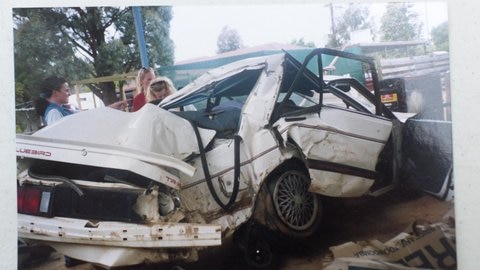
When Melita Parker was 21, she was resuscitated by the side of a road in central Victoria.
It was 1992, and she had been in a serious crash after the vehicle she was a passenger in hit a tree at 140 kilometres an hour.
She was not expected to survive the air ambulance journey to The Alfred Hospital.
"I spent a week in intensive care on life support, followed by several weeks on the ward, and then 12 months of rehabilitation," Ms Parker said.
The statement was made as part of an impassioned submission to the parliamentary inquiry into claims made through the Transport Accident Commission (TAC).
Since the accident, Ms Parker has been living with chronic pain and a brain injury.
"At 21, I was effectively told by doctors and treating specialists that I would not amount to much, that I would not be able to return to my studies, attain a degree, or have the career or life I had once imagined," she said.
"With — and I stress only with — TAC support, I proved that opinion wrong.
"But I can no longer, in good conscience, have people believe I support the TAC as it stands today."
'Endurance test'
The TAC is a Victorian government-owned organisation set up to pay for treatment and benefits for people injured in transport accidents.
Under its "no-fault" scheme, the TAC pays for medical benefits and support services to any injured person, regardless of who caused the crash.
It is funded through the transport accident charge, which is collected through vehicle registration fees.
The two-day parliamentary inquiry, chaired by Victorian Legislative Council member Joe McCracken, examined processes related to legitimate and disputed claims and circumstances and systems related to fraudulent claims.
It also probed interactions with other services, such as the NDIS, and how TAC clients have been affected by federal law changes.
Ms Parker told the inquiry that the culture of the TAC had changed in recent years.
"What has disturbed me most is not any single incident," she said.
"It's the pattern I've observed. It's the culture.
"It's the system that only moves once escalation is applied. A system that only moves when you become impossible to ignore is not serving injured people; it is an endurance test."
Consequences of TAC delays
Ms Parker told the inquiry that, in 2025, she faced a four-month delay in the approval of her ketamine treatment, which she said was the only effective way to manage her pain.
The TAC is legally required to determine treatment requests within 28 days.
Ms Parker said the TAC also issued an occupational therapy report that attributed statements to her that she never made, including that she intended to return to work.
"I have been on WorkCover for PTSD for over 10 years. There is no prospect of return to employment," she said.
The report meant her psychiatric treatment, medications and WorkCover payments could have been jeopardised.
She also made a formal complaint about a TAC clinical panel member who contacted her long-term dentist in a manner the TAC later confirmed was aggressive and unprofessional.
The TAC ultimately made multiple formal apologies to Ms Parker as a result of her complaints.
Ms Parker also cited the repeated requirement to escalate claims for basic treatment access.
"There appears to be cultural tolerance for passive noncompliance, false report content written to fit templates, and surveillance of clients who have raised formal complaints," she said.
"The inquiry should examine whether TAC's organisational culture is consistent with its statutory obligations and the standards required of a scheme serving vulnerable Victorians."
'Dehumanising' experience
Other submissions made to the inquiry raised concerns about the difficulty of navigating the system, especially for vulnerable people, and how those in regional areas could be further disadvantaged.
One submission said private medical information had been sent to the wrong client.
The inquiry repeatedly heard that individuals were required to self-advocate in order to get treatment, and of the unwillingness of medical services to treat TAC patients.
Health providers told the inquiry of delays in getting paid when they took on TAC patients, as well as lower fees and administrative burdens.
Two witnesses alleged that TAC employees tried to intimidate them into not giving evidence at the inquiry.
Birregurra resident Erin Casey, who was in an accident in 2024, said her experience with the TAC was "dehumanising".
She said the TAC declined to recognise her diagnosis of long concussion syndrome, despite it being confirmed by two neurologists and her general practitioner.
"[The TAC] needs a massive overhaul," she said.
'Systemic issues'
Along with road trauma victims, multiple organisations also gave evidence, including the Health Complaints Commission.
The Rights Information and Advocacy Centre (RIAC), an independent disability advocacy support organisation, said in its submission that it had found "systemic issues" within the TAC.
"These issues are exacerbated for Aboriginal people, people experiencing family violence, and those living in regional and rural areas," the RIAC's submission said.
"RIAC supported an Aboriginal woman with an acquired brain injury who had previously received a TAC payout following a motor vehicle accident. She was also an NDIS participant.
"Due to domestic violence and coercive control, the TAC payout was taken by her partner … this context was not adequately considered by either TAC or the NDIA."
The RIAC said that, as a result of this, the National Disability Insurance Agency was reluctant to fund ongoing supports and, as the TAC funding had already been exhausted, the woman did not end up accessing any financial support.
"The impacts of family violence were not meaningfully assessed, and the result was no effective support from either system, leaving an already vulnerable person without assistance," the RIAC said.
'We may never be perfect'
TAC chief executive Tracey Slatter apologised at the inquiry to clients who did not have supportive experiences.
"The TAC is building on 40 years of successful operation," she said.
"We may never be perfect, but we can always be better.
"We know that people who rely on us rightly expect timely decisions, clear communication, and to be treated with empathy and respect.
"We thank everyone who has shared their experiences … and we take the issues raised very seriously."
Ms Slatter said allegations of intimidation from TAC staff to clients giving submissions at the inquiry were "surprising" and would be investigated.
"Last year, we funded nearly $1.87 billion in treatments, services, benefits and compensation for TAC clients," she said.
In the same period, the TAC also said it funded around 43,255 clients, ranging from those with short-term injuries to clients with severe injuries requiring complex and lifelong rehabilitation supports.
In response to health providers facing a disincentive to take on TAC clients, Ms Slatter said the commission had made improvements in that area in recent months.
"We have made a number of improvements to make it easier for providers to deal with the TAC," she said.
"We have significantly improved our payment processes of invoices, and we have also increased [our] fees."
Ms Slatter said the TAC had also made improvements regarding the delays faced by clients.
Transport Accident Commission Road (ORG)
Transport Accident Commission (ORG)
the Transport Accident Commission (ORG)
Melita Parker (PERSON)
TAC (ORG)
Victoria (LOCATION)
The Alfred Hospital (LOCATION)
Ms Parker (PERSON)
Victorian (ORG)
Victorian Legislative Council (ORG)
Joe McCracken (PERSON)
NDIS (ORG)