
World News
CNA Explains: How Singapore’s Small Claims Tribunals work - and what happens next
Key Points
CNA Explains: How Singapore’s Small Claims Tribunals work - and what happens next A recent case involving a maid agency ordered to compensate a customer has put the spotlight on Singapore’s Small Claims Tribunals. Here’s how the process works, what you can claim and what happens after a ruling. SINGAPORE: A maid agency was recently ordered to compensate a customer after falsely claiming that a domestic helper could speak Mandarin - a case that has put the spotlight on Singapore’s Small...
CNA Explains: How Singapore’s Small Claims Tribunals work - and what happens next
A recent case involving a maid agency ordered to compensate a customer has put the spotlight on Singapore’s Small Claims Tribunals. Here’s how the process works, what you can claim and what happens after a ruling.
SINGAPORE: A maid agency was recently ordered to compensate a customer after falsely claiming that a domestic helper could speak Mandarin - a case that has put the spotlight on Singapore’s Small Claims Tribunals (SCT).
For consumers and businesses locked in disputes over money, going to court can be costly and intimidating. The SCT offers a faster, lower-cost alternative to resolve certain disputes - without the need for a lawyer.
What kinds of cases qualify, how much can you claim, and what happens after you file? Here’s what you need to know.
What are the Small Claims Tribunals?
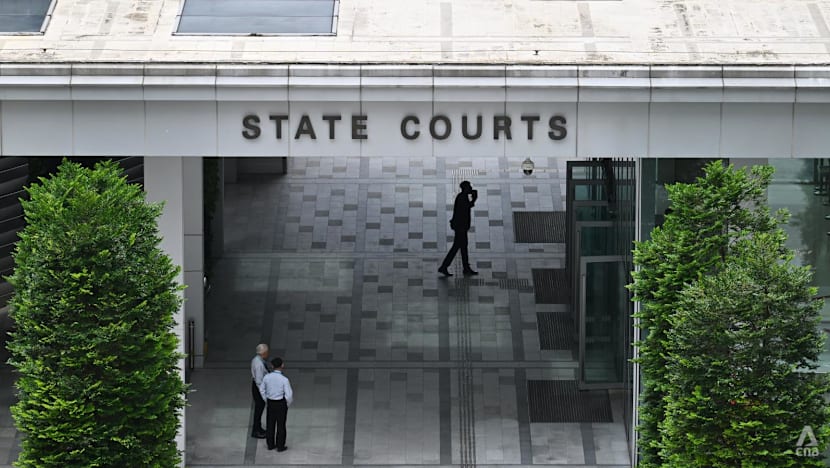
Part of the State Courts, the SCT specialises in resolving low-value disputes.
It typically deals with cases involving goods or services or residential tenancy agreements. Claims must be filed within two years after the date that creates one's "cause of action", according to the Singapore Courts (SG Courts) website.
"Cause of action" in this case is the set of facts that entitles one to start a court action against another party.
Most SCT cases conclude within four months of filing, it said.
Lawyers are not allowed to represent parties in proceedings before the SCT, though they can provide legal advice to claimants to help them better understand the process, assess the merits of their case and ensure that their supporting documents are in order, Ms Cherie Tan of DOT Chambers told CNA.
According to SG Courts' annual report for 2024, 11,771 cases were filed in the SCT that year, making up about 77 per cent of the State Courts' community justice and tribunals cases.
Who can file a claim, and how much can you request?
Cases in the SCT have a claim limit of up to S$20,000, though this can be increased to S$30,000 with both parties' consent.
Individuals or other entities can file claims with the SCT, with filing fees that vary depending on the claim amount: S$10 for individuals and S$50 for other entities for claims of up to S$5,000. It would be S$20 for individuals and S$100 for other entities for claims above S$5,000 but up to S$10,000.
For claims above S$10,000 but up to S$30,000, the filing fee will be 1 per cent of the amount claimed for individuals and 3 per cent for other entities.
Claims must be filed online via the Community Justice and Tribunals System (CJTS) using your Singpass account, while tourists can apply for a temporary CJTS pass to access it.
The process is accessible and designed for self-represented parties, said Ms Tan.
How do you file a claim, and what will you need?
To apply for a case to be heard, you will need to have completed a pre-filing assessment and have the respondent's details, such as name and address.
Supporting documents, like contracts, invoices, receipts, photographs, emails or tenancy agreements, are also needed.
Mr Nicolas Tang, managing director of Farallon Law Corporation, said that documentation is very important for small claims cases as the SCT is designed for parties to present their cases clearly without lawyers.
"Parties should be ready to explain each part of their claim in detail, such as every invoice in a claim or every defect in a renovation dispute, and corporate representatives must produce all relevant supporting documents.
"Documentation helps prove three things: what was agreed, what went wrong, and what loss or remedy is being claimed."
PayNow confirmations, WhatsApp screenshots and evidence of defects or efforts towards mitigation can strengthen one's documentary evidence, said Mr Tang.
"A good rule of thumb is: for every sentence in your story, have a document, screenshot, photo, or witness who can support it."
Ms Tan noted one common challenge that some claimants face - not having sufficient documentary evidence to support their position.
"People often feel strongly that they have been wronged, but what matters before the tribunal is whether they can prove their case with evidence."
Another issue is managing expectations. "Not every dispute or grievance translates into a legally recoverable claim," said Ms Tan.
Claimants should therefore take some time to understand the legal basis of their claim before they start proceedings, she noted.
What are the limitations?
A claim is only as effective as your ability to identify and locate the other party, said Ms Tan.
For disputes involving sellers on social media platforms or overseas merchants, consumers should keep records of the transaction and verify who they are dealing with before making payment, she advised.
They should also buy through reputable platforms and use payment methods that provide some form of buyer protection.
If the seller is overseas or cannot be identified, pursuing a claim through the SCT may not be a practical option, Ms Tan said.
Mr Tang said that consumers should not focus solely on pricing when purchasing a product and should also factor in the risk when going ahead with a transaction.
What happens after a ruling?
Among the possible options, the SCT can order respondents to pay a stated sum or rectify any shortage in services rendered, according to the Singapore Courts website.
An order from the SCT does not automatically result in payment, said Ms Tan.
Appeals are possible for some cases. However, respondents must still comply with a tribunal order even if they intend to appeal it.
If one party does not comply with the SCT's order, the successful claimant may start execution or enforcement steps against the other party in the civil courts, according to SG Courts.
The appropriate enforcement method will depend on the circumstances and whether the debtor has assets or means to satisfy the order, Ms Tan noted.
Want an issue or topic explained? Email us at digitalnews [at] mediacorp.com.sg. Your question might become a story on our site.
CNA (LOCATION)
Singapore (LOCATION)
SCT (ORG)
the Small Claims Tribunals (ORG)
the State Courts (ORG)
the Singapore Courts (ORG)
SG Courts (ORG)
Ms Cherie Tan (PERSON)
DOT Chambers (ORG)
SG Courts' (ORG)
the State Courts' (ORG)
S$20,000 (PERSON)
S$100 (PERSON)
the Community Justice and Tribunals System (ORG)
Singpass (PERSON)