
Science
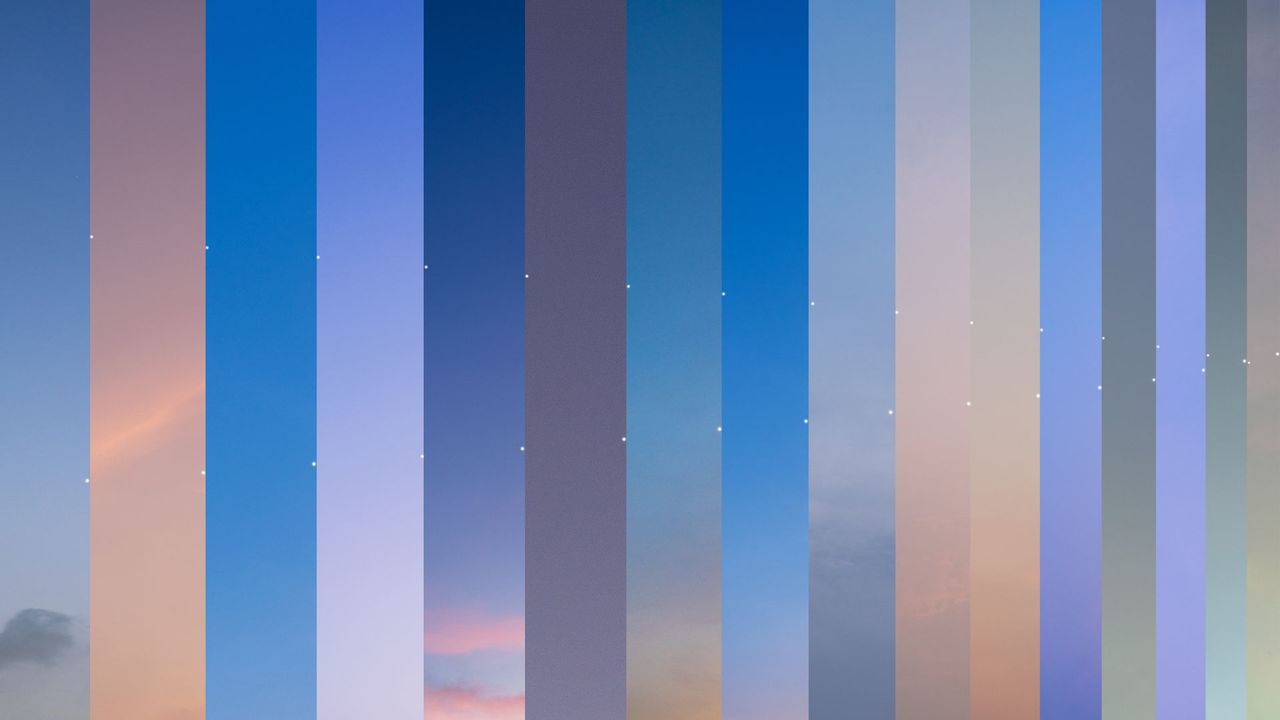
Closer every day: A spectacular 30-day collage of the Venus-Jupiter conjunction (photo)
Key Points
Closer every day: A spectacular 30-day collage of the Venus-Jupiter conjunction (photo) Venus appeared to move closer to Jupiter in Earth's sky, as the two planets drifted farther apart in space. Astrophotographer Soumyadeep Mukherjee has shared a spectacular 30-day collage of the western night sky titled "Closer, Everyday", which captures the subtle motion of Jupiter and Venus as they danced through the skies above Kolkata, India, ahead of a dramatic planetary conjunction. The photos used...
Closer every day: A spectacular 30-day collage of the Venus-Jupiter conjunction (photo)
Venus appeared to move closer to Jupiter in Earth's sky, as the two planets drifted farther apart in space.
Astrophotographer Soumyadeep Mukherjee has shared a spectacular 30-day collage of the western night sky titled "Closer, Everyday", which captures the subtle motion of Jupiter and Venus as they danced through the skies above Kolkata, India, ahead of a dramatic planetary conjunction.
The photos used to create the collage were taken with a Nikon Z6II camera paired with a Sigma 50 mm lens in the hours following sunset from May 11 through to June 9, as Jupiter and Venus shone close to one another in the constellation Gemini.
"On most of the days, the images were captured during civil twilight in order to showcase the varying colours of the twilight sky along with the planets," Mukherjee told Space.com in an email. "However, on some occasions, due to the presence of clouds, images were captured during nautical and astronomical twilight."
Mukherjee remained consistent with his technique throughout, varying only the shutter speed to account for changing light conditions, creating a gorgeous glimpse of the planetary procession. "During capturing the images, the camera was kept level to the horizon, and the planets were placed right at the middle of the frame, as much as possible," explained Mukherjee. "The images were captured with the same camera, the same lens, at the same focal length."
The Nikon Z8 is a powerhouse of a camera and is brilliant in almost every aspect. It's a full-frame mirrorless camera that performs exceptionally in low-light conditions and produces excellent images. Check out our Nikon Z8 review for more.
Each successive shot tracked the relentless movement of Jupiter and Venus as they circled the sun, while appearing to draw closer to one another in Earth's sky. The slow dance came to a climax on June 9 — which is depicted in the far right panel — when skywatchers worldwide were treated to a dramatic planetary conjunction as Jupiter and Venus shone less than 2 degrees away from one another above the western horizon.
In reality, the close pass of Jupiter and Venus was nothing more than a misleading matter of perspective. Venus has actually been growing more distant from Jupiter throughout the 30-day photoshoot, during which time it added another 27 million miles (43 million kilometers) between itself and the gas giant as it raced toward Earth.
Want to create your own incredible photos of the night sky? Then be sure to read our roundups of the best cameras and lenses for astrophotography, along with our beginner's guide to photographing the post-sunset realm.
Editor's Note: If you would like to share your astrophotography with Space.com's readers, then please send your photo(s), comments, and your name and location to [email protected].
You must confirm your public display name before commenting
Please logout and then login again, you will then be prompted to enter your display name.
Anthony Wood joined Space.com in April 2025 after contributing articles to outlets including IGN, New Atlas and Gizmodo. He has a passion for the night sky, science, Hideo Kojima, and human space exploration, and can’t wait for the day when astronauts once again set foot on the moon.