
World News
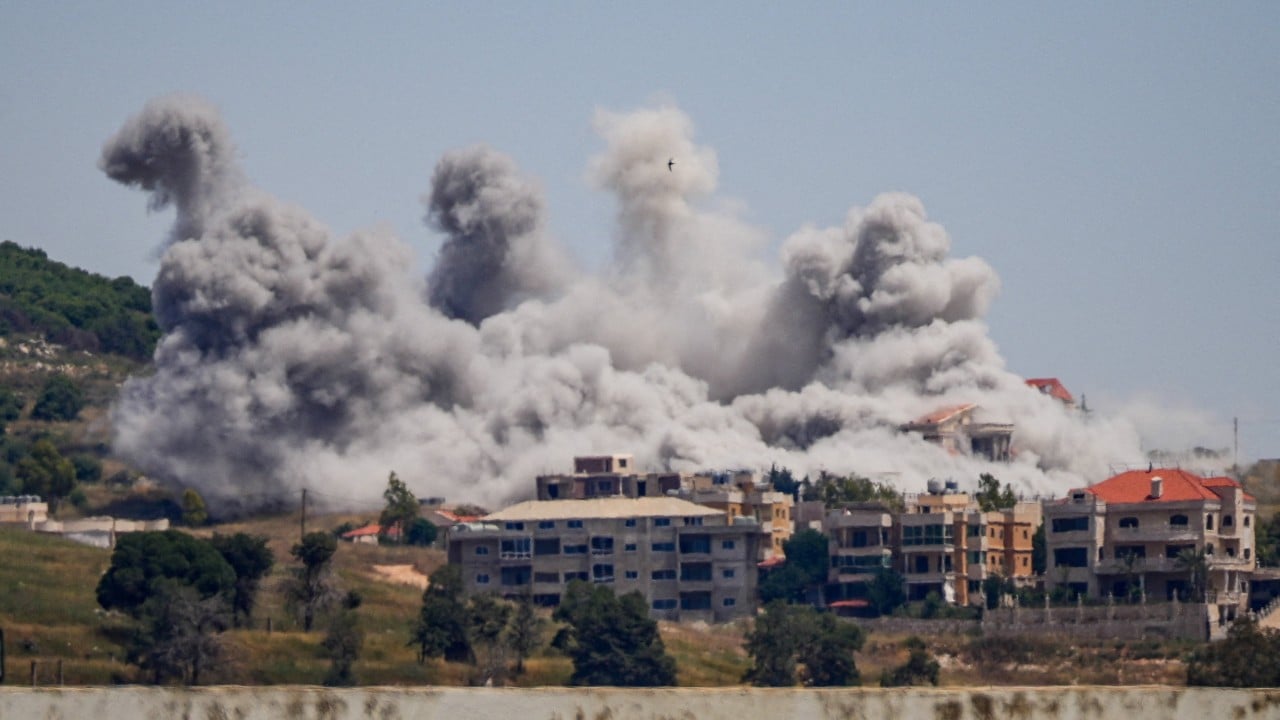
Israel and Lebanon agree to renew fragile ceasefire, create Hezbollah-free zones
Key Points
Israel and Lebanon agree to renew fragile ceasefire, create Hezbollah-free zones The deal calls for the Lebanese army to take full control of those areas, from which the militants would be banned Israel and Lebanon agreed Wednesday to renew their fragile ceasefire and create a number of “pilot” security zones inside Lebanon from which Hezbollah militants would be banned. In a joint statement released after a fourth round of US-mediated talks at the State Department, the two sides said the...
Israel and Lebanon agree to renew fragile ceasefire, create Hezbollah-free zones
The deal calls for the Lebanese army to take full control of those areas, from which the militants would be banned
Israel and Lebanon agreed Wednesday to renew their fragile ceasefire and create a number of “pilot” security zones inside Lebanon from which Hezbollah militants would be banned.
In a joint statement released after a fourth round of US-mediated talks at the State Department, the two sides said the ceasefire “is contingent on a complete cessation of Hezbollah fire and the evacuation of all Hezbollah operatives” from areas south of the Litani River.
It was not immediately clear how the security zones would be established but the agreement calls for the Lebanese army to take full control of those areas.
“These steps will enable progress towards a comprehensive peace and security agreement,” the statement said.
“All countries reaffirmed that the future of the relationship between Israel and Lebanon must be decided by the two sovereign governments. They rejected any attempt, by any state or non-state actor, to hold Lebanon’s future hostage.”