
Entertainment
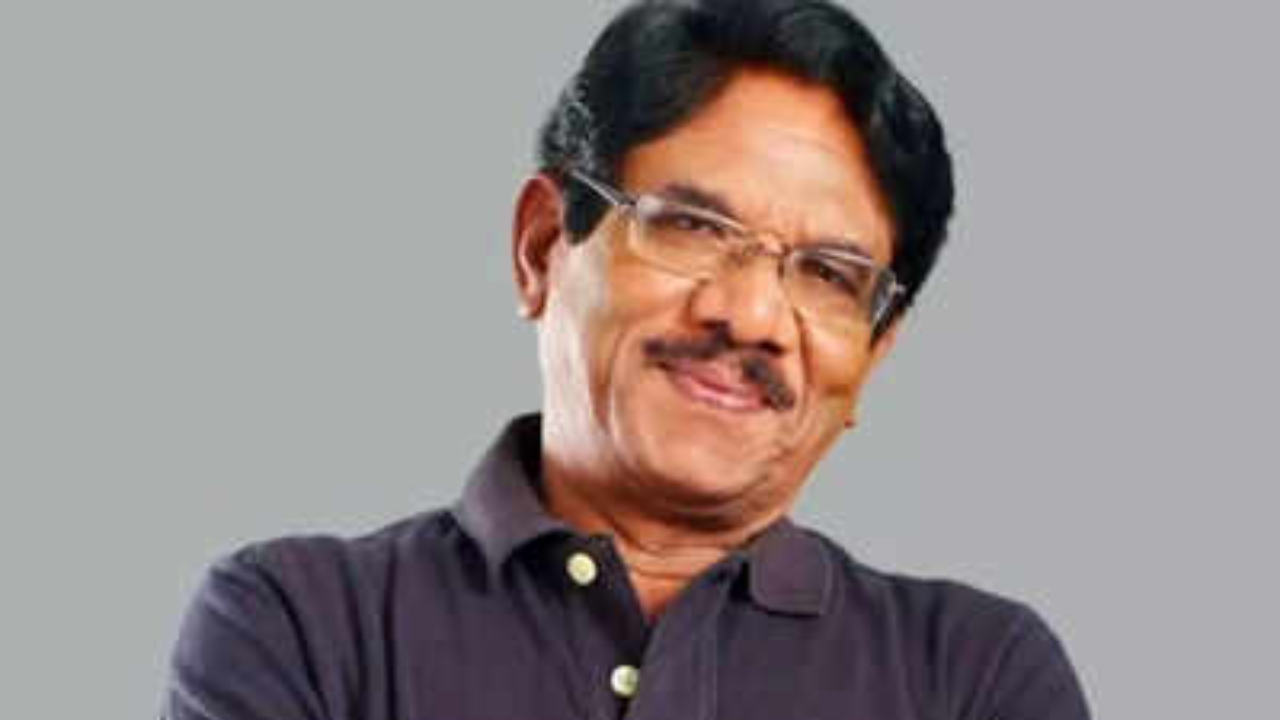
Bharathiraja: The Aladdin of Tamil cinema
Key Points
CHENNAI: Like Aladdin rubbing the magic lamp to set the genie free, Bharathiraja liberated an intense version of Tamil cinema that had long remained bottled up within studio sets and shooting floors. With 16 Vayadhiniley (1977), he blazed a trail and revealed the rugged and lush beauty of Tamil Nadu’s countryside to both filmmakers and moviegoers. It was a cult film that marked the beginning of a new era in Tamil cinema.
CHENNAI: Like Aladdin rubbing the magic lamp to set the genie free,
Bharathiraja liberated an intense version of Tamil cinema that had long remained bottled up within studio sets and shooting floors. With 16 Vayadhiniley (1977), he blazed a trail and revealed the rugged and lush beauty of Tamil Nadu’s countryside to both filmmakers and moviegoers.
It was a cult film that marked the beginning of a new era in Tamil cinema.
Asked about his achievement, he would famously tell a film gathering later: “Cinema took me to Chennai. I took cinema to my villages. I filmed the lives of ordinary people.” Bharathiraja made the director a hero and chose to connect directly with his audience by addressing them as ‘En Iniya Tamil Makkaley’ (My Dear Tamils), with folded hands and in his signature baritone voice, at the beginning of his films.
Born in Theni-Allinagaram as Chinnasamy in 1941, Bharathiraja was briefly a government employee — a malaria inspector in the state health department. After short apprenticeships under different directors, Bharathiraja delivered 16 Vayadhiniley and announced his arrival with a bang. The film immortalised Rajinikanth as Parattai, Kamal Haasan as Chappaani and Sridevi as Mayilu. Rajini, a future superstar, also got his first punchline — “Idhu Eppidi Irukku?” (How is this one?).
After his second film, Kizhakkey Pogum Rayil, also became a runaway hit, Bharathiraja perhaps wanted to shake off his country-cousin image. He conjured up Sigappu Rojakkal, where Chappaani Kamal transformed into the suit-booted psycho killer Dileep, while Mayilu became the sophisticated Sarada.
Super-confident about his story, script and directorial toolkit, Bharathiraja turned producer with just his fourth film, Puthiya Vaarpugal, and cast his assistant director K. Bhagyaraj as the lead opposite 16-year-old Punjabi girl Rathi Agnihotri. Both went on to become stars in the years that followed. The industry still talks about how the hero was finalised just a day before the cameras started rolling.
That was Bharathiraja. He would cast anyone and shoot anywhere, for his craft was the true hero. To this day, in Kodambakkam, the word “Director” belongs only to Bharathiraja. He inspired countless directors and actors. Inspired by the success of Bharathiraja and his assistants, young men from small towns and villages left their homes and arrived in Kodambakkam carrying bags overflowing with stories and dreams.
He also refused to be bracketed within any definition. Nizhagal (1980) gave him his first taste of box-office failure, but it launched the careers of lyricist Vairamuthu and actors Chandrasekar, Nizhalgal Ravi and Manivannan. The film failed, but the industry gained.
Then came a string of memorable films — the sparkling teenage romance Alaigal Oivathillai, the murder mystery Tik Tik Tik, the Revathi-Pandian debut Mann Vasanai, Pudhumai Pen, Kaidhiyin Diary, Mudhal Mariyadhai and Vedham Pudhithu. It was a dream run. Each film bore his signature, yet none resembled the other. However, between 1988 and 1993, at least six of his films did not perform well at the box office.
In 1988, his big-budget home production Kodi Parakkuthu, starring Rajinikanth, bombed because Bharathiraja tried to make a typical Rajini film. When he began shooting the movie, he remarked that directing Rajini in 16 Vayadhiniley had been like walking with the breeze. “In Kodi Parakkuthu, working with Rajini felt like riding a storm,” Bharathiraja said.
When the industry began to wonder if it was the end card for the man hailed as ‘Iyakkunar Imayam’ (Himalayan Director), Bharathiraja returned to his roots and unearthed two gems — Kizhakku Seemaiyile (1993), perhaps the most authentic film set against a Madurai backdrop, and Karuthamma (1994), which captured the female infanticide rampant in Tamil Nadu’s southern districts at the time.
Bharathiraja made a dozen more films until 2020, but they did not measure up to what he had achieved by 1994. In a career spanning 43 years, he directed 42 films, besides working on several television serials. He acted, sang and lent his voice for dubbing, and, more importantly, remained active and visible until the very end.
Bharathiraja had a fascination for narrating stories that blended seamlessly with not only the lush green fields of Theni and the manicured hills of Ooty, but also the rugged, cactus-filled dust bowl of Usilampatti and the rocky beaches of Muttam.
He had the Midas touch when it came to introducing women to cinema — Radhika, Vijayashanthi, Rathi Agnihotri, Revathi, Radha, Rekha, Ranjitha and Sukanya, among others. He gave them substantial roles. Even Silk Smitha, who was red-hot at the time but largely confined to item numbers, was given a role of consequence in Alaigal Oivathillai.
While he taught newcomers how to act and climb the ladder of success, in the case of Sivaji Ganesan, he succeeded in persuading the legend not to “act”. Instead, he allowed Sivaji to simply live the life of the middle-aged village elder Malaichamy in Mudhal Mariyadhai. It brought out some of Sivaji’s finest work in his twilight years.
In many ways, Bharathiraja’s jagged personality reflected the terrain he was born into. The foothills of the Western Ghats are rough, tough and rugged in appearance. Yet beneath that exterior lies fertile soil that allows any seed to germinate and grow into a banyan tree. Bharathiraja was much the same — outwardly uncompromising, but deeply nurturing of talent, helping generations of actors, writers and filmmakers take root and flourish.