
Technology
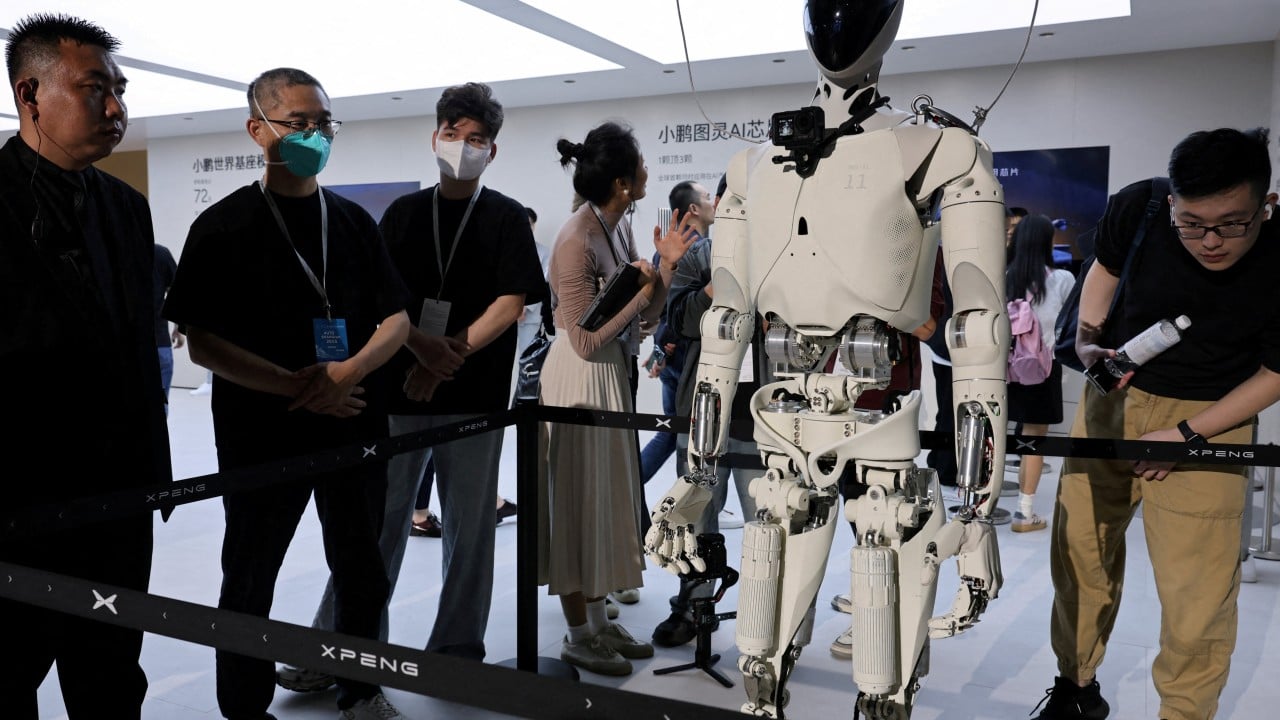
China fast tracks humanoid robots and embodied AI into industry under nationwide programme
Key Points
China fast tracks humanoid robots and embodied AI into industry under nationwide programme The scheme spans manufacturing and healthcare to disaster relief and requires local governments and SOEs to test and deploy the technology this year The goal is to accelerate the deployment of humanoid robots and embodied AI in real-world production and service environments, giving local governments and state-owned enterprises less than six months to prove the technology’s viability in such settings,...
China fast tracks humanoid robots and embodied AI into industry under nationwide programme
The scheme spans manufacturing and healthcare to disaster relief and requires local governments and SOEs to test and deploy the technology this year
The goal is to accelerate the deployment of humanoid robots and embodied AI in real-world production and service environments, giving local governments and state-owned enterprises less than six months to prove the technology’s viability in such settings, according to an official document issued on Tuesday.
Authorities said implementation plans must be submitted by the end of June, with progress reports due by the end of November.
“By the end of 2026, key humanoid robot products will complete application verification and regular deployment in a number of representative scenarios, entering ‘work mode’,” the Ministry of Industry and Information Technology and the State-owned Assets Supervision and Administration Commission said in the document.
Beijing is pushing to create more than 100 high-value applications and support the deployment of 10,000 units by year-end – a target that reflects a broader shift in the industry’s priorities, said Shao Hao, senior director of the robotics lab at Chinese smartphone maker Vivo.
“The core purpose of the policy is to push the industry from a demonstration-driven logic to a task-oriented logic, and from showcasing individual capabilities to building integrated systems that can perform real-world tasks,” Shao said.
“Six months is not a long time, but a concentrated effort like this can help the industry converge more quickly on viable technology paths and engineering solutions.