
Politics
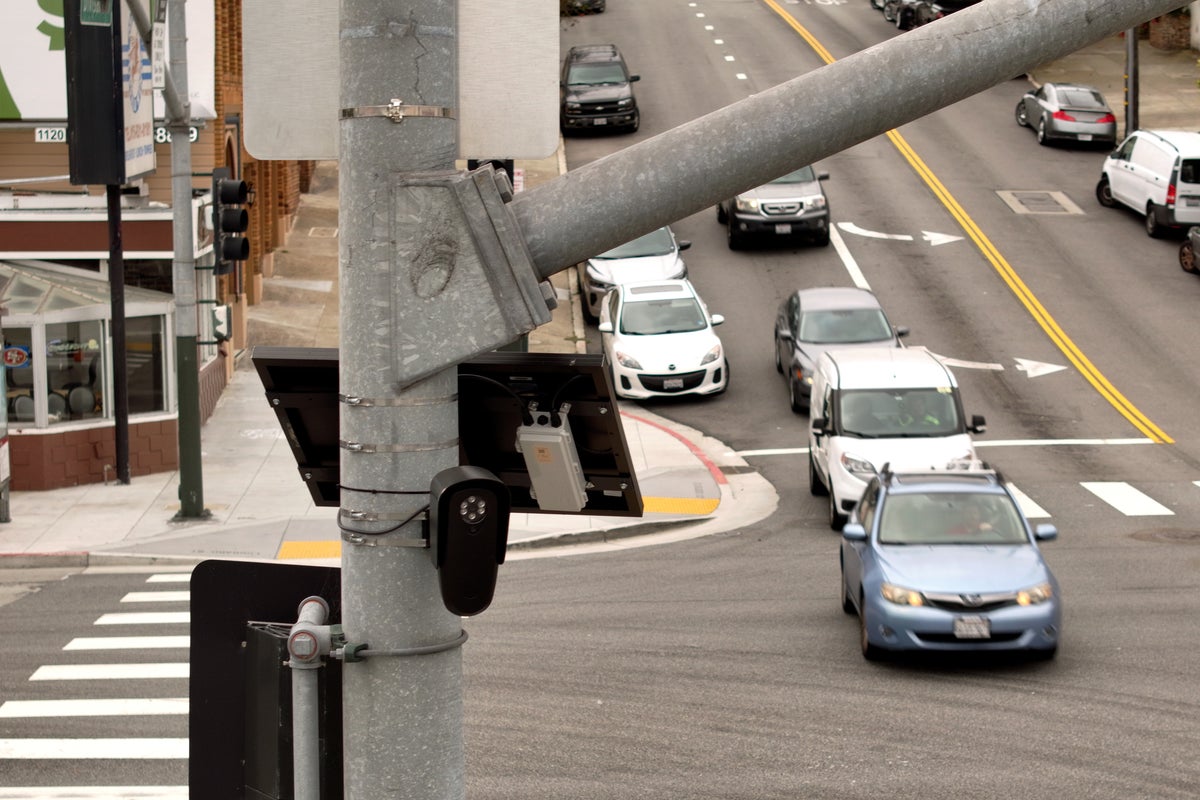
‘Indiscriminate surveillance’ lawsuit claims 1.6 billion car scans tracking millions of drivers
Key Points
‘Indiscriminate surveillance’ lawsuit claims 1.6 billion car scans tracking millions of drivers Civil rights groups have sued on behalf of New York residents to stop Westchester County, New York, from using nearly the nearly 600 license plate readers they have installed around the county - Bookmark A coalition of civil rights groups has filed a class-action lawsuit against Westchester County, New York, urging a state judge to halt the operation of nearly 600 license plate readers (LPRs). The...
‘Indiscriminate surveillance’ lawsuit claims 1.6 billion car scans tracking millions of drivers
Civil rights groups have sued on behalf of New York residents to stop Westchester County, New York, from using nearly the nearly 600 license plate readers they have installed around the county
- Bookmark
A coalition of civil rights groups has filed a class-action lawsuit against Westchester County, New York, urging a state judge to halt the operation of nearly 600 license plate readers (LPRs). The groups contend that the system constitutes a warrantless and "indiscriminate surveillance system" that violates the state constitution.
The lawsuit alleges that the county never secured proper authorization for the program, which has amassed a staggering database of 1.6 billion plate scans. This extensive data has reportedly been shared with over 50 external law enforcement agencies, including U.S. Immigration and Customs Enforcement.
The complaint asserts that the network "records the long-term travel patterns, daily habits, and intimate information of millions of law-abiding New Yorkers and other motorists who travel through Westchester."
Barry Friedman, founder and faculty director of the Policing Project at NYU School of Law, which filed the suit on behalf of four motorists, stated, "In a democracy, a police department cannot unilaterally decide — without legislative authorization — to surveil the daily movements of its own citizens without any real accountability, transparency, or oversight.
This indiscriminate data surveillance must not be allowed to continue in the dark."
A spokesperson for Westchester County responded, saying, "Westchester County has not yet received or reviewed the lawsuit referenced."
The widespread deployment of license plate reader systems, which use cameras to scan and record vehicle information, has sparked considerable controversy nationwide.
The Associated Press reported in November that the U.S. Border Patrol was operating a clandestine LPR program that targeted drivers based on their travel patterns, prompting congressional Democrats to raise concerns about its legality.
Last year, Flock Safety, a prominent LPR company, paused its collaboration with the Department of Homeland Security after revelations that police departments were sharing LPR data with immigration authorities.
Other municipalities and states are now restricting data sharing with federal agencies, shortening data retention periods, or even canceling contracts in response to public outcry.
The civil rights groups brought the case on behalf of four women residing in Westchester County or nearby jurisdictions. The suit claims that the plaintiffs' license plate data had been captured thousands of times by the county’s camera network in recent years.
For instance, a vehicle belonging to plaintiff Lora Nelson was recorded over 2,400 times, while another plaintiff’s vehicle was captured 1,134 times between 2023 and 2026, according to the complaint.
Westchester County, a 430-square-mile area just north of New York City, is traversed by major thoroughfares such as Interstate 87, Interstate 95, and the Hutchinson River Parkway, which handle daily commuter traffic into and out of New York City, as well as long-distance travel.
The women are represented by the Policing Project at New York University School of Law, the Knight First Amendment Institute at Columbia University, the New York Civil Liberties Union, and the law firm Freshfields.
While the use of license plate readers has generally been upheld by most courts because they document vehicle movements on public roadways, the Westchester litigation is part of a broader legal effort to compel courts to reconsider such doctrines amid the proliferation of surveillance technologies, data collection, and analysis.
Civil (ORG)
New York (LOCATION)
Westchester County (LOCATION)
U.S. Immigration and Customs Enforcement (ORG)
New Yorkers (ORG)
Westchester (LOCATION)
Barry Friedman (PERSON)
the Policing Project at NYU School of Law (ORG)
The Associated Press (ORG)
the U.S. Border Patrol (ORG)
LPR (ORG)
Democrats (ORG)
Flock Safety (ORG)
the Department of Homeland Security (ORG)
Lora Nelson (PERSON)