
For nearly half a century, American policymakers have debated how to negotiate with the Islamic Republic of Iran. The real question is whether Washington is still misdiagnosing the problem. Iran is not simply a diplomatic adversary but a regime whose strategy is built on terrorism, proxy warfare and hostility toward the United States.
Why does Washington continue to treat the regime as a negotiating partner when decades of evidence suggest it is a national security threat? The answer lies in a misunderstanding of its nature. Successive administrations have often analyzed Tehran as a conventional state pursuing national interests. It is not. The regime was born as an ideological project built on hostility toward America, Israel and the Western order.
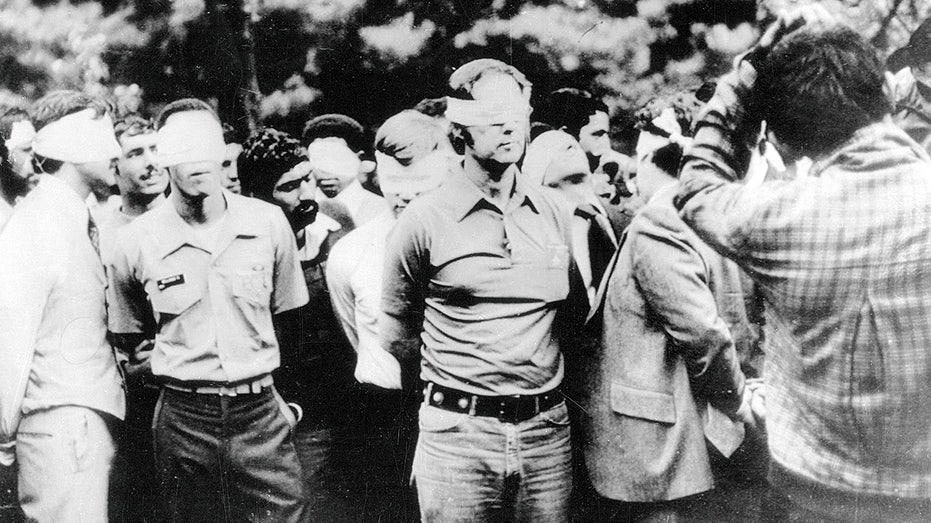
The conflict did not begin with the nuclear issue, sanctions or regional expansion. It began in 1979, when Iran was transformed from a key American ally into a revolutionary headquarters. The seizure of the U.S. Embassy in Tehran was more than a diplomatic crisis; it signaled that the new regime would derive legitimacy through permanent confrontation.
Washington's misperception of the regime dates back to the revolution itself. Many American policymakers viewed the upheaval through the lens of anti-monarchical politics rather than Khomeinist ideology. The result was the greatest strategic loss of the Cold War: America lost a key ally and gained a radical state aligned with anti-Western forces across the Middle East.
TRUMP'S WARNS IRAN IS 'PLAYING US FOR SUCKERS' AS HE MULLS RENEWED STRIKES
The rebellious coalition surrounding Iran’s then-leader Ayatollah Ruhollah Khomeini extended beyond traditional clerics and included Islamic terrorist actors aligned with broader anti-Western movements. What emerged was not merely a new government but a transnational ideological project. Washington underestimated that transformation then and has often underestimated it since.
Khomeinism became the ideological engine of the regime, combining religious absolutism, anti-Westernism and political violence. This is why Washington has repeatedly misunderstood Tehran. The Islamic Republic is not merely a regime with whom America has policy disagreements. It views survival and confrontation as inseparable, while anti-Americanism, hostility toward Israel and the export of revolution remain central to its identity.
From the aftermath of the 1979 upheaval, Tehran began building transnational networks. The Islamic Revolutionary Guard Corps (IRGC) and later the Quds Force cultivated and directed regional Islamic terrorist movements, eventually creating the "Axis of Resistance" — a transnational evil network stretching from Lebanon and Iraq to Syria and Yemen.
IRAN ACCELERATES EXECUTION CAMPAIGN AGAINST ANTI-REGIME ACTIVISTS AMID INTERNET CENSORSHIP
Hezbollah became the most successful model of Tehran’s strategy, while Hamas, Palestinian Islamic Jihad, Iraqi militias and the Houthis advanced Iranian influence through proxy warfare.
This notorious network has cost American lives for decades. From Beirut to Khobar Towers to attacks on U.S. forces in Iraq and Syria, the pattern has been consistent. The regime does not need to confront America directly when it can rely on proxies and terrorist allies. Terrorism is not an occasional instrument of the regime; it is part of its strategic culture.
The threat is no longer confined to the Middle East. Assassination plots, threats against former American officials and operations against dissidents demonstrate that Tehran does not view geography as a barrier. The same hostility that drives its regional policy also drives its activities abroad.
FROM HOSTAGE CRISIS TO ASSASSINATION PLOTS: IRAN’S NEAR HALF-CENTURY WAR ON AMERICANS
The consequences of that misunderstanding continue to this day. The assassination of former Iranian diplomat Ali Akbar Tabatabai in Maryland in 1980 was an early warning that ideological violence could reach American soil. Over time, threats against American officials, assassination plots, influence operations and networks became part of the landscape confronting American institutions.
Critics argue that American institutions have often approached the challenge through isolated investigations rather than a broader strategic lens. The FBI, Department of Homeland Security and intelligence agencies have disrupted plots and prosecuted individual cases, yet the larger ecosystem of ideological influence, and propaganda networks, have often received less attention. Understanding this regime requires more than identifying agents. It requires understanding the architecture that produces them.
The challenge is not simply identifying operatives or organizations. It is understanding the broader ecosystem of influence behind them. The regime’s reach extends beyond IRGC officers and formal agents, appearing through media narratives, lobbying networks and ideological sympathizers. These networks may appear fragmented, yet they often advance the same objective: weakening opposition to the regime and softening American resolve.
This is where diplomacy has repeatedly failed. Washington has too often assumed that sanctions relief or negotiations could moderate the regime’s hostility. The problem is that the United States has repeatedly misunderstood the actor across the table. The Islamic Republic has often used diplomacy as a shield, a delay mechanism and a survival tool.
The Joint Comprehensive Plan of Action (JCPOA), or Iran nuclear deal, did not address the regime’s missile program, proxy network or commitment to Islamic terrorism. Sanctions relief strengthened the ruling system and gave Tehran more room to maneuver. Repeated negotiations allowed the regime to buy time while continuing the same behavior elsewhere. Each time Washington treats the Islamic Republic as a conventional diplomatic problem, Tehran gains the advantage.
The United States has made this mistake under both Republican and Democratic administrations. Some believed engagement would soften the regime; others believed pressure alone would force change. But without understanding the regime’s ideological core, neither approach can fully succeed. A regime built on revolutionary survival will adapt, deceive, and endure.
CLICK HERE FOR MORE FOX NEWS OPINION
Today the regime may be weaker than it once appeared. Its terrorist network has suffered serious setbacks, damaging Tehran’s illusion as a regional power. Inside Iran, the regime faces a crisis of legitimacy fueled by poverty, repression, uncertainty over succession. The rise of a security-driven junta within the theocratic system has exposed its fragility.
But a weaker regime is not necessarily a safer one. The Islamic Republic survives through barbaric repression at home and propaganda abroad. When cornered, it seeks ways to frighten enemies, divide opponents, activate proxies and turn survival itself into political victory. For many Iranians, this means living under a regime willing to sacrifice the country to preserve an ideological project.
That is why the question before Washington is not whether another round of talks can be arranged, but whether America understands the nature of the regime it faces. The regime is not merely a diplomatic challenge; it is a national security challenge that has shaped U.S. policy and counterterrorism operations for decades.
The regime is not merely a diplomatic dispute but a long-term national security threat. Until Washington recognizes that reality, Tehran will continue to exploit opportunities, expand its terrorist networks and threaten American interests worldwide.