
World News
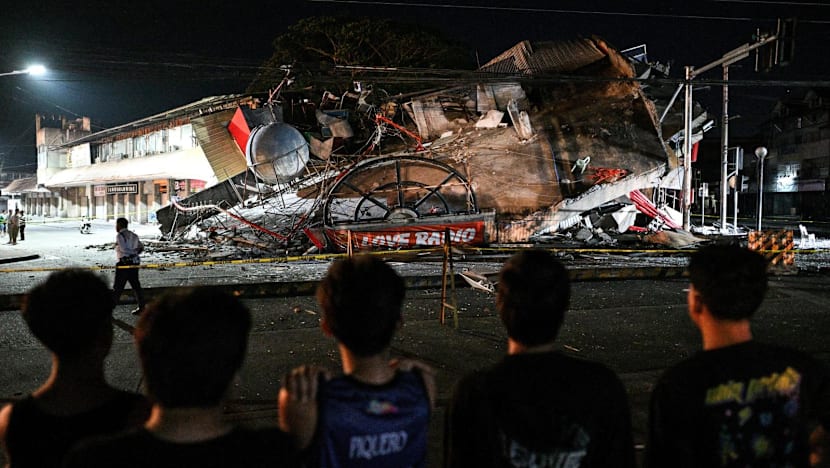
Rescuers press on in quake-hit Philippines as aftershocks and infrastructure damage hamper efforts
Key Points
Rescuers press on in quake-hit Philippines as aftershocks and infrastructure damage hamper efforts Recovery operations have been complicated by more than 2,000 aftershocks since the quake, some reaching magnitudes as high as 6.4. Search and rescue teams on Thursday (Jun 11) continued efforts to find dozens still missing days after a powerful earthquake struck southern Philippines, with aftershocks and damaged critical infrastructure hampering operations. The 7.8-magnitude earthquake off the...
Rescuers press on in quake-hit Philippines as aftershocks and infrastructure damage hamper efforts
Recovery operations have been complicated by more than 2,000 aftershocks since the quake, some reaching magnitudes as high as 6.4.
Search and rescue teams on Thursday (Jun 11) continued efforts to find dozens still missing days after a powerful earthquake struck southern Philippines, with aftershocks and damaged critical infrastructure hampering operations.
The 7.8-magnitude earthquake off the coast of Mindanao on Monday killed at least 47 people and injured more than 480 others. Officials say some 45,000 people have been displaced, while over 3,100 homes were damaged.
Recovery efforts have been complicated by more than 2,000 aftershocks since the quake, some reaching magnitudes as high as 6.4.
“It's a really dangerous situation. There're a lot of challenges,” said Drew Strobel, operations manager at the International Federation of Red Cross and Red Crescent Societies (IFRC).
“(Rescuers) need to be careful as they go in to extricate people from buildings that have collapsed. The safety component is something that really concerns us.”
The IFRC and its local partner, the Philippine Red Cross, are assessing needs and providing emergency assistance in affected areas.
RACE TO REACH REMOTE COMMUNITIES
Aid agencies say reaching isolated communities remains among the biggest challenges, with damaged roads and collapsed bridges leaving some remote areas inaccessible.
Rescuers are racing against time as the critical 72-hour window, widely regarded as the most important period for finding survivors trapped under rubble, has closed.
“Right now, there's a lot of focus on urban areas, but there's still a lot of rural areas that have yet to be assessed, and those are blocked by broken roads and bridges,” Strobel told CNA’s Asia Now programme.
“Getting access to some of those remote communities is really a challenge for us. We’re focusing on getting to those outlying areas to provide life-saving assistance. Until we get to them, our work will not be done.”
Humanitarian organisations are prioritising clean water, food, sanitation and healthcare for affected communities.
The Philippine Red Cross has established medical tents in place of damaged hospital facilities and is providing emergency medical care and ambulance services.
It has also launched an emergency appeal to support relief distributions, safe water provision, shelter assistance, psychosocial support and other aid for affected families.
“This is a complex, large-scale emergency that's still ongoing. We're focusing on life-serving support, but it's going to take a sustained relief effort to really help people recover,” Strobel said.
He added that damage to hospitals, roads and power infrastructure has complicated efforts to transport patients.
"There are a lot of efforts that need to take place to find alternative ways to transport patients to the larger hospitals that are still functioning," he said.
CHILDREN AMONG HARDEST HIT
Monday's quake, one of the strongest to hit the Philippines in half a century, struck on the first day of the school year for millions of students across Mindanao.
The Department of Education said more than 1,000 public schools were affected, and classes remain suspended.
President Ferdinand Marcos Jr has warned of the potentially traumatising impact on children and announced specialised training for teachers to help students cope with the disaster.
Aid groups are also warning of the long-term psychological impact, particularly on children and families who have lost homes and loved ones.
“The psychosocial effect (could) be underestimated,” Strobel said. “We have sustained efforts in mental health and psychosocial services, which people can receive. (We’re) present with these communities to help them with long-term recovery.”
He said teams are also assessing livelihood needs and preparing financial assistance programmes to help affected families rebuild their lives.
Thousands remain in evacuation centres and many residents are fearful of returning home amid continuing aftershocks. Authorities and aid groups say recovery is expected to take months.