
Technology
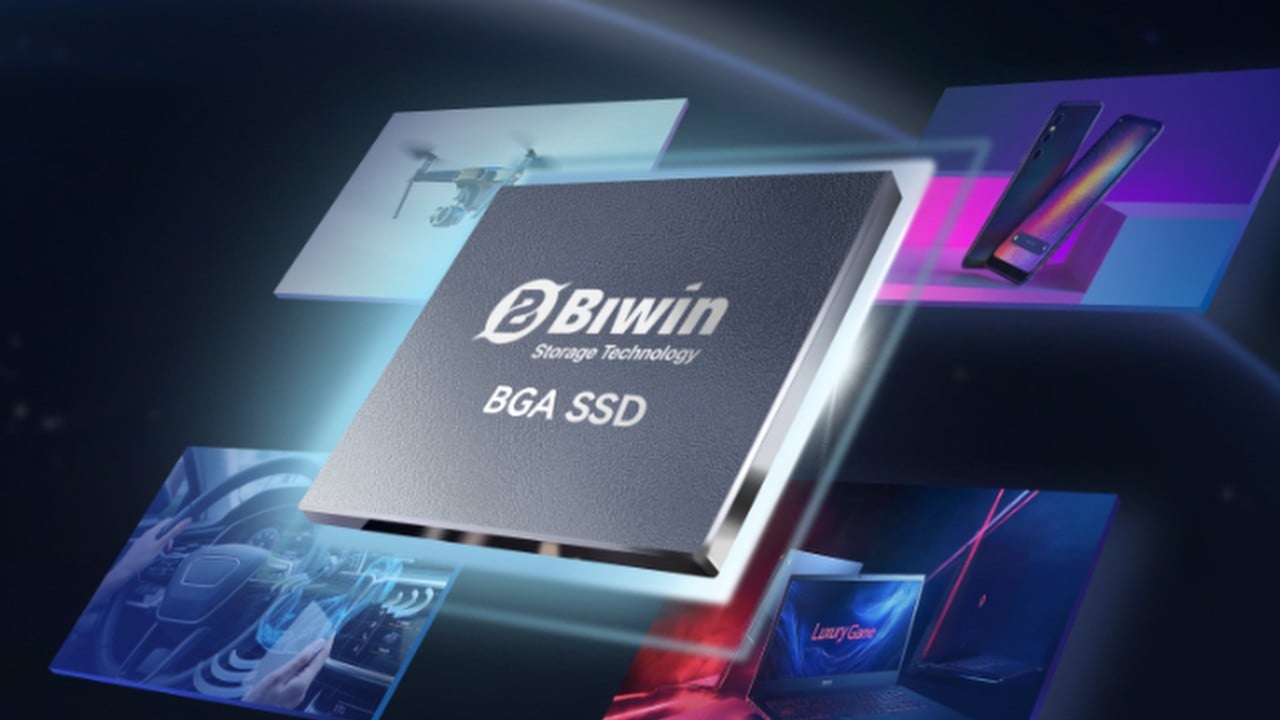
To beat chip crunch, Chinese firm inks memory deal bigger than its sales
Key Points
To beat chip crunch, Chinese firm inks memory deal bigger than its sales The US$1.86 billion multi-year flash deal with unnamed supplier underscores how downstream companies scramble to secure capacity Under the locked-volume, locked-price arrangement, Biwin would buy enterprise-grade chips in batches from the third quarter of 2026 through the second quarter of 2028, according to a filing with the Shanghai Stock Exchange on Tuesday. The supplier was not disclosed, citing commercial...
To beat chip crunch, Chinese firm inks memory deal bigger than its sales
The US$1.86 billion multi-year flash deal with unnamed supplier underscores how downstream companies scramble to secure capacity
Under the locked-volume, locked-price arrangement, Biwin would buy enterprise-grade chips in batches from the third quarter of 2026 through the second quarter of 2028, according to a filing with the Shanghai Stock Exchange on Tuesday. The supplier was not disclosed, citing commercial confidentiality.
The company said the contract would “secure medium- to long-term capacity and delivery schedules for memory chips, reducing the risk of supply disruption caused by market fluctuations”.
Biwin’s 2025 revenue of 11.3 billion yuan (US$1.7 billion) is eclipsed by the deal, which is equivalent to 12.6 billion yuan and is far above the threshold that triggers mandatory disclosure under Star Market rules.
The arrangement highlights how Chinese downstream storage firms are responding to the current memory upcycle by locking in upstream supply earlier and for longer periods.
Biwin said the 2026 purchase volume under the contract would amount to 4.45 per cent of its 2025 NAND flash procurement, rising to 14.88 per cent in 2027. Figures for the first half of 2028 were not disclosed.