
Business & Finance
Cambodia's renewable energy push helps shield economy from oil shocks, says minister
Key Points
Cambodia's renewable energy push helps shield economy from oil shocks, says minister Hydro and solar power have helped Cambodia keep electricity prices stable despite rising global energy costs, the country’s Minister of Mines and Energy Keo Rottanak tells CNA's Roland Lim. Cambodia says its rapid expansion of renewable energy has helped shield its electricity consumers from the impact of the Strait of Hormuz crisis, even as rising oil and gas prices continue to weigh on households and...
Cambodia's renewable energy push helps shield economy from oil shocks, says minister
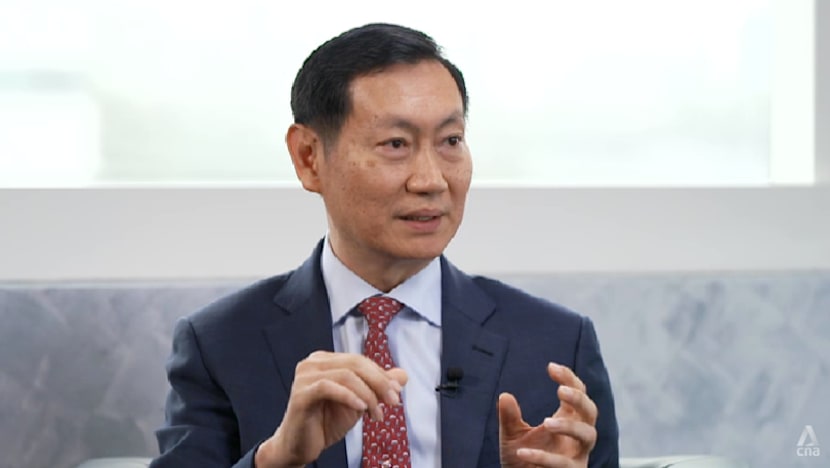
Hydro and solar power have helped Cambodia keep electricity prices stable despite rising global energy costs, the country’s Minister of Mines and Energy Keo Rottanak tells CNA's Roland Lim.
SINGAPORE: Cambodia says its rapid expansion of renewable energy has helped shield its electricity consumers from the impact of the Strait of Hormuz crisis, even as rising oil and gas prices continue to weigh on households and businesses.
Speaking to CNA in Singapore on Thursday (Jun 11), Cambodia’s Minister of Mines and Energy Keo Rottanak said clean energy now accounts for nearly two-thirds of the Southeast Asian country’s installed power capacity, helping it keep electricity prices stable despite turmoil in global fuel markets.
He said deeper regional integration through the proposed Association of Southeast Asian Nations’ (ASEAN) Power Grid would be critical to strengthening long-term energy security across the region.
Global energy markets have been rattled since the escalation of the United States-Israel conflict with Iran at the end of February, with Tehran's response disrupting traffic through the Strait of Hormuz, a critical artery for global oil and gas shipments.
“We are very exposed to this external shock, and that has raised prices for diesel, petrol and even LPG (liquefied petroleum gas) prices,” Mr Rottanak said.
He added that higher fuel costs have affected both households and the broader economy.
But electricity prices, at least, have been kept at “pre-Hormuz crisis levels”, thanks to hydro and solar power, said Mr Rottanak.
To further shield consumers from rising fuel costs, Cambodia has also reduced import duties on fuel, he said.
He added that duties on some electrical appliances, such as cooking stoves, have been removed to encourage households to switch from gas to electricity.
ASEAN POWER GRID KEY TO ENERGY SECURITY
Cambodia aims to raise the share of green energy in its installed power capacity to at least 70 per cent by 2030, well above ASEAN's target of 45 per cent sustainable power capacity by the same year, Mr Rottanak noted.
Greater use of such energy would help Cambodia reduce emissions while supporting long-term economic growth and helping lower electricity costs for households and businesses over time, he added.
But the country's energy transition does not stop at expanding renewable generation at home.
The next stage of Cambodia's energy transition is deeper integration with its neighbours through the long-planned ASEAN Power Grid, the minister said.
“One of the pillars of energy policy is resilience, and we see that a resilient domestic grid is enhanced when we have interconnection,” he said.
The grid was first proposed in the late 1990s as a way to strengthen regional energy security. The network would allow countries to move clean electricity where it is needed most, reducing dependence on imported fossil fuels.
Cross-border power trade is already part of Cambodia's energy strategy. The country imports electricity from Laos and Vietnam, accounting for less than 20 per cent of Cambodia's power needs.
However, Mr Rottanak said the longer-term goal is not simply to increase imports but to create a more integrated regional market where electricity can flow in multiple directions depending on demand.
“It’s not about meeting our own domestic demand and resiliency target alone. It’s also about chipping in to make sure that our region collectively will be much more resilient and protected from further shocks down the road,” he said.
OIL AND GAS STILL PART OF THE TRANSITION
Even as Cambodia accelerates its shift towards clean energy, Mr Rottanak said fossil fuels will continue to play a role during the transition.
He added that regional oil and gas resources could help strengthen ASEAN's energy security as countries continue to decarbonise their economies.
That includes potential oil and gas resources in the Gulf of Thailand, where Cambodia and Thailand have overlapping maritime claims.
The area is estimated to contain energy resources worth about US$300 billion, including around 311 billion cubic metres of natural gas. The resources have remained largely undeveloped amid the long-running dispute.
More than two decades ago, Cambodia and Thailand signed an agreement aimed at resolving their maritime boundary issues and exploring ways to jointly develop resources.
In May, Thailand withdrew from the agreement, reportedly arguing that the framework had made little progress.
Mr Rottanak said Cambodia is now pursuing a compulsory conciliation process under the United Nations Convention on the Law of the Sea (UNCLOS).
"It is our hope and expectation that this peaceful legal process under international law would allow the two parties to work out differences peacefully and amicably," he said.
He said an eventual agreement could benefit not only the two countries but also the wider region.
"Any new discovery that would bolster ASEAN’s collective reserve in oil and gas would be a great thing for Cambodia, for Thailand, and also for ASEAN as a whole."
Cambodia (LOCATION)
Hydro (ORG)
Mines and Energy (ORG)
Keo Rottanak (PERSON)
CNA (LOCATION)
Roland Lim (PERSON)
SINGAPORE (LOCATION)
the Strait of Hormuz (LOCATION)
Southeast Asian (ORG)
Association of Southeast Asian Nations’ (ORG)
ASEAN (ORG)
Power Grid (ORG)
the United States (LOCATION)
Israel (LOCATION)
Iran (LOCATION)