
World News
China backs next generation of tech champions as new rules reshape path overseas
Key Points
China backs next generation of tech champions as new rules reshape path overseas Government funding continues to fuel innovation in hubs such as Shenzhen, but tighter controls on outbound investment could add new compliance hurdles for firms with global ambitions. SHENZHEN: In a bustling conference hall in Shenzhen, startup founders take turns pitching their ideas in English to an international audience of investors and journalists. Some are developing high-tech dental care devices.
China backs next generation of tech champions as new rules reshape path overseas
Government funding continues to fuel innovation in hubs such as Shenzhen, but tighter controls on outbound investment could add new compliance hurdles for firms with global ambitions.
SHENZHEN: In a bustling conference hall in Shenzhen, startup founders take turns pitching their ideas in English to an international audience of investors and journalists.
Some are developing high-tech dental care devices. Others are building artificial intelligence-powered sports glasses or vying for a place in the increasingly competitive companion robot market.
But they all share a common goal – expanding beyond China and reaching global markets.
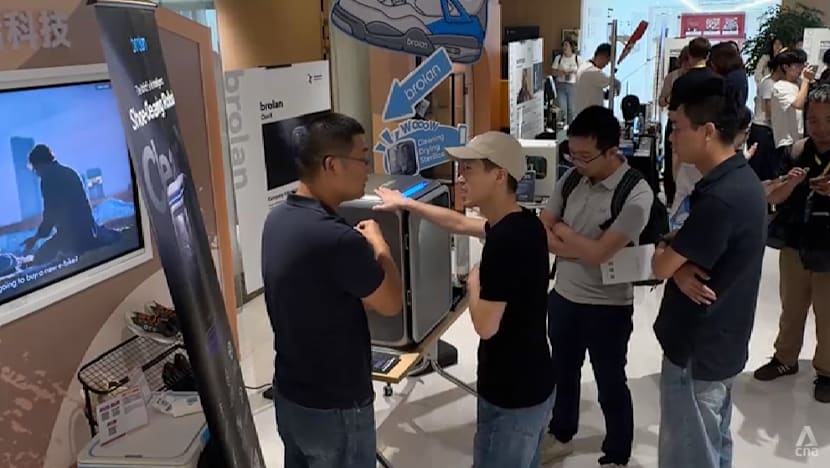
The entrepreneurs were showcasing their products earlier this month at the Global Connect Show, a business networking event that connects Chinese companies with overseas media, investors and commercial partners.
Their ambition reflects China's efforts to cultivate its next generation of technology champions.
Often dubbed China's Silicon Valley, Shenzhen offers startups access to funding, talent and a vast manufacturing ecosystem, helping them bring new products to market quickly.
But as Beijing moves to tighten oversight of outbound investment from Jul 1, companies pursuing overseas growth may face new compliance hurdles, even as state support for innovation continues.
SHENZHEN'S "SPECIAL MAGIC"
For many entrepreneurs, Shenzhen is one of the best places in China to build a startup.
"Finding money is the hardest part," noted Chris Pereira, founder and chief executive of iMpact, organiser of the Global Connect Show held on Jun 1.
"But here in Shenzhen, the possibility of getting (investment) is higher than anywhere else because there's a special magic here that people are willing to think big."
Industry players say that "magic" comes from an ecosystem where government support, venture capital and manufacturing supply chains are closely connected.
This allows startups to move quickly from concept to commercialisation, said Carol Yu, founding partner and senior vice-president of Shenzhen InnoX Academy.
"It really compresses the time from ideation, prototyping, testing user feedback to mass production. They have the talent density, they have all the suppliers."
Founded in 2021, InnoX Academy is a non-profit incubator backed by the Shenzhen government. It trains entrepreneurs and also invests in startups.
The academy's funding model reflects a broader trend across China, where local governments are playing a growing role in supporting early-stage technology firms.
CHANGING GEOPOLITICAL LANDSCAPE
But as state support grows, so will scrutiny. Beijing’s new outbound investment regulations come as competition between China and the West increasingly extends into technology, data and talent.
The regulations will strengthen oversight of overseas investments that could affect national security and allow authorities to review and, in some cases, block certain deals.
Analysts note that these rules will likely target more critical sectors like AI, advanced manufacturing and advanced computing.
Those in consumer technology, like the start-ups incubated at InnoX Academy say they are not affected for now.
The move follows a broader global trend.
The United States has restricted certain investments into advanced Chinese technology sectors, while the European Union has expanded scrutiny of foreign investments in sensitive areas including technology and AI.
Analysts say the latest Chinese rules formalise controls that many companies were already anticipating.
"There are many entrepreneurs who have been taking a very conservative stance … very cautious about how they interacted with foreign capital holders and how they were going about expanding abroad,” noted Rui Ma, founder of research firm Tech Buzz China.
"I think what gives most people the anxiety is really how it's going to be implemented,” she said.
The regulations are widely seen as affecting frontier technologies such as AI, semiconductors and advanced manufacturing.
"Overall it reflects an increasingly confident China (that) thinks it has more rights, assets and technology to safeguard overseas," said Qiu Mingda, senior analyst for China and Northeast Asia at Eurasia Group.
BIGGER LEGAL AND COMPLIANCE TEAMS
For many consumer technology startups, such as those at the Global Connect Show, the immediate impact may be limited.
But recent disputes involving Nexperia – a Dutch semiconductor company owned by China's Wingtech Technology – and Chinese AI startup Manus have become cautionary examples for founders and investors navigating an increasingly uncertain cross-border landscape.
Nexperia was ordered to divest a semiconductor facility in Britain on national security grounds, while Meta's proposed acquisition of Manus was abandoned after Beijing intervened.
Analysts say the new rules are unlikely to stop Chinese firms from expanding overseas, but companies may need larger legal and compliance teams as regulatory requirements become more complex.
"There will be a chilling effect," said Qiu.
"As the compliance risk increases, the compliance burden for companies that go beyond the borders will have to increase as well, and companies will have to be allocated more resources in dealing with this."
The changes could also complicate partnerships between Chinese firms and overseas investors, who now have to navigate compliance requirements across multiple jurisdictions, he added.
For startup founders, that means legal and regulatory expertise must become part of their business plan.
Esther Huang, founder of oral-care startup Ocjoy, described the new regulations as a double-edged sword.
"On one hand, it can help us better screen for partners who can stay with us over the long term," she said.
"On the other hand, we do need to pay close attention to these kinds of clauses. If there are too many constraints and too many KPIs (key performance indicators), they could tie our hands."
She added that for early-stage entrepreneurs, the changes also mean "learning more and gaining more legal knowledge".
FUNDING LIKELY TO REMAIN STATE-LED
The tighter oversight is also expected to influence how Chinese companies raise money.
Industry observers say firms will need to account for longer approval timelines, greater transparency requirements and more complex reporting obligations when planning overseas deals.
With private capital harder to come by and foreign investors becoming more cautious, analysts say many startups are likely to continue relying on government-backed funds.
"For the foreseeable future, that's going to be a very major part of how Chinese companies, startups, innovative startups, get funded," said Tech Buzz China's Ma.
Government-linked funding also offers more than capital, she said, providing companies with credibility, connections and access to strategic resources within China.
“You have to care a lot about the strategic resources you can corral for yourself inside mainland China, and local government funds are one of them,” Ma added.