
Sport
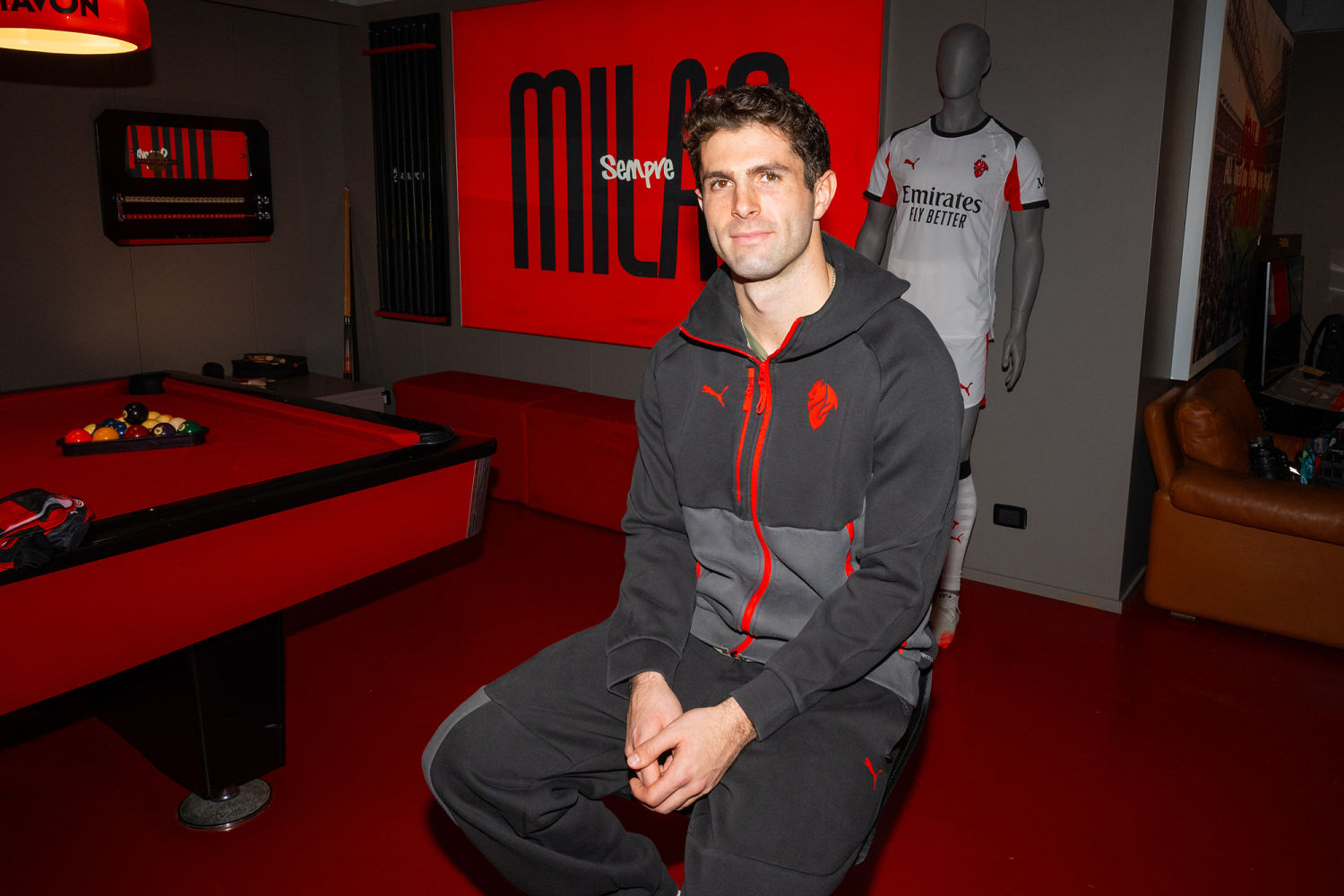
Christian Pulisic has played under pressure before, but nothing like this World Cup
Key Points
When the U.S. men’s national team opens its World Cup bid on Friday in Los Angeles, all eyes will be on Christian Pulisic. The 27-year-old star is widely considered the most talented American player of his generation and — rightly or wrongly — tasked with delivering the best result in the country’s history this summer on home soil. He says he’s not letting that pressure get to him.
When the U.S. men’s national team opens its World Cup bid on Friday in Los Angeles, all eyes will be on Christian Pulisic. The 27-year-old star is widely considered the most talented American player of his generation and — rightly or wrongly — tasked with delivering the best result in the country’s history this summer on home soil.
He says he’s not letting that pressure get to him.
“I think no matter what, wherever you’re playing, in the World Cup there’s pressure,” Pulisic, nicknamed “Captain America,” told NBC News in February at the training facility of his professional club, AC Milan. “I’m just going to try to live in the moment and enjoy the best I can.”
That’s easier said than done. The furthest the men’s national team has gone over the last three decades has been the quarterfinals in 2002. Since then, it either did not qualify (2018), failed to make it out of the group stage (2006) or was eliminated in the round of 16 (2010, 2014, 2022).
It also doesn’t help that fans and commentators are still questioning the potential of this group — nicknamed “The Golden Generation” for its abundance of talented young players. Former U.S. defender Alexi Lalas, now a commentator for Fox Sports, called out the roster at a news conference last month.
“This is a generation that has been given absolutely everything both on and off the field in terms of resources, in terms of opportunities, in terms of pathways,” Lalas said. “And I don’t think that I’m being unrealistic. I don’t think I’m being unfair by saying that we should expect more from this group.”
One player in particular, Lalas says, is Pulisic.
Last summer, Pulisic voluntarily decided not to join Team USA in the CONCACAF Gold Cup — a tournament featuring the top nations from North America, Central America and the Caribbean — to focus on both his mental and physical health. The decision sparked heavy backlash from fans and former national team players who questioned his level of commitment.
More recently, questions have surrounded Pulisic’s play at the professional level. Following two exceptional seasons for AC Milan in Italy’s Serie A, he couldn’t find consistency on the field in 2025-26. He missed seven games this year because of minor injuries and didn’t score at all in 2026.
Pulisic’s leadership has also come into question. A self-described introvert, he has not always been the loudest person on the field. He says he prefers to lead by his play on the field.
Weston McKennie agrees with that sentiment. McKennie, a fellow U.S. star who has played alongside Pulisic since they were teenagers, described him as someone who takes the helm of the team mostly “by action.”
“I think ultimately the worst thing people can do, which is something that I feel like people always try and find a way to do, is just add more pressure than what he already feels on top of himself,” McKennie told NBC News. “He knows that he’s the face of the team, and I think he knows that he bears a lot of the burden and responsibility of this team’s success.”
Jozy Altidore, who was on the U.S. national team when Pulisic made his first appearance as a 17-year-old, said he always knew Pulisic had special abilities.
“I think Christian, from the first day, was a wonderful kid to be around,” Altidore, now a Telemundo analyst, told NBC News. “Respectful, humble, incredibly hardworking. He had a fire in him that you saw in the training and the way that he prepared himself, the way he approached the game, tackles, everything. He had a competitive spirit. It’s no surprise to see his success.”
Altidore added that much of Pulisic’s growth was a direct result of the negativity he has faced in recent years.
“Disappointments in life, disappointments in your career — they harden you,” Altidore said. “They make you understand that this experience isn’t always just rainbows and butterflies, that there’s dark moments that you’re going to have to navigate. And he’s had dark moments that he’s had to come out of, and he’s come out of them in a big way.”
It was seen in an international friendly against Senegal on May 31. Pulisic was exceptional, contributing a goal and an assist in a 3-2 victory.
He showed that night that if he’s firing on all cylinders, the U.S. could go deep in the tournament.
“Now that the world’s eyes are [turning] to us, he has an opportunity to do what no other men’s player has been able to and capture that attention, that love,” former U.S. goalkeeper Tim Howard said. “If the team does well and he does well, then he can take himself to a whole other planet.”
Pulisic remains grounded. He has said he tries not to listen to pundits who have scoffed at the idea that this team is good enough to make legitimate noise in the World Cup.
Asked what would be considered a successful World Cup for the team, Pulisic shot down any notion that it had to make it to a particular round.
“I don’t like to put one game on it. I think we take it as it goes,” he said. “Putting in really good performances against the biggest teams is what we want to do, and I think the results will come.”
[Image text:] Sempve
Emirates
FLY BETTER