
Entertainment
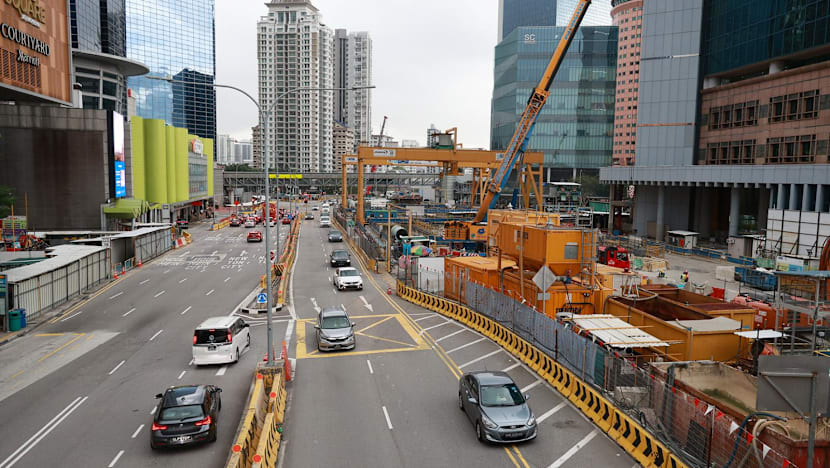
'A decade of inconveniences': Will the wait for the North-South Corridor be worth it in the end?
Key Points
'A decade of inconveniences': Will the wait for the North-South Corridor be worth it in the end? After years of living with construction noise, dust and disruption, residents and businesses along the North-South Corridor are weighing up whether the project’s promised benefits will ultimately make the wait worthwhile. For the past five years, Ms Rachel Gauri has lived with constant noise, dust and disruption as her Housing and Development Board (HDB) flat near Woodlands Drive overlooks the...
'A decade of inconveniences': Will the wait for the North-South Corridor be worth it in the end?
After years of living with construction noise, dust and disruption, residents and businesses along the North-South Corridor are weighing up whether the project’s promised benefits will ultimately make the wait worthwhile.
For the past five years, Ms Rachel Gauri has lived with constant noise, dust and disruption as her Housing and Development Board (HDB) flat near Woodlands Drive overlooks the North-South Corridor (NSC) construction area.
"Every day, it is so noisy that we cannot sleep," said Ms Gauri, a 38-year-old stay-at-home mother of a three-year-old and six-year-old.
"We have to close all the windows and doors to shut out the noise."
Besides the noise, Ms Gauri said dust from the construction work regularly finds its way into her home and coats her windows.
More than 20km away in Novena, 46-year-old video director Keith Kwek faces a different kind of frustration.
Having lived in the area for about three decades, he has watched familiar roads, pedestrian crossings and bus stops being repeatedly shifted to adapt to the ongoing construction.
Driving or walking routes that residents had grown accustomed to would suddenly get diverted, only to change again months later.
While there are wayfinding signs, the changes are frequent enough that Mr Kwek has had to "rewire" his brain constantly.
"You get used to one route, and then suddenly it changes. You have to learn a new way again, and it adds to your mental load," he said.
Mr Kwek added that private-hire drivers are frequently confused by the shifting roads and often make wrong turns with navigation apps struggling to keep up with the changes.
"I think all of us can put up with some level of inconvenience, for the sake of better infrastructure, but it's been going on for years," he said.
"It's expected to go on till 2029, so that's like a decade of inconveniences."
Like Ms Gauri and Mr Kwek, the other 50 residents and businesses along the construction area for the NSC whom CNA TODAY spoke to also brought up similar complaints of noise, dust as well as inconvenient and meandering routes.
Spanning 21.5km, the NSC is Singapore's first integrated transport corridor, designed to improve connectivity between northern towns such as Woodlands, Sembawang and Yishun, and the city, while easing congestion on the Central Expressway (CTE) and other major arterial roads.
The NSC starts at Admiralty Road West and ends at East Coast Parkway near Republic Boulevard.
Comprising an 8.8km viaduct in the north and 12.3km of underground road tunnels, it is supposed to cut travel time from northern neighbourhoods by up to 30 minutes.
Besides an expressway tunnel and viaduct, the project will feature dedicated bus lanes, cycling trunk routes and pedestrian-friendly surface streets.
Major construction works began in 2018 and the project was originally expected to be completed by about this year but it was delayed by the COVID-19 pandemic and manpower disruptions.
The corridor is now expected to open in phases from 2027, with the northern viaduct section from Admiralty Road West to Lentor Avenue targeted to open in 2027 and the southern tunnel section from Lentor Avenue to the East Coast Parkway scheduled for completion in 2029.
In response to queries from CNA TODAY, a Land Transport Authority (LTA) spokesperson said construction of the NSC is highly complex as there is limited working space since the corridor cuts through densely built-up areas and interfaces with several existing pieces of major infrastructure, including operational MRT lines and multiple utility networks.
"We have been planning and executing works sequentially to ensure continued prioritisation of public safety, and will provide further updates as works progress," its spokesperson said.
VIBRATING BUILDINGS, DEALING WITH DETOURS
For residents in Ang Mo Kio, the most noticeable impact of the NSC construction has been the temporary roundabout at the junction of Ang Mo Kio Avenue 5 and Avenue 6, which replaced a familiar four-way cross junction.
While many have since adapted to the new arrangement, some residents said it initially caused confusion.
Confusion aside, the roundabout has increased walking time for residents.
Said Ang Mo Kio resident Minwen Chang, 27, a project manager: "Before … you could cross in any direction. Now, you're forced to follow a specific route to get to the other side."
Mr Cher Liang, 29, another resident of the area, said all the temporary infrastructure meant to replace previous structures has made it significantly more difficult for residents to get around.
He said that ever since an overhead bridge, which connected his estate to Yio Chu Kang MRT station, was removed, he has had to take a convoluted route to the station.
"They shouldn't make it harder for people to get around. If they're going to remove an overhead bridge, there should be a good alternative," said the airline relationship manager.
Over at Yishun Avenue 5, residents expressed concerns that their lives wouldn’t get better once construction stopped and the NSC eventually opened.
For some residents, their doorways open directly onto the ongoing construction just metres away.
Halal consultant Murni Hanafi, 34, is worried that the road will be even noisier once the NSC is done, as her HDB flat sits level with the corridor's viaducts.
"We just worried because we are already living in front of the road," said Ms Murni, who lives on the third floor of her block.
"It was quite busy even before the construction. We are already used to the noise, but the [NSC] will incur more noise because the highway is on top."
She added that cracks also started appearing on her walls and along the corridor, but HDB sent contractors to patch them up after the problem appeared in neighbouring blocks.
Mr Muhaimin Zaini, 30, who lives over at Block 711 in Yishun, said he felt "uneasy" during past drilling works as his unit was vibrating.
"The flat felt was a bit shaky ... I could feel the vibrations. So, at one point I felt a little bit unsafe."
He too is worried about ongoing noise given the surface road and viaduct run parallel to his fourth-floor flat.
"It is going to be noisy because now I will have to deal with two roads - one is at the lower level and one at the upper," he said.
"I understand the whole point of connectivity, but there are residents here. Why do you have to put a highway literally a few metres away?"
CNA TODAY found that residents living in Novena, parts of Ang Mo Kio, and Yishun were the most affected and incensed by years of construction.
However, residents in Rochor had few complaints and were largely buffered from the ongoing construction.
The LTA spokesperson said it has worked with contractors to reduce the impact of construction on residents through measures such as noise barriers, noise enclosures, mufflers, dust-control measures, and the scheduling of noisy works during appropriate hours.
Additionally, LTA said noise levels are expected to decrease as the most intensive foundation works have been completed. Most of the remaining construction will take place underground, reducing noise and the need for further traffic diversions.
"These measures have taken on board public and community feedback, and LTA continues to work with the respective contractors to introduce additional measures where needed."
Ms Tracy Chandran, 42, a stay-at-home mother who lives in Woodlands and her husband, Mr Eranga Basnayake, 41, who works in IT, for example, were two residents CNA TODAY spoke to who were less annoyed and more excited about the project.
Having lived in Germany for five years, Mr Basnayake said he was excited about the NSC’s planned cycling infrastructure given that he cycled every day for both work and leisure.
Ms Chandran hoped the NSC would reduce congestion on roads such as Woodlands Avenue 12 by providing motorists with additional routes into the city.
"We've always depended on the North-South Line, but if there are easier ways to get to the city centre or the south, we're definitely happy about that," she said.
STRUGGLING BUSINESSES
While the disruption has been felt by residents all along the corridor, in Novena, where construction has been particularly intense, it is the businesses that have struggled to keep customers coming through the door.
At SingThai Restaurant on Thomson Road, manager Daniel Wen said business had been slow since it opened in January last year. The restaurant relies largely on walk-ins from nearby offices during the lunch period.
"If you stand on the opposite side of the road, you cannot see my storefront," said Mr Wen as he gesticulated to the plastic hoarding.
He said the restaurant had hoped to attract churchgoers from Novena Church across the road, but to no avail.
Flyers handed out to passers-by made no difference, he said, and those they pasted on the hoardings were taken down.
Mr Wen said he and the owner were now considering moving the restaurant elsewhere, despite having sunk considerable capital into the current space. He declined to reveal how much was spent.
Just a couple of stores away, Mr Alvin Lin, owner of Celine's Gelato at Novena Regency, said sales fell by about 25 per cent after construction barricades were erected directly in front of his shopfront in October 2024.
Since opening in 2021, Mr Lin said Celine's Gelato had drawn a steady stream of walk-in customers, including diners from nearby restaurants and churchgoers heading home after Sunday services.
"Some of our regular customers who live across the road thought the building had been demolished because of the barricades. They didn't even bother crossing over to check if we were still here," said Mr Lin.
Near Celine's Gelato, the eponymous owner of Bao Er Cafe said their Novena outlet had also been "greatly affected" by the barricades.
"Many of our customers say it's a hassle to travel down there because of the construction," said Ms Bao, who opened the cafe in 2022 and serves traditional Singaporean breakfast dishes.
She noted that the traffic lights had been moved several times, affecting the U-turn nearby, and adding to the confusion of customers headed to the area.
"We're hoping the works will be completed soon. Once the construction is done, it should bring footfall back here again," she said.
In response to queries from CNA TODAY, the LTA spokesperson said the authority is aware that construction hoardings and noise barriers can affect the visibility and footfall of businesses along the corridor, including those in the Novena area.
To mitigate this, LTA said it works closely with affected stakeholders on customised solutions such as placing directional signage and advertisement banners on the hoardings and noise barriers to ensure that customers remain aware that these establishments remain fully operational.
"We will continue to engage local business owners to explore practical adjustments as construction progresses."
NOT SIMPLY A ROAD
For residents who have endured years of disruption, the benefits of the NSC may feel like a distant reality with some questioning whether the benefits for them will justify the period of inconvenience.
Ms Chang, who has lived in Ang Mo Kio for close to 20 years, said she is unsure what the completed NSC would mean for her.
She has only heard "bits and pieces" of what the NSC is, including how cycling will be taken into account.
"North-South Corridor is like a foreign concept to me," said Ms Chang, who added she does not cycle.
Transport experts said that residents along the NSC will reap significant benefits once the project is completed, including reduced congestion on roads, shorter travelling times and the opening up of surface-level spaces for pedestrians and cyclists.
"The through traffic will be able to cut travel time to the central area with minimum disruption from side traffic," said transport engineering consultant Gopinath Menon.
"Bus commuters will have bus lanes to speed up buses from the north, cyclists will have cycle paths and pedestrians will have wide footpaths and features."
Dr Samuel Chng from the Singapore University of Technology and Design (SUTD) said that while motorists are likely to experience some of the "most visible travel time savings", it would be "inaccurate to view the NSC as a project that primarily benefits drivers".
He added that the dedicated bus lanes are particularly important as a single bus can move more people than private cars occupying the same road space.
Professor Sing Tien Foo, the provost's chair professor at the NUS Department of Real Estate, said that one of the benefits of the NSC is increased inter-town connectivity.
"Business and trade could increase because of better connections between the northern towns and the rest of the island," he said.
Business and trade could increase because of better connections between the northern towns and the rest of the island.
There will also be more efficient links to Malaysia once the Johor Bahru–Singapore Rapid Transit System (RTS) Link opens at the end of the year, he added.
Dr Chng described the NSC as one of Singapore's "most significant transport infrastructure projects in recent decades".
He said that it was not "simply a new road" but it reflects a broader shift in how transport corridors are being designed.
Traditionally, major expressways were primarily intended to move private vehicles more efficiently, he said but the NSC was conceived as a multi-modal corridor, integrating dedicated bus infrastructure, active mobility routes, and opportunities to "reshape the surrounding urban environment".
"By diverting through-traffic into tunnels and viaducts, it creates opportunities to reallocate surface road space towards buses, walking, cycling and potentially more community-oriented uses," said Dr Chng, who is also a research assistant professor and head of the Urban Psychology Lab in the Lee Kuan Yew Centre for Innovative Cities.
LTA said that it has been engaging residents and stakeholders since August 2024 through site walks, interviews and focus group discussions to help shape the future design of these spaces and the plan is to create "welcoming streets and public spaces for communities" along the corridor.
MODEST PROPERTY PRICE GAINS COMPARED TO AN MRT LINE
Mr Lee Sze Teck, senior director of data analytics at Huttons Asia, said the disruption appears to have weighed on home prices in the short term, as potential buyers may have shunned these areas for now.
Huttons' analysis of transactions between 2020 and the first quarter of 2026 found a clear gap in price gains between homes beside the construction and those further away.
Four-room HDB flats near the works at Blocks 633 to 640 Ang Mo Kio Avenue 6 rose 39.6 per cent in value, compared with a 46.8 per cent gain for flats away from the construction at Blocks 601 to 619 Ang Mo Kio Avenue 4 and 5.
The gap was wider for private homes. Non-landed homes near the Marymount MRT construction zone gained 29.7 per cent compared to homes away from the construction with a 48.3 per cent gain for those near Bright Hill MRT.
The years of construction may have tested the patience of residents living along the NSC, but Mr Lee said the long-term impact on home values could ultimately be more positive.
"When the construction of NSC is completed, all types of homes will gain from the improved convenience," he said, adding that prices of properties near the construction may normalise to the same level as those located away from the construction.
A public space that will connect three cultural districts in downtown Singapore. Areas in Ang Mo Kio lined with lush greenery. These concepts are among others proposed by global architecture firm Henning Larsen and partners. It was appointed the Master Plan Consultant for the project to develop surface streets along the 21.5-kilometre North-South Corridor. Claudia Lim reports.
As for which areas will gain the most, Mr Lee pointed to the southern end of the corridor.
"The Newton and Novena area may potentially see a bigger increase in home values as a large portion of the NSC construction is in the area," he said.
While prices may rise, Dr Lee Nai Jia, who co-heads PropertyDoctors, a property media platform focused on real estate analysis, said transport-related price premiums are usually stronger with a new MRT station than with road-based infrastructure.
"Rail connectivity benefits a wider group of residents, including children, elderly family members, and those who do not drive," explained Dr Lee.
"For road-based infrastructure, the impact is typically more modest, especially given the high cost of car ownership."
Still, Dr Lee said the NSC can improve the "overall attractiveness" of some neighbourhoods, such as by enhancing connectivity and reducing travel times.
"The NSC is unlikely to be a major price catalyst by itself. Its more meaningful contribution may be in improving liveability, accessibility, and the day-to-day experience of residents along the corridor.”
Dr Chng added: "The ultimate measure of success is not whether the NSC moves more vehicles, but whether it helps move more people efficiently, sustainably and comfortably, while creating better places for communities along the corridor.”
North-South Corridor (LOCATION)
Ms Rachel Gauri (PERSON)
Housing and Development Board (ORG)
Woodlands Drive (LOCATION)
NSC (ORG)
Ms Gauri (PERSON)
Novena (LOCATION)
Keith Kwek (PERSON)
Kwek (PERSON)
CNA (LOCATION)
Singapore (LOCATION)
Woodlands (LOCATION)
Sembawang (LOCATION)
Yishun (PERSON)
the Central Expressway (LOCATION)