
World News
Video: Deadly Israeli strike on Lebanon kills 3; will it derail US-Iran peace talks?
Key Points
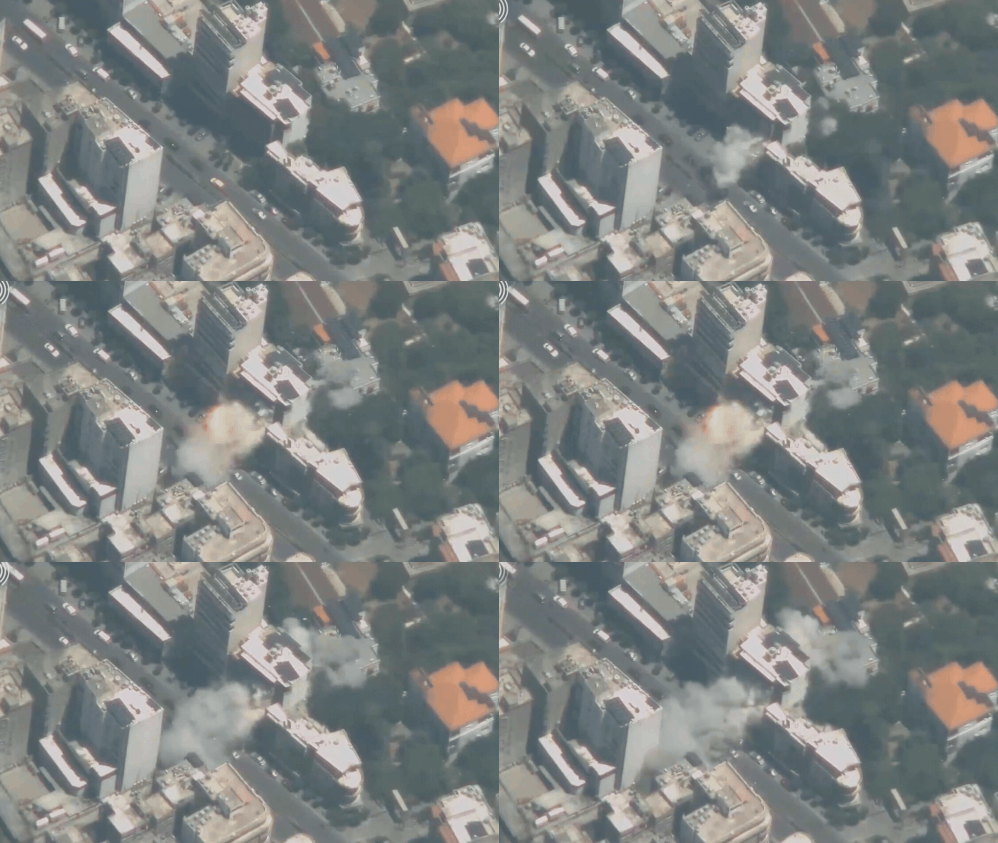
Israeli air strikes on Beirut’s southern suburbs on Sunday killed three people and injured six others, raising fresh concerns that the latest escalation could jeopardise ongoing efforts to secure a US-Iran peace deal. The strike targeted the Dahiyeh district of Beirut, a stronghold of Hezbollah. Smoke was seen rising over the Lebanese capital as rescue workers searched through the rubble of a damaged apartment building.
Israeli air strikes on Beirut’s southern suburbs on Sunday killed three people and injured six others, raising fresh concerns that the latest escalation could jeopardise ongoing efforts to secure a US-Iran peace deal.
The strike targeted the Dahiyeh district of Beirut, a stronghold of Hezbollah. Smoke was seen rising over the Lebanese capital as rescue workers searched through the rubble of a damaged apartment building. Lebanon’s Civil Defence said it recovered three bodies and six wounded people from the site.
In a statement posted on X, the Israeli military said it had carried out “a precise strike” against a Hezbollah command centre in Dahiyeh. The Israeli Air Force said the facility “served the terrorists of the terrorist organization Hezbollah for advancing terror plots against the citizens of the State of Israel and IDF forces operating in southern Lebanon”.
Israel said the strike came after Hezbollah launched aerial targets towards Israeli territory earlier on Sunday. The military added that Hezbollah “continues to advance terror plots against the citizens of the State of Israel and IDF forces” and warned that it would continue operations to remove threats against Israel.
The attack immediately drew condemnation from Iran, which backs Hezbollah and has been engaged in negotiations aimed at ending months of regional conflict. Brigadier General Mohammad Jafar Asadi, deputy commander of Iran’s highest military command, warned that Tehran would respond.
“Without a doubt, these crimes will not go unanswered,” Asadi told Defa Press news agency.
Iranian parliamentary speaker and chief negotiator Mohammad Bagher Ghalibaf suggested the strike had undermined confidence in Washington’s role in the peace process. In a post on X, he wrote: “The Zionists' incursion into Dahiyeh has once again shown that America either lacks the will to fulfill its commitments or the ability to do so. By giving the green light to the regime, you cannot gain concessions. The game of bad cop and good cop is outdated. If you lack the will and ability to fulfill your commitments, speaking of continuing the path is not possible.”
He later added that there was “no point” in continuing talks if the United States could not ensure its commitments were upheld.
The timing of the strike is particularly sensitive. Mediators, including officials from Qatar, have been working to finalise an agreement between Washington and Tehran, with reports suggesting negotiators were nearing a breakthrough. US President Donald Trump had previously indicated that a deal could be signed as soon as Sunday, while also urging Israeli Prime Minister Benjamin Netanyahu to avoid actions that could derail diplomacy.