
Business & Finance
Hegseth insists US had control of Strait of Hormuz all along – despite shipping freeze that has impacted global economy
Key Points
Hegseth insists US had control of Strait of Hormuz all along – despite shipping freeze that has impacted global economy Defense secretary claims U.S. is ‘ready’ to push Iran to reopen the Strait of Hormuz fully once deal is signed - Bookmark - CommentsGo to comments Defense Secretary Pete Hegseth clashed with CBS’s Margaret Brennan on Sunday over whether the U.S. ever established functional military control over the Strait of Hormuz, as the administration once again promised that a peace...
Hegseth insists US had control of Strait of Hormuz all along – despite shipping freeze that has impacted global economy
Defense secretary claims U.S. is ‘ready’ to push Iran to reopen the Strait of Hormuz fully once deal is signed
- Bookmark
- CommentsGo to comments
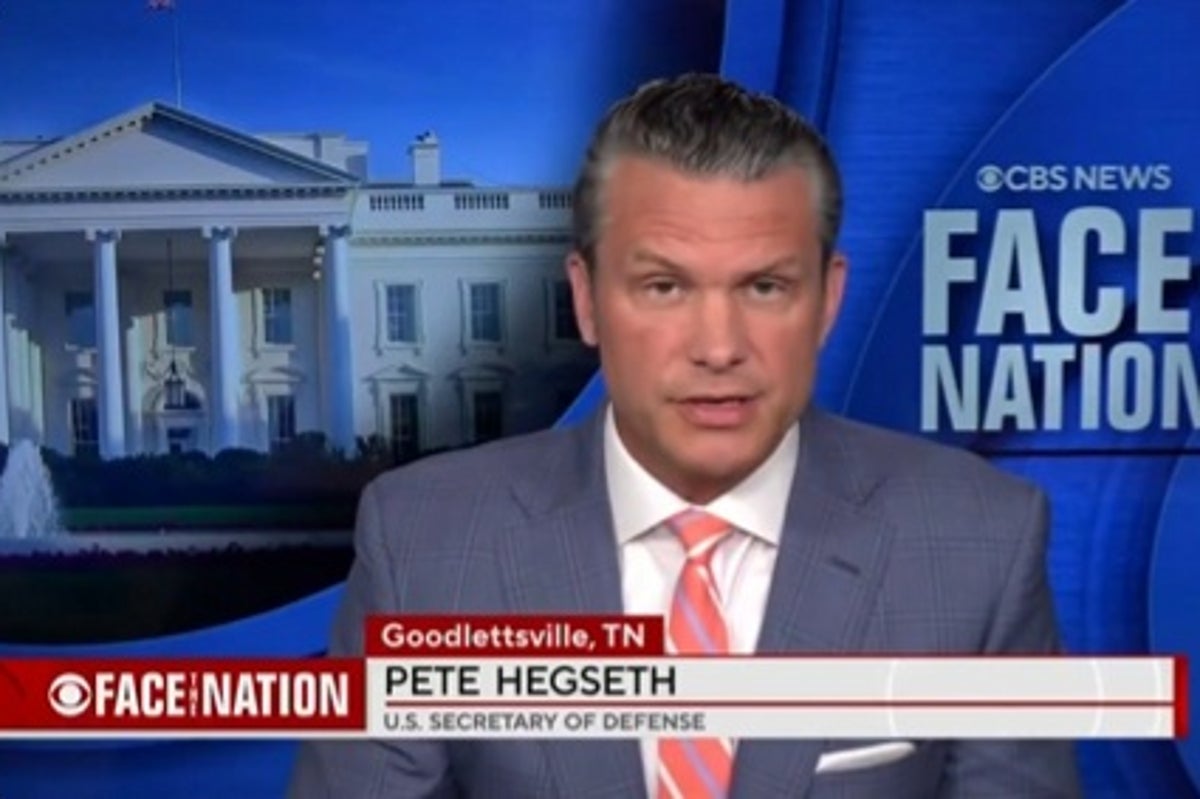
Defense Secretary Pete Hegseth clashed with CBS’s Margaret Brennan on Sunday over whether the U.S. ever established functional military control over the Strait of Hormuz, as the administration once again promised that a peace agreement was hours away from being inked.
For months, the strait’s closure has affected global shipping traffic and put a serious dent in the amount of oil making it to market every month. The resulting fuel price spikes have soared past $4 a gallon across the U.S., but in recent days has begun to decline towards pre-war levels.
Last week, White House officials touted the ability of the U.S. Navy to safely escort ships through the strait, which is often mined by Iranian boats, and protect them from Iran’s aerial drone attacks. Traffic through the strait with naval escorts has now trickled up to about one half of the levels witnessed before hostilities began, providing some relief in the market.
On Sunday, Donald Trump’s self-described secretary of War claimed that U.S. forces had actually controlled the Strait of Hormuz the “entire time”, pointing to the increasing levels of U.S.-escorted traffic through the waterway and the U.S. blockade which had prevented ships thought to be working with Iran from passing through the area.
“Project Freedom never stopped, and we’ve run 125 million barrels of oil through the strait and Iran couldn’t do anything about it. How many ships from Iran have transited our blockade? Zero. We have controlled the strait this entire time,” said Hegseth.
Brennan then countered: “Right, you're going to negotiate with them to re-open it.”
The defense secretary was then asked if the strait would return to pre-war shipping levels, and he demurred.
“We are doing things I can't – we're already talking, we're already doing things I can't talk about on this program, and – and that to ensure that safe passage happens as quickly as possible, so we're all over this,” he said.
“Once this deal is signed, our expectation is that Iran will stop shooting, you know, drones at commercial shipping,” he added.
Jet fuel in particular saw massive supply constraints develop as a result of the strait’s closure. Roughly 1/5th of the world’s supply traveled through the strait pre-closure. Higher jet fuel prices quickly ricocheted through other parts of the economy as air shipping costs climbed overnight; U.S. low-budget airline Spirit Airlines, already on shaky economic footing, was unable to bear the increased strain and folded, declaring bankruptcy overnight and leaving some passengers stranded.
Administration officials headed into Sunday claiming that a deal to extend the ceasefire between the U.S. and Iran for 60 days was just hours away from being signed. Hegseth, in the same CBS interview, said that those plans were on track as of Sunday morning.
“The Deal is scheduled to get signed tomorrow, and immediately after it is signed, the Hormuz Strait is OPEN TO ALL,” the president proclaimed on his Truth Social platform.
But apart from extending the ceasefire and pledging to begin talks, the memorandum of understanding (MOU) supposed to be signed in the hours ahead does not actually address any of the key objectives laid out by the president, Hegseth and other U.S. officials for the war effort beyond re-opening the Strait of Hormuz. The two sides are set to continue negotiations on Iran’s nuclear program, while other stated objectives like seeking out regime change or ending Iran’s ballistic missile capabilities remain unachieved.
Adding to the issue for the White House is the fatigue many Americans and many especially in Washington are feeling as countless promises from top officials that the war will end in days or weeks have fallen by the wayside and the Iran War approaches the end of its fourth month as a conflict.
Reports indicate that the deal will not be signed at a signing ceremony, but rather over a digital meeting.
Other reports indicated Sunday that Iranian officials had not committed to signing the agreement. Iran’s foreign minister also insisted on Friday that dissolution of Iran’s nuclear material would have to occur within Iran’s borders.
Hegseth, in his interview Sunday, rejected the idea of the United Nations being involved in that process but indicated openness to the International Atomic Energy Agency (IAEA)’s involvement. The group passed a resolution last week demanding Iran give it access to conduct inspections at nuclear sites bombarded by U.S. strikes last year.
“You'll have inspections, you'll have oversight, whether they're U.S., whether they're international, but it will be a throttle set by the United States through our negotiators with the military and strength as the guarantor of this. If Iran does not want to comply, then they can deal with the War Department again,” said Hegseth.
Join our commenting forum
Join thought-provoking conversations, follow other Independent readers and see their replies
Comments