
Science
NASA's X-59 reaches speed and altitude milestones ahead of first quiet supersonic flights
Key Points
NASA's X-59 reaches speed and altitude milestones ahead of first quiet supersonic flights The plane will soon be ready to fly over US communities. NASA's X-59 research plane took its first supersonic flight at the beginning of the month, and now it's demonstrated that it can reach the speed and altitude conditions it'll need to achieve for planned trips over US communities in the near future. The X-59 is designed to fly at supersonic speeds without producing a loud sonic boom; instead, it'll...
NASA's X-59 reaches speed and altitude milestones ahead of first quiet supersonic flights
The plane will soon be ready to fly over US communities.
NASA's X-59 research plane took its first supersonic flight at the beginning of the month, and now it's demonstrated that it can reach the speed and altitude conditions it'll need to achieve for planned trips over US communities in the near future. The X-59 is designed to fly at supersonic speeds without producing a loud sonic boom; instead, it'll make a "quiet sonic thump," according to NASA. For now, though, it's flying alongside another research craft that does produce a sonic boom, to obscure whatever noise it makes as it undergoes testing.
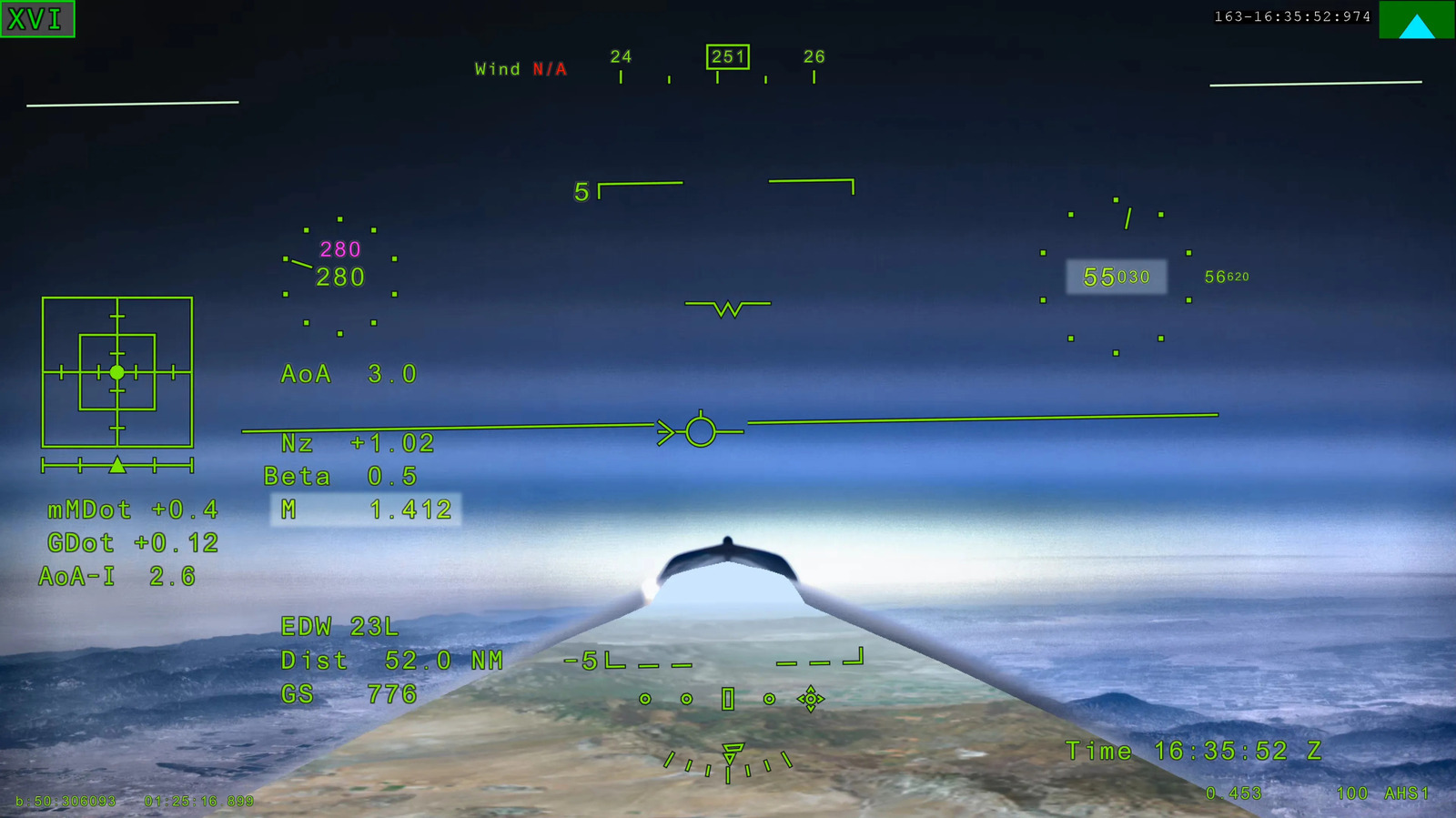
In a test flight on Friday, the X-59 flew Mach 1.4, or about 924 mph, and reached an altitude of 55,000 feet. For the previous flight, on June 5, it hit Mach 1.1.
The space agency says this latest test "was an even more critical step" than the one that preceded it, as it hit key targets that it'll replicate during its Quesst mission. The Quesst mission, which is still months away, will see the X-59 fly over populated areas so NASA can get feedback from the public on what the sonic thump sounded like to listeners on the ground. Before that, though, the plane will go through an acoustic validation phase, in which the team will measure its supersonic acoustic signature to make sure it is indeed breaking the sound barrier without producing a traditional sonic boom.
[Image text:] XVI
163-16:35:52:974
24
251
26
Wind N/A
5
280
280
55030
56620
W
AoA
3.0
NZ
+1.02
Beta
0.5
mMDot+0.4
M
1.412
GDot +0.12
AoA-I 2.6
EDW 23L
Dist
52.0NM
5L
GS
776
Time 16:35:52 Z
b:50:306093
01:25:16.899
453
100AHS1