
World News
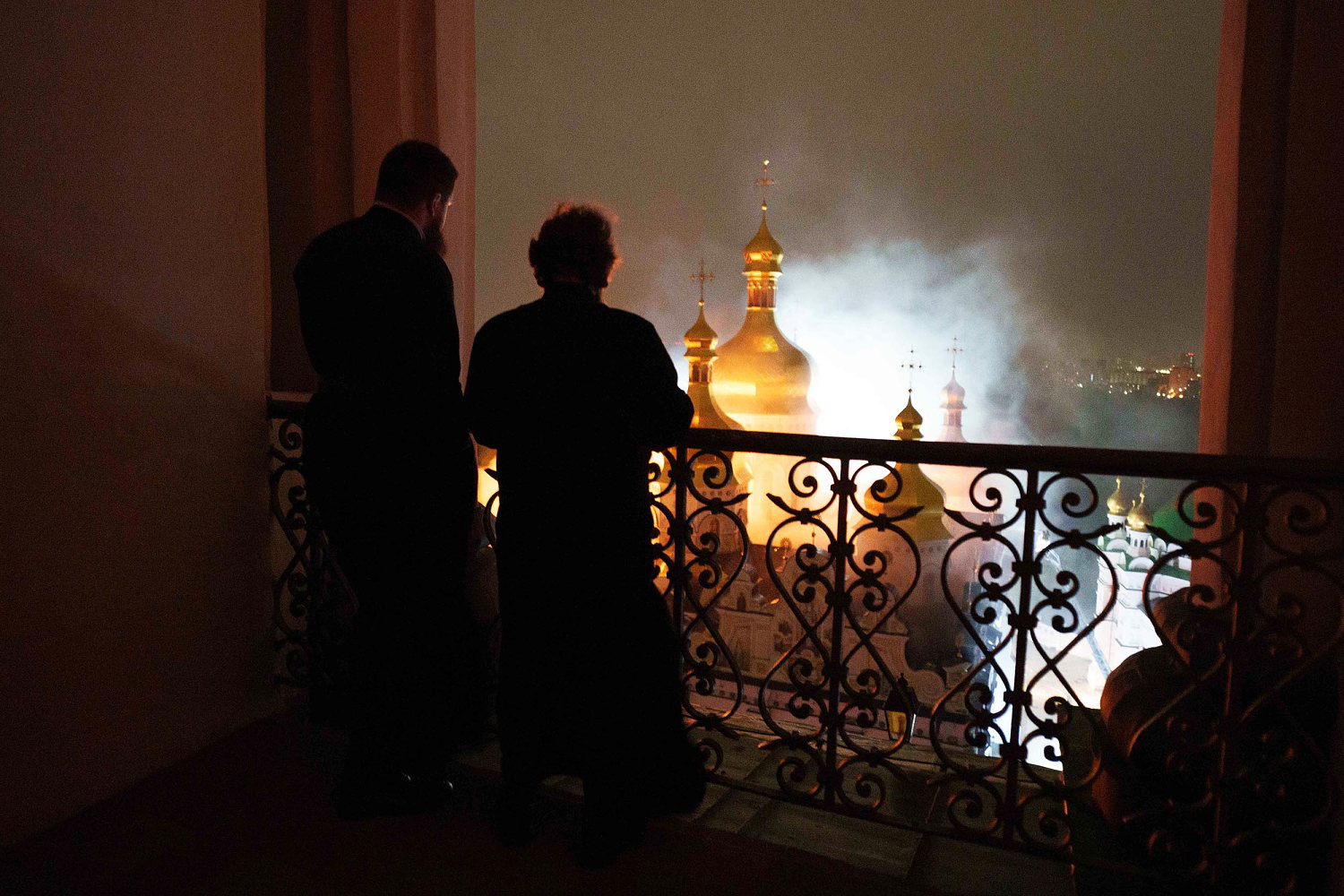
Deadly Russian attacks fuel blaze at centuries-old monastery in Kyiv
Key Points
Deadly Russian strikes across Ukraine overnight sparked an intense blaze at a 1,000-year-old monastery in Kyiv, one of the country’s most important religious and cultural landmarks. The attacks killed at least nine people — four in the capital, and five rescue workers in the northeastern city of Kharkiv who were responding to an earlier Russian strike, officials said early Monday. But the sight of fire and smoke engulfing the Kyiv-Pechersk Lavra, a UNESCO World Heritage site founded in 1051,...
Deadly Russian strikes across Ukraine overnight sparked an intense blaze at a 1,000-year-old monastery in Kyiv, one of the country’s most important religious and cultural landmarks.
The attacks killed at least nine people — four in the capital, and five rescue workers in the northeastern city of Kharkiv who were responding to an earlier Russian strike, officials said early Monday.
But the sight of fire and smoke engulfing the Kyiv-Pechersk Lavra, a UNESCO World Heritage site founded in 1051, drew significant and widespread condemnation.
President Volodymyr Zelenskyy called it “one of Russia’s most serious crimes against Christian culture to date.” He later visited the site.
Russia’s defense ministry denied responsibility, saying that the damage was caused by “a missile from a U.S.-made Patriot” missile system, which Ukraine uses for air defense.
NBC News has reached out to Zelenskyy’s office for comment on the claim, while Yuriy Ihnat, a spokesperson for Ukraine’s Air Force, said that a Russian drone had hit the monastery.
The monastic complex in the heart of Kyiv is one of Ukraine’s most treasured cultural and spiritual landmarks, a centuries-old pilgrimage site that draws visitors from across the country and beyond.
It’s known for its network of churches, bell towers and underground caves. UNESCO described the site as a “masterpiece of Ukrainian art” and placed it on the World Heritage in Danger list after Russia’s full-scale invasion, citing “the threat of destruction the Russian offensive poses.”
Ukrainian Foreign Minister Andrii Sybiha called Russian President Vladimir Putin “the 21st century’s worst barbarian” after the attack on the monastery. The head of the Orthodox Church of Ukraine asked for prayers for the site’s salvation.
Firefighters battled the blaze beneath the towers and golden domes of the monastery’s Dormition Cathedral. Damage at the complex was substantial and a serious fire had broken out, Tymur Tkachenko, the head of the capital’s military administration, said in a Telegram post.
“This is how Russia shows the world its intention to continue the war,” Zelenskyy wrote in a post on X.
President Donald Trump will meet with leaders of the G7 at a summit in France this week, where Ukraine is expected to be high on the agenda. Zelenskyy called on Kyiv’s allies to increase pressure on Moscow and provide additional air defense systems.
French foreign minister Jean-Noel Barrot likened the site to Paris’ Notre Dame cathedral, while European officials signaled the overnight attacks would only intensify renewed efforts to end the war.
Many Ukrainian museums, cultural sites and churches have come under attack from Russian strikes in the war, now more than four years old. Last week, Russia blamed Ukraine for striking and damaging the historic “Defense of Sevastopol” panorama museum in annexed Crimea.
Russia’s defense ministry said its forces carried out what it described as large-scale strikes against military-industrial facilities and military airfields in Kyiv, Kharkiv and Dnipro, adding that all intended targets had been successfully hit.
Meanwhile, a Ukrainian drone attack in Russia’s Tula region, south of Moscow, killed three people, including a 1-year-old child, and wounded three others, regional governor Dmitry Milyaev said in a Telegram post.
In Kyiv, Russian drones and missiles struck every district of the capital, damaging apartment buildings and electricity infrastructure, according to Mayor Vitali Klitschko.
Twenty-three people were injured and around 140,000 residents were left without power. Another five people were injured in Kharkiv, officials said.
The latest wave of attacks came a day after Zelenskyy said he had discussed efforts to end the war with Trump in a phone call Sunday, ahead of this week’s G7 summit.