
UK News
What we know about Palestine Action and why it came to be banned
Key Points
What we know about Palestine Action and why it came to be banned The network, launched in 2020, is said to have 20,000 people on its mailing list - Bookmark The Home Office has secured a significant legal victory after appeal judges upheld the proscription of Palestine Action as a terror group. The decision overturned a previous High Court ruling that deemed the ban “disproportionate”. Thousands of people have been arrested for supporting a proscribed terror group since the ban was...
What we know about Palestine Action and why it came to be banned
The network, launched in 2020, is said to have 20,000 people on its mailing list
- Bookmark
The Home Office has secured a significant legal victory after appeal judges upheld the proscription of Palestine Action as a terror group.
The decision overturned a previous High Court ruling that deemed the ban “disproportionate”.
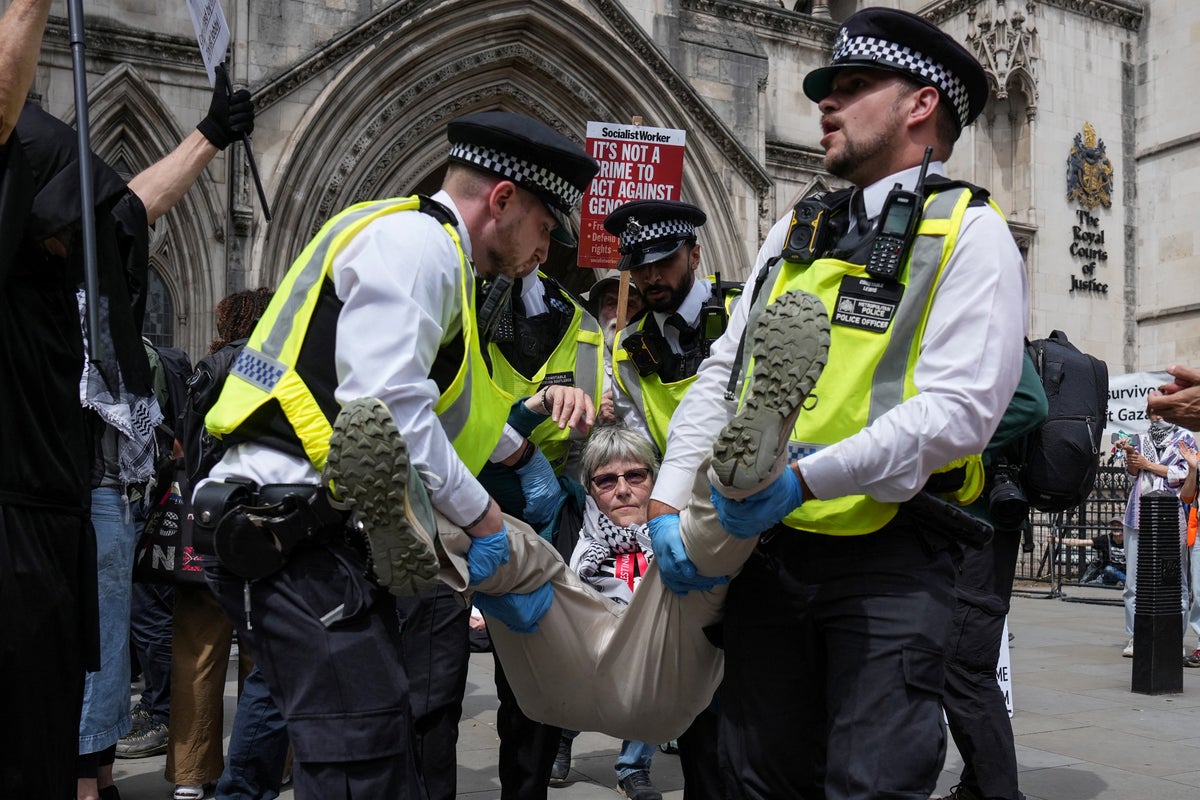
Thousands of people have been arrested for supporting a proscribed terror group since the ban was implemented in July 2025, according to figures from Defend Our Juries.
This is what we know about how Palestine Action emerged as a protest group and why it came to be banned.
2020
The network launched with a protest at Elbit Systems’ UK headquarters in London. Activists broke inside and smeared red paint over the building.
The group’s founders are said to be Huda Ammori and Richard Barnard, but the extent and nature of its membership and organisation is largely unexplained, according to the High Court ruling.
Some 20,000 people are said to be on the organisation’s mailing list.
2022
Palestine Action targeted the Thales defence factory in Glasgow in a high-profile attack.
The group is said to have caused more than £1 million worth of damage, including to parts essential to submarines.
The sheriff, in passing custodial sentences, described the panic among staff, who feared for their safety as pyrotechnics and smoke bombs were thrown in the area where they were evacuating.
2023
Towards the end of the year, the group released The Underground Manual.
Its “direct action” comprises “various types of criminality including acts of criminal damage such as spray painting, damaging buildings or other property and destroying or attempting to destroy property”, the judgment said.
According to the Home Office, the document encourages the creation of cells, provides practical guidance on how to carry out activity against private companies and government buildings on behalf of Palestine Action, and provides a link to a website that contains a map of specific targets across the UK.
The Underground Manual recommends “smashing stuff… with an efficient sledgehammer in your hand” as something that is “very quick” and can cause “quite a bit of damage”.
It suggests targeting expensive equipment or blocking drains with concrete and recommends “breaking in” and damaging contents as “obviously a very effective tactic”.
The manual also encourages those involved to record their actions so Palestine Action can publicise them.
2024
Palestine Action’s activities increased in frequency and severity from the start of the year.
The group targeted sporting events and the homes of politicians and occupied university campuses.
More than 15 branches of Barclays bank across England and Scotland were vandalised by the group’s members.
Barclays’ staff said they had experienced abuse, intimidation, and fear for personal safety while at work, the court’s ruling said.
Three protesters avoided jail after demonstrating outside the house of Prime Minister Sir Keir Starmer.
2025
The group claimed responsibility for action in which two Voyager planes were damaged at RAF Brize Norton.
Palestine Action posted footage of two people inside the base in Oxfordshire.
The clip showed one person riding an electric scooter up to an Airbus Voyager air-to-air refuelling tanker and appearing to spray paint into its jet engine.
Then-home secretary Yvette Cooper announced plans to ban Palestine Action days later.
Speaking on June 23, she said that the vandalism of the two planes, which police said caused an estimated £7 million of damage, was “disgraceful”.
The ban, which came into force on July 5, made it a criminal offence to belong to or support the group, punishable by up to 14 years in prison.
At a High Court hearing at the end of November, Raza Husain KC, for Ms Ammori, said the “suffragettes would have been liable for proscription” if the same legislation had been in force at the beginning of the last century.
Sir James Eadie KC, for the Home Office, told the court that the ban “strikes a fair balance between interference with the rights of the individuals affected and the interests of the community”.
2026
In the High Court decision in February, Dame Victoria Sharp, Mr Justice Swift and Mrs Justice Steyn said the ban was “disproportionate”.
Reading a summary of the decision, Dame Victoria said: “The nature and scale of Palestine Action’s activities falling within the definition of terrorism had not yet reached the level, scale and persistence to warrant proscription.”
But the ban remained in place to allow the Home Office time to appeal.
More than 500 people were arrested at a protest in Trafalgar Square in April, according to the Metropolitan Police, including Massive Attack musician Robert Del Naja.
In June, the Court of Appeal ruled that the decision to ban the group was lawful, overturning the High Court.
In a summary of the decision, Lady Chief Justice Baroness Carr said the High Court had “materially understated the position” when considering how much latitude the home secretary had when deciding whether to proscribe.
She later said that comparisons to groups such as the suffragettes were “seriously flawed”.
Baroness Carr concluded: “It is not, as claimed, a direct action civil disobedience protest group like the suffragettes, operating transparently in the open.
“It is a covert organisation which operates with secret cells to avoid the detection and prosecution of those using violence to destroy property and cause injury.”
Following the judgment, Ms Ammori said that she intended to take the case to the UK Supreme Court, and the European Court of Human Rights if needed.