
More than two decades ago, as a Pentagon strategist during the run-up to the Iraq War in 2003, I found myself asking a question that received far less attention than troop movements, air strikes or invasion plans: What happens after the initial victory?
Military planners focused on defeating Saddam Hussein's regime. I remained concerned about what would follow. Even with access to senior-level planning discussions and classified assessments, I believed too many assumptions were being made about the peace that was supposed to emerge after the fighting stopped.
That same question returned to me Sunday when President Donald Trump announced on Truth Social that the United States and Iran had reached a memorandum of understanding to end nearly four months of war and that he was authorizing the immediate reopening of the Strait of Hormuz and lifting the U.S. naval blockade. A formal signing ceremony is set for Friday, June 19, in Geneva, with Pakistan's Prime Minister Shehbaz Sharif serving as host.
The guns are falling silent. Diplomats are returning to the table. Oil futures dropped 4% and equity markets rallied on the news. Those developments should not be dismissed.
WHAT COMES NEXT IN THE IRAN WAR? WHAT THIS CEASEFIRE WILL AND WON'T DO
But history teaches us that ending a war and securing a durable peace are not the same thing.
Trump deserves credit for bringing this conflict to this point. He was scheduled to arrive in Evian-les-Bains today, June 15, for the G7 summit running June 15- 17 with genuine momentum. Last year he left the G7 in Canada early because of the growing conflict. This year he arrives having announced its tentative end.
TRUMP IS REALIGNING WORLD ENERGY MARKETS AND THE IRAN STRIKES ARE ACTUALLY HELPING
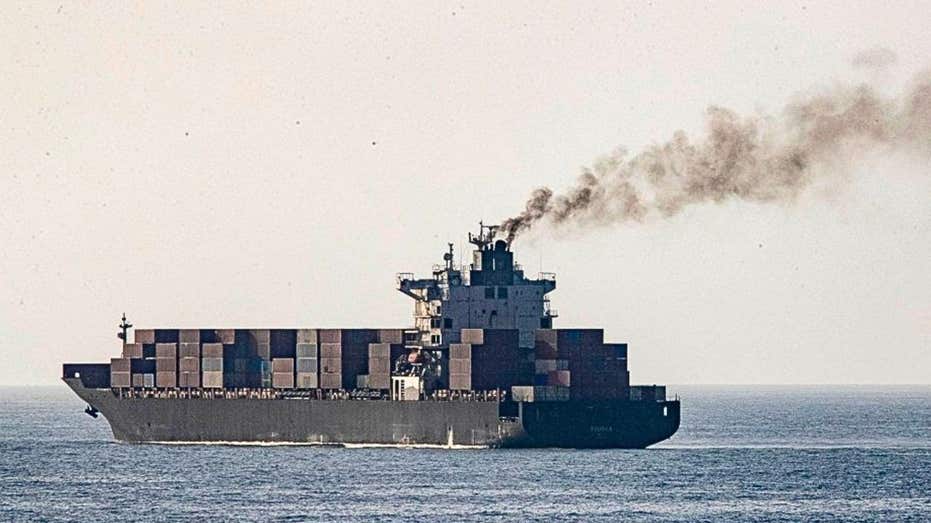
The economic stakes were severe. The Strait of Hormuz has been effectively closed since late February, strangling roughly 20% of global petroleum supplies, some 20 million barrels per day. U.S. inflation reached 4.2% in May, the highest level in three years, driven almost entirely by the energy shock Iran's closure produced.
The International Maritime Organization confirmed at least 46 attacks on international shipping in and around Hormuz since the conflict began. Reopening the strait is the most immediate economic relief available.
German Chancellor Friedrich Merz said he welcomed the agreement reached and that it must be implemented "with determination." He stressed, "The Strait of Hormuz must be opened to free navigation permanently and without any restrictions" and said Iran must "verifiably" discontinue its military nuclear plans. Even allies who questioned the military campaign cannot credibly dismiss what has been accomplished.
Trump has scheduled bilateral meetings at the G7 with Macron and with leaders from Egypt, Qatar, the UAE and India, the regional partners whose quiet cooperation made this agreement possible. Qatar and Pakistan served as primary mediators; Saudi Arabia provided critical support. That coalition is a genuine diplomatic achievement.
Yet Americans should view this agreement for precisely what it is: a strategic pause.
TRUMP’S IRAN WAR NOW COMES DOWN TO ONE BRUTAL QUESTION: WHAT COMES NEXT?
That is not a criticism. A strategic pause may be exactly what is needed at this moment. But a pause is not a solution.
The Memorandum of Understanding (MOU) extends the ceasefire for 60 days, including in Lebanon, during which nuclear negotiations are to be conducted. A senior administration official confirmed that Iran has committed "indefinitely to never procure or develop nuclear weapons," a pledge that, if verified and enforced, would exceed what the Obama-era Joint Comprehensive Plan of Action ever achieved. Sanctions relief is tied to compliance. Those terms, on paper, are strong.
The ink was barely dry before contradictions surfaced. Iranian state media contradicted U.S. officials on the Hormuz terms, claiming Iran retains the right to charge transit fees. The international shipping industry warned it "still considers it very risky for ships to commence transits" through the strait despite the announced deal. The actual MOU text has been closely held; European allies told CNN they are working from diplomatic conversations rather than the document itself.
NETANYAHU'S ISRAEL GRAPPLES WITH TRUMP-IRAN DEAL AS DETAILS REMAIN UNCLEAR
The Lebanon dimension is the most immediate complication. Israel was not party to the negotiations. Defense Minister Israel Katz announced Monday the IDF will not withdraw from Lebanon, Syria or Gaza under any deal terms, and Prime Minister Benjamin Netanyahu reportedly told Trump directly that Israel does not consider itself bound by the Lebanon provisions. Hezbollah fired drones into northern Israel on Sunday even as the deal was announced.
The agreement does not resolve the crisis. It pauses the crisis and creates an opportunity to resolve it.
ANY NEW IRAN DEAL SHOULD BE JUDGED BY RESULTS, NOT VICTORY-LAP RHETORIC
What should Americans watch?
First, does Hormuz remain genuinely open, not simply unblockaded, but trusted by commercial shipping and transited by tankers at normal volume? Iran's contradictory statements on tolls, the need to clear mines, and the shipping industry's stated reluctance to resume transits all suggest the reopening will be contested.
Second, does Iran accept verifiable, permanent limits on its nuclear activities, confirmed decommissioning of enrichment infrastructure and full inspector access? Trump said Saturday the deal would eliminate Iran's enriched uranium stockpile. His Sunday announcement omitted any reference to the nuclear program. That gap matters.
Third, does regional violence actually decline, or does it migrate from one front to another? Israel's stated refusal to honor the Lebanon provisions is the kind of discrepancy that has collapsed agreements before.
Fourth, does this agreement survive the 60-day window and produce a second, binding accord? Many ceasefires endure for weeks. Far fewer produce lasting settlements. The 2015 Joint Comprehensive Plan of Action, which Tehran ultimately subverted, is the relevant precedent. Hope is appropriate. Naïveté is not.
MORNING GLORY: WHAT WILL DONALD TRUMP'S LEGACY BE AS A WARTIME PRESIDENT?
Success is not measured by a signing ceremony in Geneva, favorable market reactions, or a post on Truth Social. Success is measured by whether the underlying causes of the conflict are addressed in ways that reduce the likelihood of a future war.
CLICK HERE FOR MORE FOX NEWS OPINION
As I learned during years in the Pentagon, military campaigns can achieve remarkable results. The harder challenge is always securing the peace that follows. President Dwight D. Eisenhower understood this after the Korean War. We learned it painfully after taking Baghdad in April.
President Trump may ultimately look back on this agreement as one of his most significant foreign policy achievements. I genuinely hope he can.
He was set to arrive at the G7 today with the wind at his back. The question that will define his legacy is not whether he ended the shooting. It is whether the architecture built in these next 60 days proves stronger than Tehran's ambitions, Israel's independent judgment, and the region's long history of swallowing diplomatic frameworks whole.
The shooting may be stopping. The real test is only beginning.