
Politics
JD Vance pushed Trump to invoke Insurrection Act to crush Minneapolis protests, book claims
Key Points
JD Vance pushed Trump to invoke Insurrection Act to crush Minneapolis protests, book claims VP reportedly urged the president to consider sending in US troops as White House officials feared widespread blowback - Bookmark - CommentsGo to comments Top White House officials reportedly debated whether Donald Trump should invoke the Insurrection Act after federal agents killed two protesters in Minnesota, but feared the political and public relations blowback over images of U.S. troops on...
JD Vance pushed Trump to invoke Insurrection Act to crush Minneapolis protests, book claims
VP reportedly urged the president to consider sending in US troops as White House officials feared widespread blowback
- Bookmark
- CommentsGo to comments
Top White House officials reportedly debated whether Donald Trump should invoke the Insurrection Act after federal agents killed two protesters in Minnesota, but feared the political and public relations blowback over images of U.S. troops on American streets.
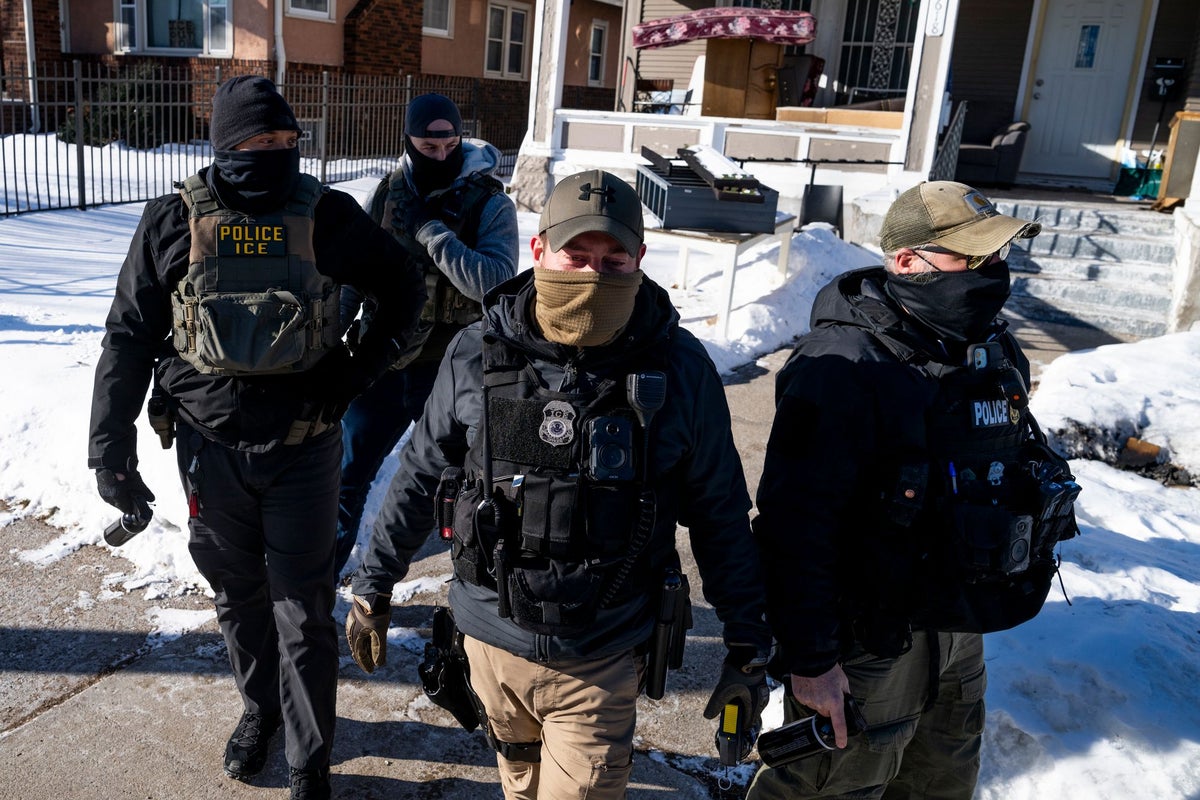
The president repeatedly threatened to invoke the law in his nationwide campaign to rapidly deport tens of thousands of people from Democratic-led cities patrolled by hundreds of masked and heavily armed officers.
But discussions reportedly came to a head after federal immigration agents fatally shot Renee Good and Alex Pretti during January’s demonstrations in Minneapolis, according to Maggie Haberman and Jonathan Swan of The New York Times for their forthcoming book Regime Change: Inside the Imperial Presidency of Donald Trump.
Days after Pretti was killed, Vice President JD Vance reportedly walked into the office of White House chief of staff Susie Wiles to make the case that the president should send a message to protesters by invoking the Insurrection Act.
Trump’s opponents warned for months that a surge of militarized Homeland Security officers would only stir up more unrest, giving the president an opening to invoke the Insurrection Act to deploy active-duty troops into cities run by his political enemies.
A previously unreported confidential memo was circulated among White House officials in October 2025 as the president publicly declared his right to invoke the Insurrection Act to crush protests against his mass deportation efforts.
White House staff secretary Will Scharf, who drafted October’s memo, reportedly argued that the law did not fit the circumstances on the ground.
Deputy chief of staff Stephen Miller, an architect of the Trump administration’s anti-immigrant agenda, argued that the boundaries of the law had not yet been tested, Haberman and Swan reported.
“That’s not true, Stephen,” Scharf replied, according to Haberman and Swan. “It’s very prescriptive.”
Pressed by then-White House deputy chief of staff James Blair what invoking the law would accomplish, the room reportedly went quiet.
Wiles, according to Haberman and Swan, told her colleagues that the federal surge was designed to target immigrants who “wrongly” received government benefits but had drifted “so far off that mission.” White House communications director Steven Cheung also feared a public relations mess.
The last time the Insurrection Act was invoked was in 1992, when then-President George H.W. Bush sent active-duty troops into Los Angeles after citywide unrest followed the acquittal of four white officers in the assault of Rodney King.
The law is intended to combat a crisis that is beyond the scope of civilian law enforcement; officials in cities that have seen hundreds of federal agents on their streets have argued that state and local police are well-equipped to handle protests, and that the administration’s characterization of American cities torn apart by protests is dangerously false.
Trump told reporters last September that “we have an Insurrection Act for a reason.”
“I do that if people were being killed ... and courts were holding us up, or governors or mayors were holding us up, sure, I do that,” he told reporters at the White House. “I mean, I want to make sure that people aren’t killed. We have to make sure that our cities are safe.”
Trump threatened to invoke the Insurrection Act again in the days after an Immigration and Customs Enforcement agent fatally shot Good.
He commanded “corrupt politicians” to stop “professional agitators and insurrectionists” from “attacking” ICE agents “who are only trying to do their job.”
“I will institute the INSURRECTION ACT, which many Presidents have done before me, and quickly put an end to the travesty that is taking place in that once great State,” he wrote on Truth Social in January.
In his October memo, Scharf wrote that the Insurrection Act is a “break-the-glass” exception to the domestic use of American troops.
“Significantly,” the Insurrection Act isn’t needed to “utilize military resources in many relevant contexts,” Scharf wrote. National Guard troops can generally be used to “protect federal personnel, property and functions, and military resources can also be utilized to assist civilian law enforcement forces in many instances,” he added.
Scharf also warned that any invocation of the Insurrection Act would likely draw the administration into yet another series of extensive legal battles, which could negate any “advantage” from the president’s use of the law.
His memo was at least the second drafted for officials in Trump’s White House in an apparent attempt to curb his use of potentially illegal orders.
An earlier memo, dated April 29, appeared to address concerns about a plan to suspend habeas corpus, a fundamental due process right enshrined in the constitution to allow those detained by the government to challenge their imprisonment.
“Members of the Administration often have conversations about many different lawful options to implement the President’s agenda — with the President always being the ultimate decider,” White House spokeswoman Abigail Jackson told The Independent.
Trump has long sought to use federalized troops under his command.
In his first administration, he saw an opportunity to deploy thousands of active-duty troops to American streets after the police murder of George Floyd galvanized protests across the country in 2020.
Trump ultimately did not invoke the Insurrection Act that year, reportedly at the guidance of officials who are no longer in his circle.
His second administration, however, appears to be aiming to avoid what Trump sees as a mistake from his first term.
The president ultimately deployed federalized National Guard troops to several states, while legal challenges from state and local officials accused the administration of using American streets for political theater.
In December, the Supreme Court blocked the administration from sending the military into Chicago.
The justices appeared to reject the administration’s argument that protests against the president’s anti-immigration agenda are so volatile that only the National Guard, under Trump’s orders, can stop them.
Trump quietly withdrew those troops after a series of court rulings struck down the president’s plans.
A month before those deployments ended, Trump said on his Truth Social that Democratic-led cities would be “GONE” if it wasn’t for federal forces stepping in.
“We will come back, perhaps in a much different and stronger form, when crime begins to soar again,” he wrote. “Only a question of time!”
Join our commenting forum
Join thought-provoking conversations, follow other Independent readers and see their replies
Comments