
Politics
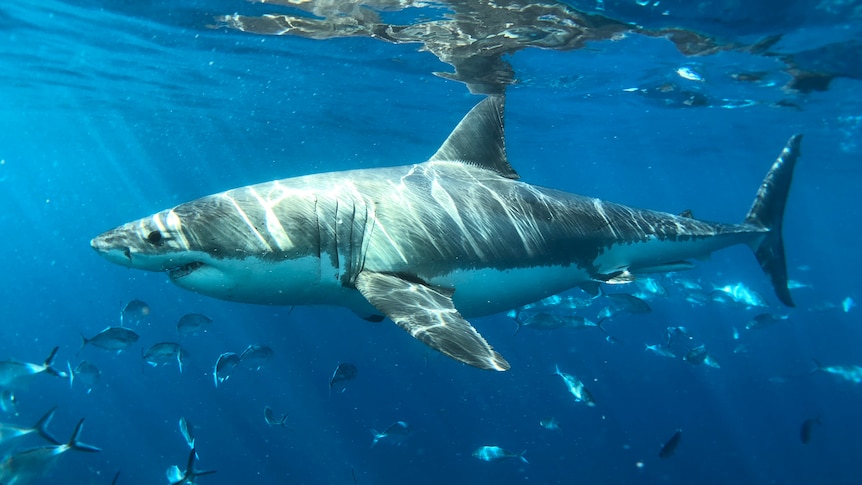
Shark culls among 'worst things' for beach safety, marine biologist says
Key Points
Shark cull will not improve beach safety or reduce attacks, marine biologists say Tue 16 Jun 2026 at 6:51am In short: Marine biologists have pushed back against a potential shark cull following an attack at a Sydney beach last weekend. The NSW government has ruled out culling great whites, but not bull sharks which are common in the city's harbour. Coogee Beach shark attack victim Leah Stewart remains in a critical but stable condition after multiple surgeries.
Shark cull will not improve beach safety or reduce attacks, marine biologists say
Tue 16 Jun 2026 at 6:51am
In short:
Marine biologists have pushed back against a potential shark cull following an attack at a Sydney beach last weekend.
The NSW government has ruled out culling great whites, but not bull sharks which are common in the city's harbour.
What's next?
Coogee Beach shark attack victim Leah Stewart remains in a critical but stable condition after multiple surgeries.
Culling sharks would not reduce the risk of attacks because of their migratory behaviour, a marine biologist says, as debate reignites on how to make Sydney beaches safer.
Leah Stewart, 35, remains in a critical but stable condition after she was bitten by a suspected white shark in Sydney's east on Saturday.
The local mother and teacher has undergone multiple surgeries for "severe and life-threatening" injuries, a statement released by the family on Monday said.
Since the incident at Coogee Beach, the state government has ruled out culling the protected migratory great white but not bull sharks.
New South Wales Premier Chris Minns on Monday said they posed a "real threat" to people in the harbour.
"They're not a protected species and we're currently undertaking a head count [to see] whether there's been an increase in the harbour as a result of a healthier harbour and more fish stocks within that tributary [and] what it means for swimming and recreating," he said.
"But a cull of great whites is not going to be the answer to this and we're not contemplating that."
'Stimulates feeding behaviour'
Humane World for Animals marine biologist, Lawrence Chlebeck, pushed back against calls for a potential cull, saying it would not work because some species follow migration patterns.
"Bull sharks and tiger sharks, they are on the entire east coast, white sharks cross the Tasman to New Zealand and come back this way," he said.
"Culling is predicated on an idea that you can reduce a local population but with these species that are highly highly migratory, you can't reduce that local population."
Mr Chlebeck said "any method by which we would cull sharks inherently attracts sharks closer in and stimulates feeding behaviour".
"So this is chumming the water and fishing, baited drumlines, shark nets that entangle other wildlife," he said.
"All of these things are exciting sharks, so really the worst thing you can do for public safety is introduce methods that kill more animals right off our beaches."
He suggested expanding the surveillance and tagging programs would help protect the public, in combination with education.
"And expanding those drone programs to weekends during the winter time, we had a nice sunny weekend here in June, that would go a long way to reducing that risk on our beaches," Mr Chlebeck said.
"We can protect wildlife and the public at beaches. It's not one or the other."
Climate change impacting shark behaviour
James Cook University professor of marine biology, Jodie Rummer, said there was "no scientific evidence that culling programs work to remove problematic animals".
"I don't agree with culling programs across the board," she said.
"I think that we've had enough lessons in all of science and all of biology that show us that when we remove predators from an ecosystem then it disrupts the whole ecosystem … and it takes us decades, if not a century, to fix it."
She said shark culls "don't reduce" the long-term risks of shark attacks.
"If we start changing the pattern in which they're moving then that's going to create another problem in the system," Professor Rummer said.
The community was surprised by Saturday's attack because it did not happen at dawn or dusk, the usual times when sharks are active, and it was a sunny winter's day.
Professor Rummer said climate change was impacting shark behaviour.
"It's not that there are more sharks in the water, it's just that they're in different places at different times than they have [been] historically,"she said.
"If the water is still warm and still attracting a lot of nutrients and a lot of prey, then of course sharks are going to be there."
She said instead of a cull, the issue of warming waters needed to be addressed.
"Then maybe we can cordon off those areas a little bit better and have better awareness as to when we should be in the water and when we should not be," Professor Rummer said.