
Entertainment
Commentary: To conserve or demolish? Singapore needs a heritage middle ground
Key Points
Commentary: To conserve or demolish? Singapore needs a heritage middle ground Architectural, historical and social considerations are often collapsed into a single yes-or-no question: Does a building qualify for conservation? But heritage rarely works so neatly, argues SUTD’s Yeo Kang Shua.
Commentary: To conserve or demolish? Singapore needs a heritage middle ground
Architectural, historical and social considerations are often collapsed into a single yes-or-no question: Does a building qualify for conservation? But heritage rarely works so neatly, argues SUTD’s Yeo Kang Shua.
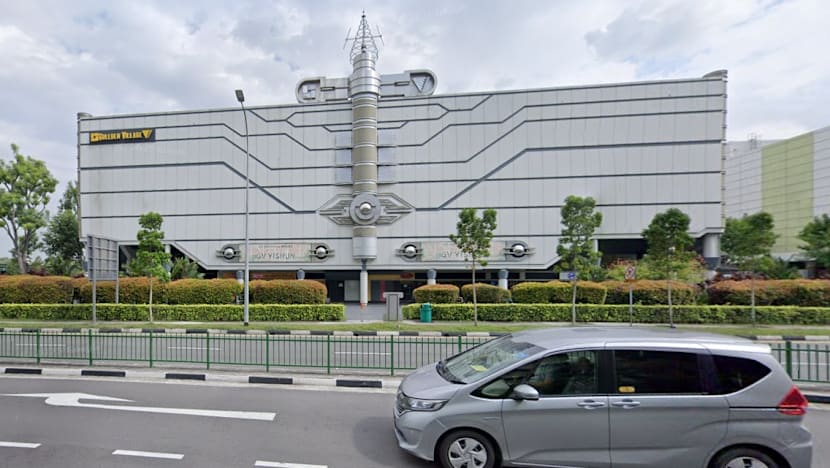
SINGAPORE: When Yishun 10 opened in May 1992, it looked like nothing else in the heartland.
Its architect, Geoff Malone, a film buff who founded the Singapore International Film Festival, was briefed to design something like “a rocket ship which had landed in Yishun from outer space”. He delivered: A metallic box wrapped in red, studded with strips of red, orange and blue neon.
A renovation in 2010 gave the building a more muted grey palette but its striking design is one reason why it sits on heritage non-profit Docomomo Singapore’s list of 100 significant modernist buildings.
Its deeper significance is social. With ten cinema halls under one roof, it brought cinema into the heartland, attracting more than three million visitors by the end of 1993. Watching films stopped being a special trip into town and became part of everyday life.
Now, Singapore’s first multiplex could soon make way for a new residential and commercial development. The proposed development had some members of the public lamenting the loss of a long-time neighbourhood landmark, yet this value will not lead to retention.
Yishun 10 is not alone. For example, after independence, the Housing and Development Board built a swimming complex in nearly every new town. For a generation, these pools were where we learned to swim and spent our weekends.
They had architectural merits too. The Buona Vista Swimming Complex, which closed in 2014 after 38 years, had a daring 100-metre concrete roof carried on just eight columns. The Bedok Swimming Complex, which drained its pools for good in 2017, was a Singapore Institute of Architects design award winner in 1983.
These are the very spaces in which social memories were formed, yet like many other post-independence architectures, these pools were judged too young to be conserved and slipped away sooner than we thought.
This is a gap Singapore must now confront. Our conservation system works well for buildings of obvious architectural or historic importance. Still, it is far less equipped to deal with those that may have contributed to Singapore’s architectural history and represented the nation’s coming-of-age years, but deemed not monumental or iconic enough.
These everyday structures, through which ordinary life unfolds, are the missing middle of our built heritage.
A BROAD DEFINITION, NARROW OUTCOMES
To be sure, Singapore’s heritage laws recognise a wide spectrum of value. The Planning Act covers buildings of special architectural, historic or aesthetic interest. The Preservation of Monuments Act goes further, citing cultural, artistic and symbolic significance.
Meanwhile, some major public projects undergo Heritage Impact Assessments, which examine how proposed works may affect heritage sites and values. There are also separate incentive schemes that encourage adaptive reuse or partial retention in selected areas.
However, these mechanisms remain selective and fragmented. They do not yet provide a consistent, legible and predictable pathway for the many buildings that sit outside formal conservation lists but still hold genuine value.
Today, architectural, historical and social considerations are often collapsed into a single yes-or-no question: Does a building qualify for conservation?
Heritage rarely works so neatly. A building may not warrant full conservation yet still deserve careful adaptation or partial retention. It is time to move from a rigid threshold to a more graduated approach. The challenge is not only to identify value, but to make retention feasible for owners when full conservation is neither practical nor necessary.
Equally important is reforming how building codes are applied to older structures. Requirements for structural loading, fire safety and accessibility are necessary and non-negotiable, but they are largely calibrated for new construction.
When applied to existing buildings, they can impose substantial costs and spatial compromises. In many cases, these tip the balance decisively towards demolition.
That said, Singapore’s regulatory system is not wholly prescriptive. Fire safety already allows performance-based design in appropriate cases where fire engineering analysis can demonstrate that the intent of the Fire Code is met.
More broadly, building regulations also recognise that performance requirements may be satisfied through alternative solutions. Extending this calibrated logic more systematically to adaptive reuse would not weaken safety. Instead, it would allow for more proportionate responses that balance risk, cost and heritage value.
Retention is no longer only a cultural question, but an environmental one too. Demolition and reconstruction carry significant material costs, while adaptive reuse extends the life of existing structures.
FROM THRESHOLD TO GRADATION
One practical step is a clearer managed adaptive reuse pathway for buildings that show social, historical or urban value but fall short of full conservation. This could allow selective retention, partial redevelopment and design-led integration, supported by tailored incentives and more predictable approvals.
How should we define social or urban value?
Yishun 10 offers an answer - one that lies less in rare materials or design pedigree than in what the building did to democratise cinemagoing, act as an anchor for shared memory and giving a young town a landmark.
The old National Library at Stamford Road makes the same point from the other direction. Demolished in 2004 to make way for a road tunnel, the red brick building is still mourned online more than two decades on. Its loss showed that a place can hold immense social value, as a space of learning and growing up, even when it falls outside the usual architectural thresholds.
Redevelopment, when done poorly, may renew the facilities yet sweep away the original form, and with it memories and meaning. Done well, it keeps the old alive within the new.
The reworked Delta Sport Centre, first completed in 1979 as one of the first HDB sports complexes in Singapore, shows how. Its architects respected the original structures, which carry no heritage protection, while adding new facilities and a public route through the site. It won Design of the Year at the 2025 President’s Design Award.
A CONVERSATION WORTH HAVING
Our statutes already recognise a broad spectrum of heritage value, but what is missing is a framework that can act on that spectrum consistently.
We do not need to save every building but we do need a system that weighs trade-offs honestly, offers owners viable paths to retention where it makes sense, and carries forward the physical traces of our nation-building era.
That begins with how we regard the everyday buildings around us. Their value may not be the same kind of heritage as nineteenth-century shophouses, colonial civic buildings or national monuments. It simply lies in a different register: in everyday life, institutional memory, social use and the lived experience of a rapidly modernising city.
In a city built on transformation, the real question is not only what we conserve or demolish, but what we choose to let endure, and in what form.
Yeo Kang Shua is Associate Professor of Architectural History, Theory and Criticism, and Architecture and Sustainable Design at the Singapore University of Technology and Design.
Singapore (LOCATION)
SUTD (ORG)
Yeo Kang Shua (PERSON)
Yishun (PERSON)
Geoff Malone (PERSON)
buff (PERSON)
the Singapore International Film Festival (ORG)
Docomomo Singapore’s (ORG)
the Housing and Development Board (ORG)
The Buona Vista Swimming Complex (ORG)
The Bedok Swimming Complex (ORG)
a Singapore Institute of Architects (ORG)
The Preservation of Monuments Act (ORG)
Heritage Impact Assessments (ORG)