
Science
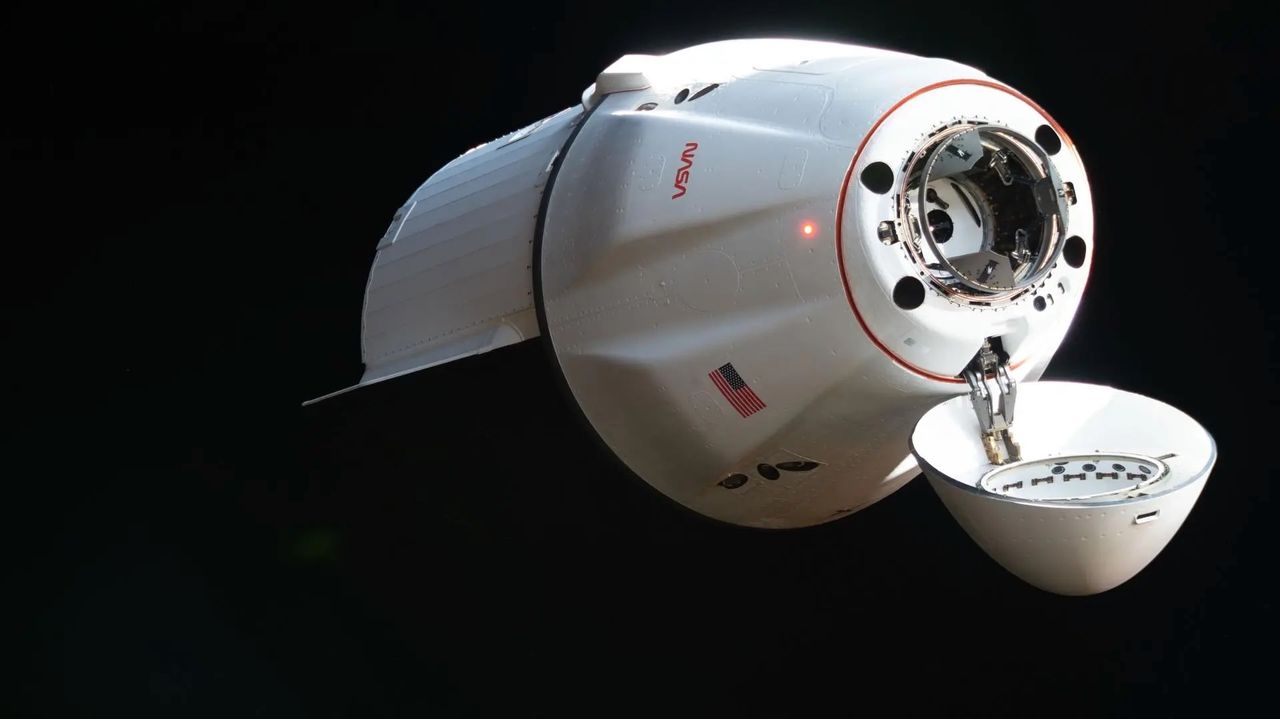
Watch SpaceX Dragon cargo capsule head home to Earth today
Key Points
Watch SpaceX Dragon cargo capsule head home to Earth today A SpaceX Dragon cargo spacecraft is scheduled to begin its journey back to Earth today (June 16), and you can watch the action live. The robotic Dragon will undock from the International Space Station (ISS) today at around 12:05 p.m. EDT (1605 GMT). If all goes to plan, the vehicle will splash down in the Pacific Ocean off the coast of California on Wednesday (June 17) at around 8:08 a.m. EDT (1208 GMT).
Watch SpaceX Dragon cargo capsule head home to Earth today
A SpaceX Dragon cargo spacecraft is scheduled to begin its journey back to Earth today (June 16), and you can watch the action live.
The robotic Dragon will undock from the International Space Station (ISS) today at around 12:05 p.m. EDT (1605 GMT). If all goes to plan, the vehicle will splash down in the Pacific Ocean off the coast of California on Wednesday (June 17) at around 8:08 a.m. EDT (1208 GMT).
You can watch the undocking live here at Space.com, courtesy of NASA, or directly via the space agency. Coverage will start at 11:45 a.m. EDT (1545 GMT). Wednesday's splashdown will not be webcast.
The Dragon launched atop a SpaceX Falcon 9 rocket on May 15, kicking off CRS-34, the company's 34th commercial resupply services flight for NASA.
The capsule arrived at the ISS two days later, delivering nearly 6,500 pounds (2,950 kilograms) of food, scientific hardware and other equipment to the astronauts aboard the orbiting lab.
The freighter will haul thousands of pounds of cargo back home as well, "carrying samples that could shape future space exploration and life on Earth," NASA officials wrote in a June 12 media advisory.
"Research returning includes bioprinted organ and cartilage tissue, data on improving cryogenic fuel storage for future space missions, and DNA‑inspired materials to develop new cancer treatments," they added. "The returning hardware includes an ocular imaging device used to monitor crew members' eye health, an absorbent bed that filters trace contaminants from cabin air, and a separator pump from the waste and hygiene compartment."
Dragon is the only operational ISS cargo spacrecraft that can survive the fiery downward trip through Earth's atmosphere.
The other active freighters — Northrop Grumman's Cygnus, Russia's Progress and Japan's HTV-X — are all expendable, burning up in our air at the end of their missions.
You must confirm your public display name before commenting
Please logout and then login again, you will then be prompted to enter your display name.
Michael Wall is the Spaceflight and Tech Editor for Space.com and joined the team in 2010. He primarily covers human and robotic spaceflight, military space, and exoplanets, but has been known to dabble in the space art beat. His book about the search for alien life, "Out There," was published on Nov. 13, 2018. Before becoming a science writer, Michael worked as a herpetologist and wildlife biologist. He has a Ph.D. in evolutionary biology from the University of Sydney, Australia, a bachelor's degree from the University of Arizona, and a graduate certificate in science writing from the University of California, Santa Cruz. To find out what his latest project is, you can follow Michael on Twitter.