
World News
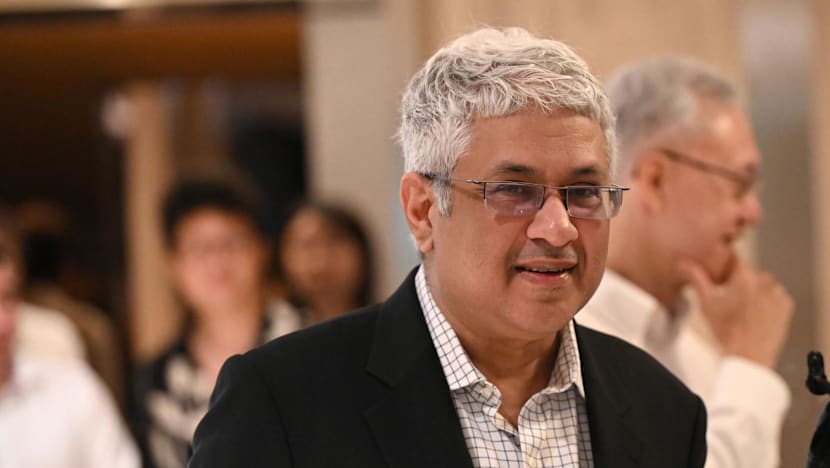
Inclusive justice goes beyond the courtroom, says Pro Bono SG chairman
Key Points
To achieve this, legal support often has to extend beyond lawyers alone to include social workers, caregivers, psychiatrists and other support networks. These professionals can help clients communicate their experiences, while also giving lawyers a better understanding of the conditions their clients live with. That philosophy is at the heart of the Inclusive Justice Law Centre, said Mr Dhillon.
To achieve this, legal support often has to extend beyond lawyers alone to include social workers, caregivers, psychiatrists and other support networks.
These professionals can help clients communicate their experiences, while also giving lawyers a better understanding of the conditions their clients live with.
That philosophy is at the heart of the Inclusive Justice Law Centre, said Mr Dhillon. Rather than operating from a single location, the centre will deliver legal services through partner agencies embedded in the community.
It is currently in discussions with about 20 organisations, including social service agency MINDS, to identify several partner sites across Singapore.
Legal specialists will rotate across these locations, working alongside social service professionals who already support clients and understand their needs.
BUILDING TRUST TAKES TIME
Mr Dhillon acknowledged that working with individuals with invisible disabilities can require greater patience and adaptability from legal professionals.
Aside from communication challenges, they may experience anxiety or difficulties trusting unfamiliar individuals, making the process of gathering information more complex than in conventional legal cases.
"When a person has an invisible disability … they may not be used to talking to you the way you're used to talking to other clients or witnesses,” he said.
“You need to go that extra mile to win trust. You need to find patience. So, it's adapting your style, perhaps giving more of your free time.”
While the work can be demanding, Mr Dhillon said it is also deeply rewarding.
“You feel very rewarded by what you do, the gap you fill, the difference you make, not just to the individual … it has a ripple effect for their family. It goes on and it can change lives,” he said.
RESPONSIBILITY BEYOND THE COURTS
Mr Dhillon stressed that creating a more inclusive justice system is not solely the responsibility of lawyers and judges.
He expressed concerns about the growing tendency to film unusual incidents in public and post them online without understanding the circumstances behind a person's behaviour.
He urged the public to be compassionate and consider whether someone may be experiencing a mental health episode or disability-related crisis.
“(For) example – a person might have bipolar (disorder) and if he is going through psychosis, he may be violent. And it’s going (be) way harder for that person to heal when he comes to and realises that this is now public,” he said.
Mr Dhillon said public education is crucial in helping Singaporeans better understand invisible disabilities and respond with empathy rather than judgment.
At the same time, he emphasised that disabilities do not excuse wrongdoing or erase the harm suffered by victims. However, he argued that a person's condition must be properly considered when determining an appropriate sentence.
“There's no justice if you don't take into account the condition, if you don't take time to understand that when (this person) committed that crime, that wasn't him or her, that was the illness,” he said.
In some cases, treatment and rehabilitation may be more appropriate than imprisonment, he added.
“The medical and rehabilitative aspects must come in as a matter of justice. That's critical for the judge to weigh in when deciding what's the appropriate sentence,” he said.
Ultimately, Mr Dhillon sees inclusive justice as a reflection of the kind of society Singapore aspires to be.
“In very affluent Singapore, we have done very well as a nation. But what does happiness, progress and prosperity as a nation really mean?” he asked.
“Being able to look out for those who are the least among us is going to make us much stronger.”