
Business & Finance
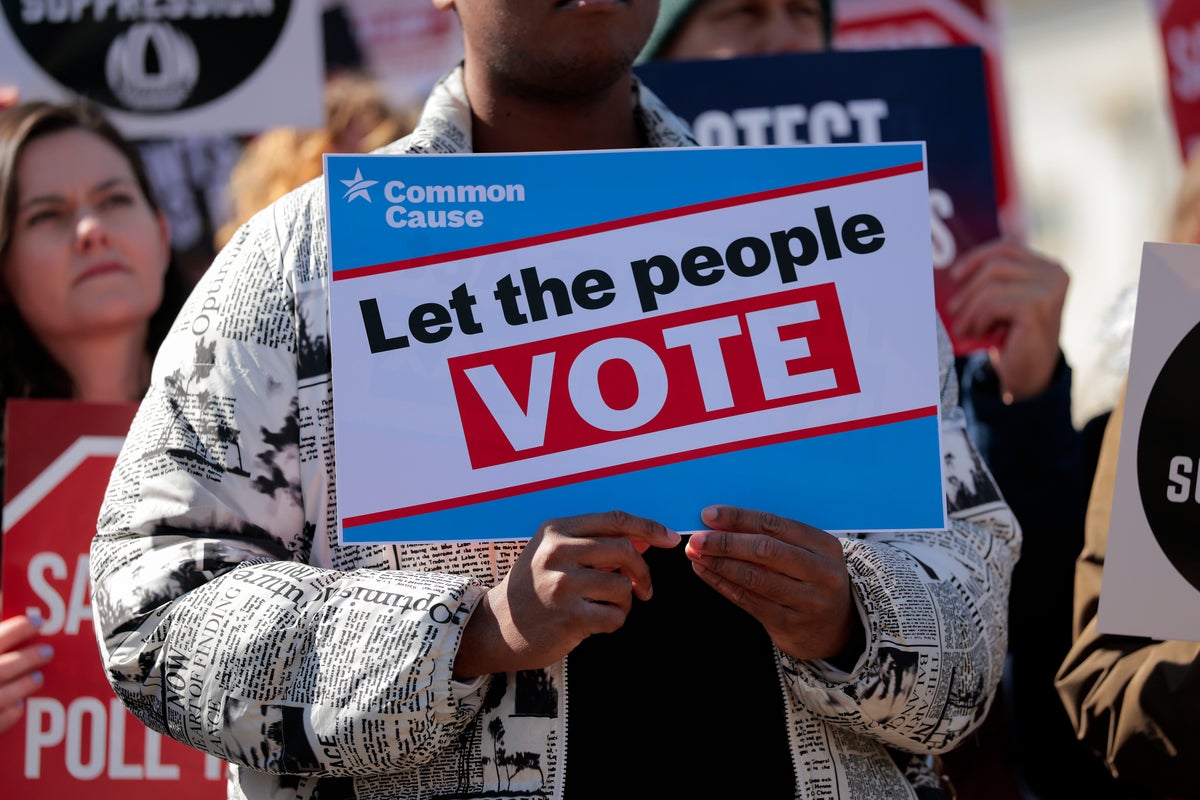
Americans divided but anxious over future of voting, speech and gun rights, poll finds
Key Points
Americans divided but anxious over future of voting, speech and gun rights, poll finds The survey, conducted by The Associated Press-NORC Center for Public Affairs Research, underscores a deep-seated consensus on the importance of personal freedoms - Bookmark - CommentsGo to comments A new poll reveals that while most Americans consider fundamental civil liberties, such as the right to vote, integral to the nation’s identity, a significant majority also believe these very rights are...
Americans divided but anxious over future of voting, speech and gun rights, poll finds
The survey, conducted by The Associated Press-NORC Center for Public Affairs Research, underscores a deep-seated consensus on the importance of personal freedoms
- Bookmark
- CommentsGo to comments
A new poll reveals that while most Americans consider fundamental civil liberties, such as the right to vote, integral to the nation’s identity, a significant majority also believe these very rights are currently under threat.
The survey, conducted by The Associated Press-NORC Center for Public Affairs Research, underscores a deep-seated consensus on the importance of personal freedoms alongside growing anxieties about the country’s future trajectory.
The poll, which took place from April 16-20, before a recent Supreme Court decision narrowed a section of the Voting Rights Act, found widespread agreement across demographics that the right to vote, free speech, and freedom of religion are crucial to the United States.
However, opinions were more divided regarding the importance of the right to bear arms, and notably, only about one-third of respondents or fewer felt these rights were secure from potential threats.
"Our idea of rights has been very consistent in this country until the last few years," said Louise Rochon, 85, from Connecticut. "Now, they’re all under threat. Every single last one of them."
Approximately nine out of 10 Americans consider the right to vote and freedom of speech to be "extremely" or "very" important to the nation’s identity. Similarly, about eight in 10 view freedom of religion as core to national identity, while six in 10 believe the right to keep and bear arms is highly important.
Despite this widespread valuation, many Americans perceive these principles as imperiled. Around two-thirds of the population believe the right to vote is under some form of threat, with one-third specifically identifying a "major threat" and three in 10 citing a "minor threat."
Only about one-third of Americans felt voting rights faced "no threat at all." Furthermore, nearly half of Americans believe freedom of speech is under major threat, a sentiment shared by about three in 10 regarding gun rights and religious freedom.
Tracy Gonzales, an independent from San Antonio, Texas, expressed concern that the country is going "down the drain." She suggested that Americans have "thrown religion to the side at the moment" and allowed other civil liberties to erode amidst intense debates over immigration and the economy.
Gonzales, 37, also referenced President Donald Trump’s immigration crackdowns, stating, "Given everything going on with our president, you really don’t have time to think of anything else. There are so many other crimes that are being committed and people that actually need help, and you’re focused on the ones that are trying to get it together."
The survey also highlighted complex views on democracy and identity among Black Americans, likely influenced by the nation’s history of denying full citizenship and voting rights to people of African descent.
While about three-quarters of Black Americans consider the right to vote "extremely" or "very important" to American identity (compared to nine in 10 white Americans), a higher proportion—four in 10—believe it faces a "major" threat today, exceeding any other racial group.
Antonio Williams, a school administrator in Dallas, Texas, who is Black, articulated this concern: "You cannot feel like you are a total and full part of the American experiment unless you have the right to vote. And African Americans didn’t fully get to enjoy the right to vote until about 60 years ago, and I feel like it’s under threat right now."
Younger adults and independents were less likely than the general population to consider voting and freedom of speech central to American identity. Julian Goodwin-Ferris, 28, a professional dancer from New Jersey, attributed this to the pervasive influence of social media.
"My age group has grown up a lot more with social media as part of their existence in life and the microcosms that that creates in politics," Goodwin-Ferris said. "I think we feel more like our voice doesn’t matter as much because it feels like we’ve grown up with our rights sort of being more ignored."
Partisan divisions also emerged regarding the perceived magnitude of threats to rights. Democrats were more inclined to see a greater threat to freedom of speech, with about six in 10 believing it faces a "major threat," compared to four in 10 independents and roughly one-third of Republicans.
Conversely, Republicans expressed greater concern about the right to keep and bear arms; while most Americans consider this right important, about 8 in 10 Republicans agreed, compared with 4 in 10 Democrats and 50% of independents.
Approximately four in 10 Republicans also felt the right to bear firearms was under threat, an increase from October 2025, a trend not observed among Democrats or independents.
Nuri Simmons, 31, a warehouse worker in New York and a registered Democrat, emphasized the interconnectedness of rights.
"We have the Bill of Rights for a reason," Simmons stated, noting that threats to different rights "bleed into each other." While primarily concerned about voting rights, he acknowledged differing perspectives: "Like when people try to bring some gun control into it, I think some people look at that as an attack on their rights. I guess that all depends on your politics."
The poll’s findings highlight a nation grappling with a fundamental tension: a shared belief in the importance of foundational liberties coexisting with widespread apprehension about their erosion, as the country approaches its semi-quincentennial celebrations.
Join our commenting forum
Join thought-provoking conversations, follow other Independent readers and see their replies
Comments
Americans (ORG)
The Associated Press-NORC Center for Public Affairs Research (ORG)
Supreme Court (ORG)
the United States (LOCATION)
Louise Rochon (PERSON)
Connecticut (LOCATION)
Tracy Gonzales (PERSON)
San Antonio (LOCATION)
Texas (LOCATION)
Gonzales (PERSON)
Donald Trump (PERSON)
Black Americans (ORG)