
Science
‘I’ve had brain injury for 7 years – but DWP still wants me to keep proving I can’t work’
Key Points
‘I’ve had brain injury for 7 years – but DWP still wants me to keep proving I can’t work’ People with conditions like permanent hearing loss and amputated limbs are being forced to re-prove their disability, researchers warn - Bookmark - CommentsGo to comments When Steve Mikellides, 46, found out he was having his Personal Independence Payment (Pip) cut by £120 a month, he became “very upset, very anxious, very scared and depressed”. “I just wanted the ground to open up,” he said. Formerly...
‘I’ve had brain injury for 7 years – but DWP still wants me to keep proving I can’t work’
People with conditions like permanent hearing loss and amputated limbs are being forced to re-prove their disability, researchers warn
- Bookmark
- CommentsGo to comments
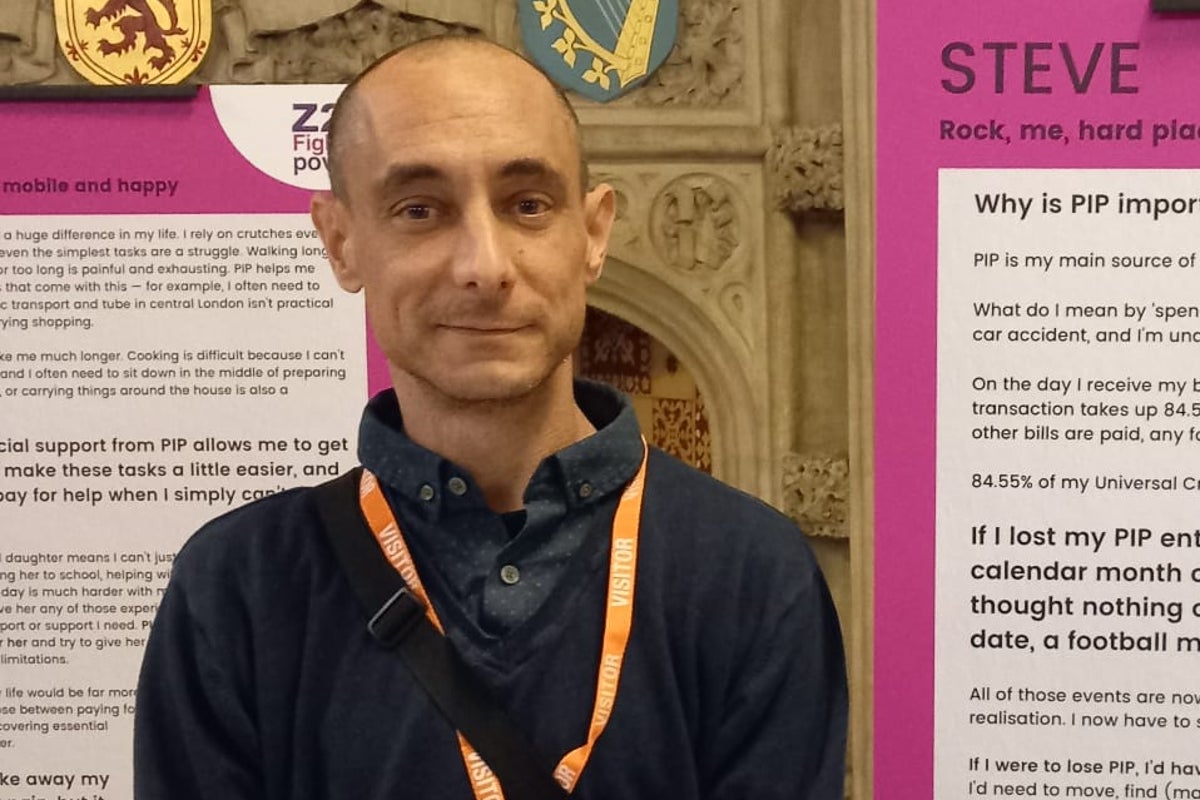
When Steve Mikellides, 46, found out he was having his Personal Independence Payment (Pip) cut by £120 a month, he became “very upset, very anxious, very scared and depressed”.
“I just wanted the ground to open up,” he said.
Formerly an NHS technician, Mr Mikellides was forced to stop work after sustaining a brain injury in a car accident in 2019.
He started receiving Pip in 2021, but just two years later his award was reassessed and lowered, despite his condition being lifelong. Alongside his brain injury, Mr Mikellides has a degenerative spine condition and severe digestion issues, which prevent him from working.
He told The Independent: “These things simply do not, will not and cannot get better, in lieu of some sort of God heaven-sent miracle. So for me that's an immediate frustration when the reassessment came in.”
After unsuccessfully appealing his decision to the DWP, Mr Mikellides took his case to tribunal. The decision was eventually overturned in January of this year and his payments were increased an backdated – a two-and-a-half year wait.
But with another reassessment of his condition due in 18 to 20 months, he said the victory feels “hollow”, adding: “OK, I might have won this round. But it's just one battle in a long, ongoing war”.
New research has indicated that he is just one of thousands of Pip claimants routinely being put through these “unnecessary” benefit reassessments despite having conditions that are unlikely to improve.
The regular reassessments for Pip for these claimants runs contrary to the Department for Work and Pensions’ (DWP) own guidelines, anti-poverty charity Z2K found in a new report.
Researchers said that they are also costing the department potentially millions in avoidable costs, pointing to the over £350m a year the government pays to private companies to carry out these assessments, at a time when welfare spending is under intense scrutiny.
The charity’s figures show that 74 per cent of people with learning disabilities, 86 per cent of those who had a limb amputation, and 62 per cent with cerebral palsy were given fixed-term awards, meaning they must undergo reassessments at least every three years. This is despite all being considered lifelong conditions.
Samuel Thomas, senior policy adviser at Z2K, said: “Department for Work and Pensions (DWP) guidance says disabled people with lifelong and progressive conditions should not be reassessed more than once a decade – but the data shows these rules simply aren’t being followed.
“Shockingly high proportions of disabled people qualifying on the basis of lifelong disabilities like cerebral palsy, permanent hearing loss and amputated limbs are being forced to undergo pointless reassessments, even though their disabilities will not change.”
The findings come after a coalition of leading charities warned in May that people with terminal or life-limiting illnesses are regularly facing “distressing” benefit reassessments. The group, convened by end-of-life charity Marie Curie and including Amnesty International and Trussell, wrote in a letter seen by The Independent, that those with terminal illnesses should stop being “forced to prove just how unwell they are”.
The Z2K report almost found that nearly 74 per cent of award reviews last year – equivalent to over 500,000 reassessments – resulted in no change to the claimant’s payments. Each assessment costs the DWP an estimated £282.
Out of the reviews that did lead to a change in award, 10 per cent were increased, while 16 per cent were decreased or stopped.
The research comes as disability minister Sir Stephen Timms continues his review into PIP which, at four million claimants, is the UK’s most claimed health and disability-related benefit. Z2K has urged the veteran Labour MP to use its findings to inform its conclusions.
A DWP spokesperson said: “We’re taking action to fix the broken welfare system we inherited, including by extending award review periods which will remove unnecessary pressure on disabled people and help to deliver savings of around £2bn.
“Rather than their diagnosis alone, the assessment considers how well someone can manage PIP activities, so outcomes depend on individual circumstances.
“As part of our work to reform the system we also launched the Timms Review – co-produced with disabled people and their representative organisations – to make sure PIP is fit and fair for the future, including reassessments.”
In April, the DWP confirmed to The Independent that it is moving to set all Pip award reviews at a minimum of three years for new claims, rising to five years at their next review if the claimant remains entitled.
Join our commenting forum
Join thought-provoking conversations, follow other Independent readers and see their replies
Comments
[Image text:] STEVE
Rock, me,hard pia
Fig
poi
mobile and happy
Why is PIP impor
a huge difference in my life.I rely on crutches evc
even the simplest tasks are a struggle Walking long
PIP is my main source of
r too long is painful and exhausting. PiP helps me
that come with this- for example,I often need to
c transport and tube in central London isn't practical
What do I mean by'spen
ying shopping
car accident. and I'm un
e me much longer.Cooking is difficuit because I can't
and I often need to sit down in the middle of preparing
On the day I receive my b
or carrying things around the house is also a
transaction takes up 84.5
other bills are paid.any f
ial support from PIP allows me to get
make these tasks a little easier. and
84.55%of my Universal C
ay for help whenI simply can
IfI lost my PIP ent
daughter means I can't jus
calendar month
ng her to school, helping wi
day is much harder with
thought nothing
e her any of those exper
port or support l noed.Py
her and try to give her
date,a football m
limitations..
fe would be far mor
All of those events are no
se between paying fo
realisation.I now have to
overing essential
ot.
If I were to lose PIP.Id ha
ke awaymy
I'd need to move.find m