
World News
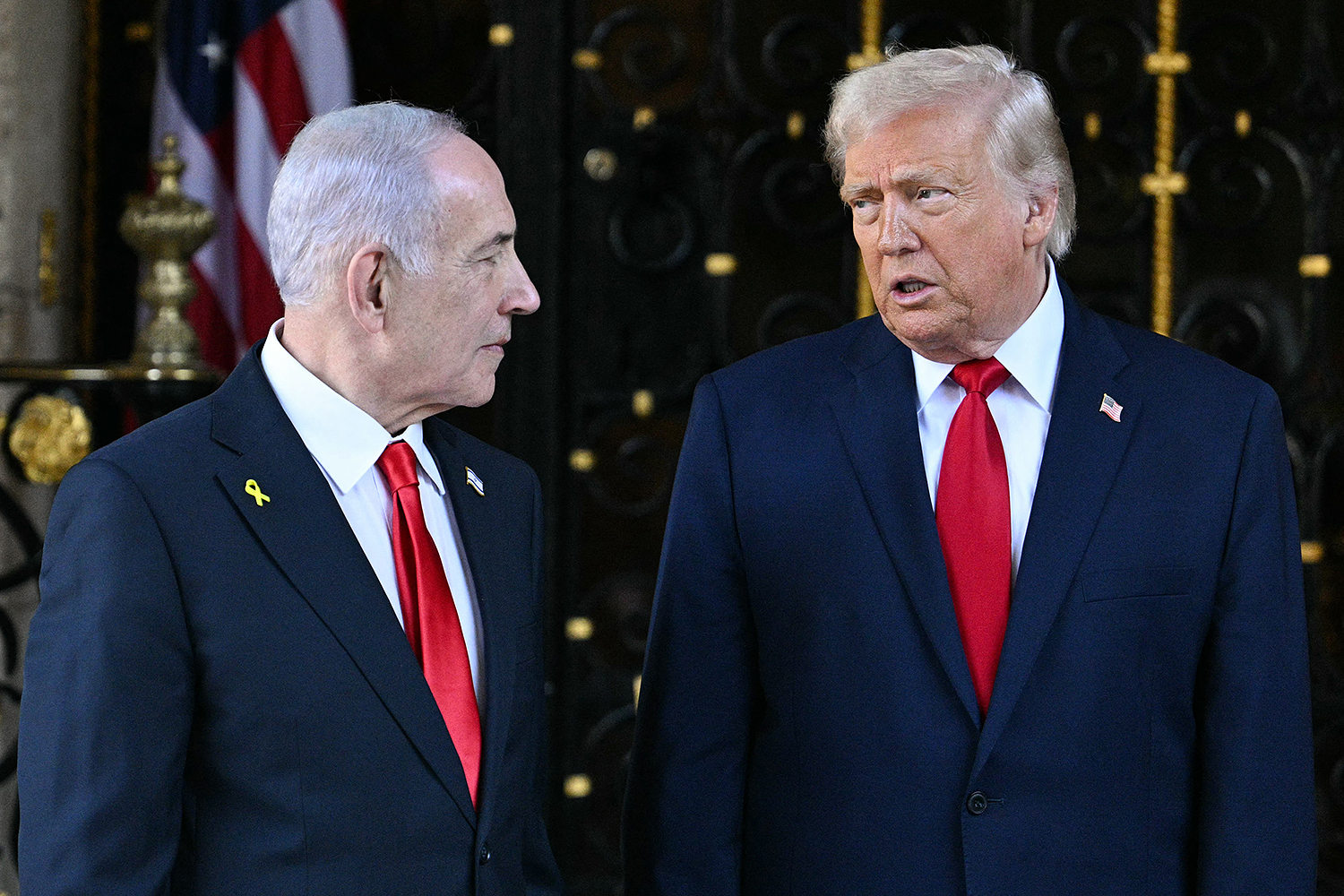
Israel cut out of Iran deal as Trump keeps deriding Netanyahu in public
Key Points
TEL AVIV, Israel — The Israeli government was not shown the memorandum of understanding drafted to end the war with Iran, an Israeli government official told NBC News on Wednesday, the latest sign of growing tension between the United States and Israel. Shortly after President Donald Trump said he had given a copy of the MOU to Israel, the same source said Israel still hadn’t seen the draft. The source wouldn’t comment on whether or not Israeli diplomats had asked for the text and were...
TEL AVIV, Israel — The Israeli government was not shown the memorandum of understanding drafted to end the war with Iran, an Israeli government official told NBC News on Wednesday, the latest sign of growing tension between the United States and Israel.
Shortly after President Donald Trump said he had given a copy of the MOU to Israel, the same source said Israel still hadn’t seen the draft. The source wouldn’t comment on whether or not Israeli diplomats had asked for the text and were denied it.
The Israeli government’s absence in the negotiations leading up to the MOU has become a perilous hindrance for Prime Minister Benjamin Netanyahu, who faces career-defining elections before the end of October. The deal framework was provided to NBC News by a senior U.S. official later on Wednesday.
The Israeli public’s reckoning with Netanyahu’s performance has also collided with an increasingly impatient Trump, whose invective against the prime minister over the past several days has shaken an increasingly isolated Israel.
“Without me, there would be no Israel,” Trump told the G7 summit Tuesday, calling Netanyahu “crazy” and using an expletive to describe his poor judgment. But Trump took particular issue with Netanyahu’s continuing attacks against Iran-backed Hezbollah in Lebanon, where more than 1 million have been driven from their homes and more than 3,500 people have died, derailing talks with Iran in the past.
Trump openly criticized seemingly indiscriminate Israeli attacks on Lebanon.
“Too many people have been killed,” Trump said at the G7 conference summit in France. “You don’t have to knock down an apartment house every time you’re looking for somebody, because there are a lot of people in those apartment houses, and they’re not all Hezbollah.”
Netanyahu has not publicly addressed Trump’s comments about him.
With Iran and the U.S. scheduled to sign a draft agreement on Friday, Netanyahu is also feeling the heat from the Israeli public.
The country went to war against Iran alongside the U.S. in late February, and its population endured weeks of Iranian counterattacks from ballistic missiles and drones.
Netanyahu’s government has been criticized for not going far enough to hobble Iran, an adversary many see as posing an existential threat, and its main proxy group Hezbollah in Lebanon.
In a survey from the Israeli Democracy Institute published two weeks ago, 57.5% of Israelis said they believe ending the conflict under the currently discussed framework won’t be compatible with Israel’s security interests.
Netanyahu’s domestic rivals have lashed out at the prime minister.
“Israel is paying the price of Netanyahu’s hubris and blindness, and the price of the manipulations that he tried to pull on Trump,” former Prime Minister Ehud Barak said in an interview Monday. “Iran emerged stronger; Israel emerged weaker. That is Netanyahu’s strategic responsibility. He failed.”
The deal framework is “one of the most shocking failures in Israel’s foreign and security policy ... entirely registered in Netanyahu’s name,” said Yair Lapid, who is expected to challenge Netanyahu in this year’s elections.
“It can be fixed, it must be fixed,” he wrote. “Netanyahu can no longer fix it, we will do it.”
In a speech on Monday night, Netanyahu defended the necessity of the war with Iran, but acknowledged that he had not reviewed the draft agreement.
“We removed, for years to come, this danger hanging over us of the elimination of Israel’s population. That is what we did. We saved the state of Israel from annihilation,” Netanyahu said, again calling the Iranian nuclear threat an “immediate danger.”
Answering questions from reporters, Netanyahu brushed off suggestions that his relationship with Trump had deteriorated.
“Many times we see eye to eye, and there are also cases in which we see less eye to eye,” Netanyahu said Monday.
He also repeatedly answered to the growing criticism from both his opponents and allies that he isn’t standing up to Trump enough.
“I am responsible for Israel’s security interests. I stand up for them,” he said.
It’s unclear whether Israel will take part in future negotiations, which the Iranians said will begin in Geneva on the day the deal is signed.
Iran’s Foreign Minister Abbas Aragchi said Tuesday that Israel’s continued attacks on Lebanon and its presence in the country violated the MOU.
Though Israel’s northern border has been mostly quiet since Trump announced the deal on Sunday night, fighting between Israel and the Iran-backed militia group Hezbollah has continued in southern Lebanon.