
UK News
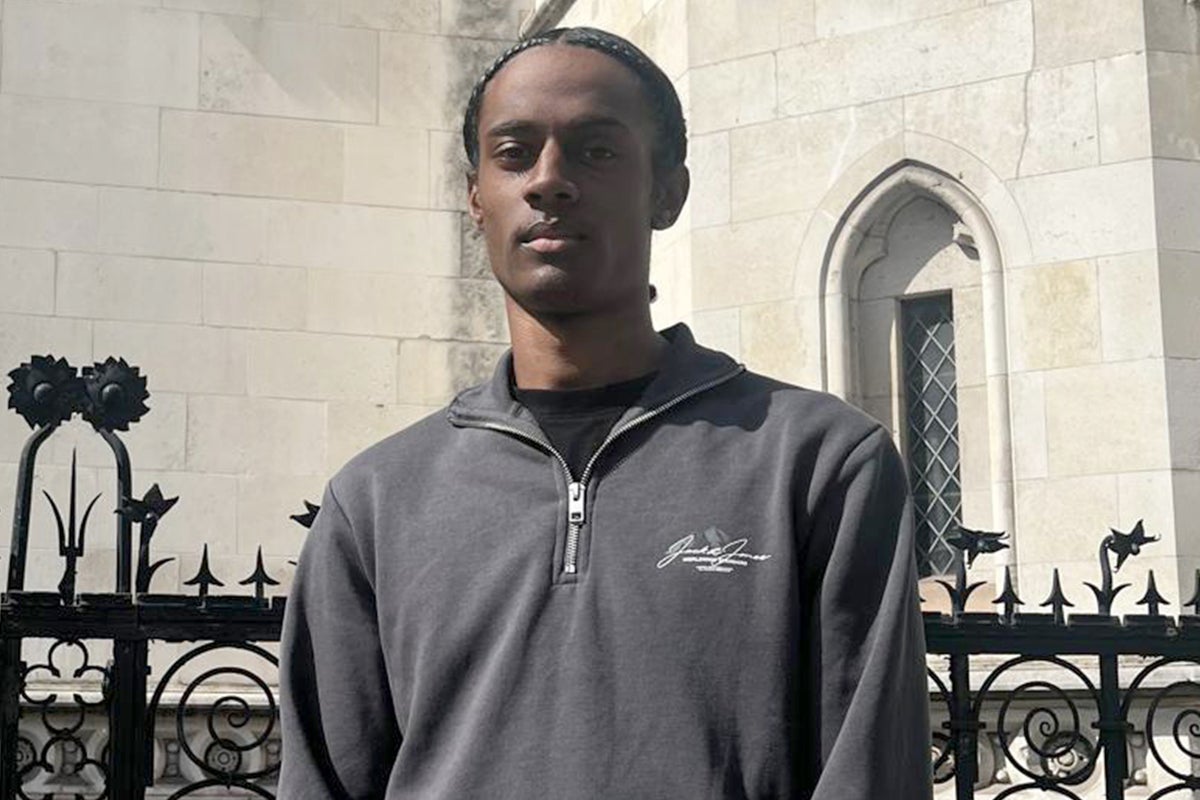
Black teen wrongly arrested over mother’s suicide attempt wins payout of up to £130k from Met Police
Key Points
Black teen wrongly arrested over mother’s suicide attempt wins payout of up to £130k from Met Police Jury finds that officers discriminated against Daryl McLune because of his race - Bookmark Police who arrested an innocent Black teenager for the attempted murder of his mother, moments after she had attempted to take her own life, will now have to pay up to £130,000 in compensation. A jury concluded that the officers discriminated against the 16-year-old due to his race. Daryl McLune, a...
Black teen wrongly arrested over mother’s suicide attempt wins payout of up to £130k from Met Police
Jury finds that officers discriminated against Daryl McLune because of his race
- Bookmark
Police who arrested an innocent Black teenager for the attempted murder of his mother, moments after she had attempted to take her own life, will now have to pay up to £130,000 in compensation.
A jury concluded that the officers discriminated against the 16-year-old due to his race.
Daryl McLune, a diligent student with “great grades” and no prior police contact, was arrested and held for 23 hours in July 2021.
He had returned to his south London home to find paramedics attending to his mother, Annette McLune, following her suicide attempt. Just 26 minutes later, he was handcuffed and taken into custody on suspicion of her attempted murder.
Harrowing bodycam footage, presented in court, captured the teenager collapsing to the ground, repeatedly crying “I wasn't even here” as he was arrested.
He subsequently sued the Metropolitan Police.
His legal team argued that racially biased officers were too quick to “jump to the conclusion” that he was a suspect, resulting in the “premature criminalisation” of what was, in reality, a “child in crisis”.
They contended that, because he is Black, he was not afforded the compassion due to a grieving child, but was instead perceived as a suspect requiring arrest, cuffing, and control.
Now, after a seven-day trial in London, a jury has found that Mr McLune was racially discriminated against because, in deciding he needed to be arrested, police treated him “less favourably than they would have treated a non-Black boy”.
His race had also played a part in the decision to authorise his detention for 23 hours, the jury found, in a rare example of a civil court case being decided by a panel of jurors.
The decision, as well as findings of false imprisonment and a breach of his human rights, means the Met is now liable to make a compensation payout, with Mr McLune claiming £130,000.
Branding it an “inherently serious case”, Mr McLune's barrister Frederick Powell told the court that the “racially motivated intervention” by police on what was in fact a “personal tragedy” had caused an “exceptional level of humiliation, distress and insult to Daryl’s dignity”.
“He was trying to come back to help his mum and he ended up being publicly humiliated and cuffed in the street, before being dragged to a police station and kept overnight,” said his barrister.
“They failed to see the child who was standing in front of them. The police didn't cause the first tragedy that befell Daryl that afternoon, but they did create the second tragedy.
“In the single most vulnerable moment of his life, they transformed a terrified boy into an attempted murder suspect. That is an injustice that still scars him.”
Central London County Court heard that Annette McLune survived, but suffered “catastrophic” injuries after her suicide attempt, having earlier spoken of being in a “dark place” following struggles with a Covid infection.
Police had been called to Bembridge House, in Iron Mill Road, by Mr McLune's father, Travayne McLune, after he found blood in their home and his wife missing, said Mr McLune's barrister in opening.
She had sustained serious injuries which ultimately put her in hospital for a year, the court heard.
Police initially quizzed Mr McLune's dad at the scene, while paramedics worked to save Annette's life, before Mr McLune himself appeared, having cycled round from his grandmother's.
Only 26 minutes later, he was slapped in cuffs in the street, with officers telling him that he was under arrest on suspicion of the attempted murder of his mum.
Police bodycam footage played to the jury showed the moment Mr McLune was arrested, collapsing while questioning why he was being held when he had not even been there.
He was later released from custody and less than a week later was informed that no further action would be taken, following the discovery of a suicide note in the flat.
In opening the case, Mr Powell told the jury: “We are here to seek accountability for what happened to Daryl when he was a 16-year-old boy.”
Accusing the police of jumping to a conclusion too quickly about Mr McLune, he claimed the arrest was driven by their perception of him as a Black teenager.
“The scene had to be made safe, she had to be treated and the police were entitled to investigate what had happened to her,” he told the jury.
“The issue is whether in the midst of that uncertainty, the police acted lawfully in moving from investigating a grave incident to arresting Daryl, a black boy who had just arrived at the scene in distress, on suspicion of attempting to murder his own mother.
“You will need to consider whether...his race played a part consciously or unconsciously in how quickly and how harshly he was treated.
“Our case is that when you hear the evidence the picture will be clear. We say this was not a case of careful and fair policing of a suspect – it was premature criminalisation of a child in crisis.”
The court heard Mr McLune had never been in trouble with police before, a “person of unblemished good character” trying “to restore his reputation that was taken from him that day”.
“He was not an adult, he was a child,” said Mr Powell. “He was a son arriving at a catastrophic scene involving his mother. He was frightened, distressed and desperate for information.
“His case is that race formed a part of the way he was seen. He was too quickly treated as a suspect, as a risk, as somebody who had to be controlled.”
He said that a suicide note that said “I am so tired fighting this Covid-19, I have nothing left in me to fight” was later found in the flat.
“That supported an obvious self-harm or mental health explanation for what happened,” he said.
“This was always an incident with obvious alternative explanations and the police needed to do a proper investigation, rather than leaping to conclusions.
“This isn't about calling anyone a racist monster. He doesn't have to persuade you that an officer used racist language. He doesn't even have to prove they were consciously racist.
“Discrimination can be unconscious. It can appear in people's assumptions, in their speed of judgment as to how behaviour is interpreted.
“Daryl should have been treated firstly and primarily as a child who was distressed and a potential witness to a family catastrophe.”
Giving evidence from the witness box, Mr McLune, now 20, told the jury that his mum had been “acting very strange” on the morning of the incident, having previously been in hospital for heat exhaustion and following a Covid infection.
She said she was in a “dark place” and repeatedly said “I'm sorry” and “I love you”, he told the court, but he had to go to see his grandmother and left her at home with his dad.
He accepted that when he returned to the scene after his mum's attempted suicide, he was “disappointed” in his dad, with Met barrister Russell Fortt saying he had acted “aggressively” towards him.
The teen was arrested shortly after leaving the scene and then returning. He told the court he had gone to phone his brother in Jamaica, but police suggested in court that he “ran off”.
Describing the shock of the arrest, he told the jury: “I couldn't believe it. I was crying and laughing at the same time. I explained to them multiple times that I wasn't there.
“I felt I was being cooperative. I was confused why I was being arrested for that. There was nothing to suggest I had done anything wrong, so I was just confused.
“I was overwhelmed with emotion, I couldn't understand. Nothing they were saying to me was making sense.”
He said that, after being taken in a van to the police station and held overnight, he was not told what had happened to his mother.
“I just felt alone,” he told the jury. “I didn't have anybody with me. Nobody to stand in my corner. I was just left alone. I had never previously been to a police station in that way.
“Many times I did inquire what was my mum's condition. The information they passed on was that I was a suspect in a crime so they wouldn't tell me what was going on. I didn't know if my mum was alive or dead.”
Mr McLune sued Met Commissioner, Sir Mark Rowley, over the July 2021 incident, claiming racially biased cops were too quick to “jump to the conclusion” that he was a suspect, rather than a shocked, grieving child.
But the Commissioner fought the claim, with Met lawyers arguing that officers were only doing their job in investigating a “serious and critical incident”.
Blood in the flat led officers to believe that the incident was “suspicious” and that something untoward may have happened, the jury was told, while police were unaware of a suicide note which was later discovered.
Mr McLune had appeared in an “angry and hostile” mood and had behaved “aggressively” towards his father, pushing him, he said, before leaving the scene, claimed the barrister.
He said the officers at the scene could not have known how Annette came to leave the window and could not have known whether Mr McLune was present when it happened.
But at the end of a seven-day trial, the jury returned their verdicts on 19 questions of fact, finding that it was proved that Mr McLune was treated “less favourably than a non-Black boy” would have been by the police in deciding to arrest him and then detain him for so long.
They also found that the Met had not proved that the officer who arrested Mr McLune at the scene “honestly suspected” that he had actually committed the offence of attempted murder.
The Met had also failed to convince them that it was “reasonable and necessary” to keep him cuffed at the police station until forensic samples were taken.
Although they found that his handcuffing had not involved excessive force, his treatment as a whole was a breach of his Article 3 right under the European Convention on Human Rights not to be subjected to “inhuman or degrading treatment”.
The case was a rare example of a jury being involved in a civil case, with the jurors making findings of fact and Judge Andrew Holmes now set to decide the level of damages Mr McLune is due.
Arguing for a damages payout of around £130,000, his lawyers say the ordeal had a profound effect on his life and future.
He has been left suffering with PTSD, nightmares, flashbacks, a mistrust of the police and low mood, while his education and future employment prospects had been impacted, it is claimed.
“The interception of a profound personal tragedy with the racially motivated intervention by the police caused an exceptional level of humiliation, distress and insult to Daryl's dignity,” said Mr Powell.
“The jury having found that there was discrimination on the grounds of race in relation to the arrest and the duration of the detention, the claimant's submission is that damages for injury to feelings should be in the higher end of the middle band.
“The sheer scale of the accusation in this case, combined with restraint, does make this an inherently serious case.”
The Met says Mr McLune's claimed damages are far too high and question whether some of his symptoms are to do with his mother's attempted suicide rather than his treatment by the police.
Judge Holmes will give a decision on the compensation amount at a later date.
If you are experiencing feelings of distress, or are struggling to cope, you can speak to the Samaritans, in confidence, on 116 123 (UK and ROI), email [email protected], or visit the Samaritans website to find details of your nearest branch.
If you are based in the USA, and you or someone you know needs mental health assistance right now, call or text 988, or visit 988lifeline.org to access online chat from the 988 Suicide and Crisis Lifeline. This is a free, confidential crisis hotline that is available to everyone 24 hours a day, seven days a week. If you are in another country, you can go to www.befrienders.org to find a helpline near you.