
World News
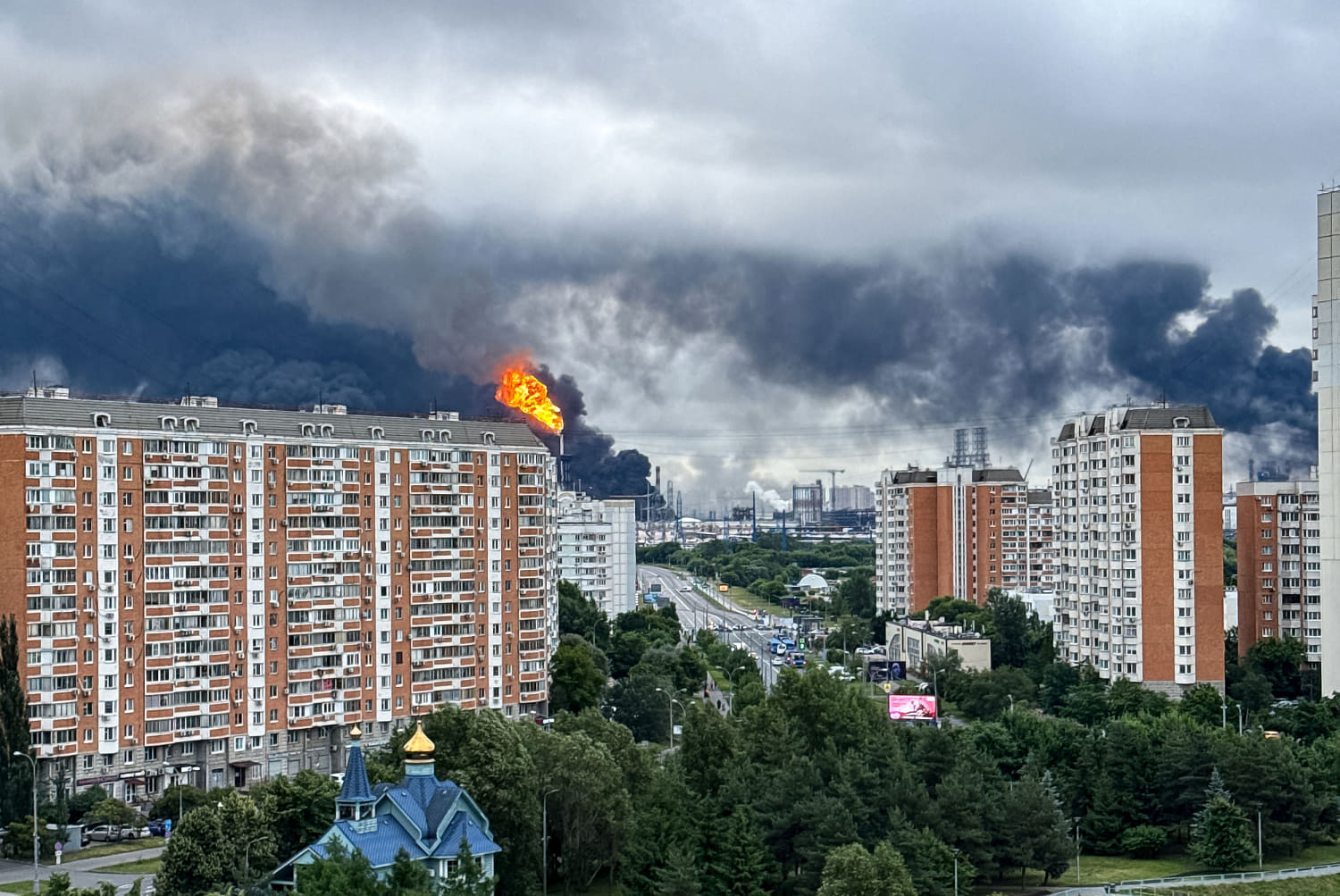
Moscow refinery ablaze as Ukraine launches biggest attack on Russian capital in years
Key Points
The Russian capital was ablaze Thursday, after Ukraine launched what appeared to be its largest attack on the city since the Kremlin invaded its neighbor more than four years ago. Waves of Ukrainian drones hit a major oil refinery in Moscow for the second time this week, sending thick clouds of black smoke and flames rising over the city through the morning. Local commercial flights were also disrupted.
The Russian capital was ablaze Thursday, after Ukraine launched what appeared to be its largest attack on the city since the Kremlin invaded its neighbor more than four years ago.
Waves of Ukrainian drones hit a major oil refinery in Moscow for the second time this week, sending thick clouds of black smoke and flames rising over the city through the morning. Local commercial flights were also disrupted.
Kyiv cast the attack as revenge for strikes on a historic monastery that had drawn global condemnation. It comes as President Donald Trump signals renewed engagement with the conflict, boosting European hopes that he may back tougher action against Russia to try and force it to the negotiation table.
A video geolocated by NBC News showed a drone flying into a plume of smoke over the Kapotnya refinery, which is in the southeast of Moscow and just 10 miles away from the Kremlin.
The facility is seen already engulfed in flames, as air defense rockets are fired at the drone before it crashes on site, throwing up a ball of fire.
Ukraine has been striking oil facilities deep inside Russia after a leap in drone capabilities, an intensifying campaign that Kyiv’s allies say has given the country “new momentum” in the war. It has led to widespread damage to energy infrastructure, helping to spark a fuel crisis centered in occupied Crimea.
Successful attacks on Moscow remain rare, however, with the capital protected by layers of air defense.
Moscow Mayor Sergei Sobyanin said 190 drones have been shot down on approach to Moscow overnight, with several reaching the oil refinery. State news agency Tass called it “the most massive drone attack on the Moscow region in two years.”
The capital’s major airports went into temporary shutdown Thursday morning “to ensure flight safety,” Russia’s transportation ministry said.
A day earlier, Russia’s aviation authority announced restrictions on flights by light private aircraft and drones in Moscow and surrounding regions — a possible sign the Kremlin is looking to ramp up protections for the capital. Ukrainian drones first attacked the refinery on Tuesday.
The attacks come at a tricky time for the Kremlin, which is facing growing internal discontent with Vladimir Putin’s leadership and handling of the war.
Kyiv has been open about what it calls its “long-range sanctions” against Russia.
“This is a fully justified response to Russian attacks on our cities and communities, and another important result of our warriors’ work against facilities that sustain Russia’s war machine,” Ukrainian President Volodymyr Zelenskyy said in a post X Thursday, sharing a video of the Russian capital burning and covered in smoke.
All of Ukraine’s partners “have noted the precision and effectiveness of our mid-range strikes and long-range sanctions” in recent days, he added, signaling that the U.S. is now on Ukraine’s side.
“If Ukraine is burning, then your Moscow will be burning too,” Zelenskyy said later Thursday, in an audio note shared with reporters.
Washington-led efforts to settle the conflict have been stalled by the Trump administration’s focus on the Iran war in recent months.
But with the peace agreement now signed with Tehran, Trump said he would refocus on Russia’s war and appeared newly aligned on the issue with allies at the Group of Seven summit this week. Just hours before the refinery strike, Zelenskyy said he held “an important coordination call” with Trump and French President Emmanuel Macron, “that can bring about significant change.”
The stunning footage of the refinery fire appeared on social media Thursday despite the ban on sharing videos and photos showing “results of drone strikes” that came into force in Moscow last month to “prevent disinformation.” In most videos, people behind the camera can be heard gasping and swearing at what they are seeing.
Other footage showed Moscow residents seemingly unfazed by the smoke in the background. Some casually rolled down the sidewalks on their scooters, as others talked on their phones and waited at bus stations.
“One of the most popular questions asked by Muscovites this morning is ‘What is going on?’” Ukraine’s Foreign Minister Andrii Sybiha said in a post on X.
“I can answer. Your country started a war of aggression against ours,” he added. “For years, it has been killing our people. Now that you know what’s going on, ask Putin when he is planning to end it.”