
Technology
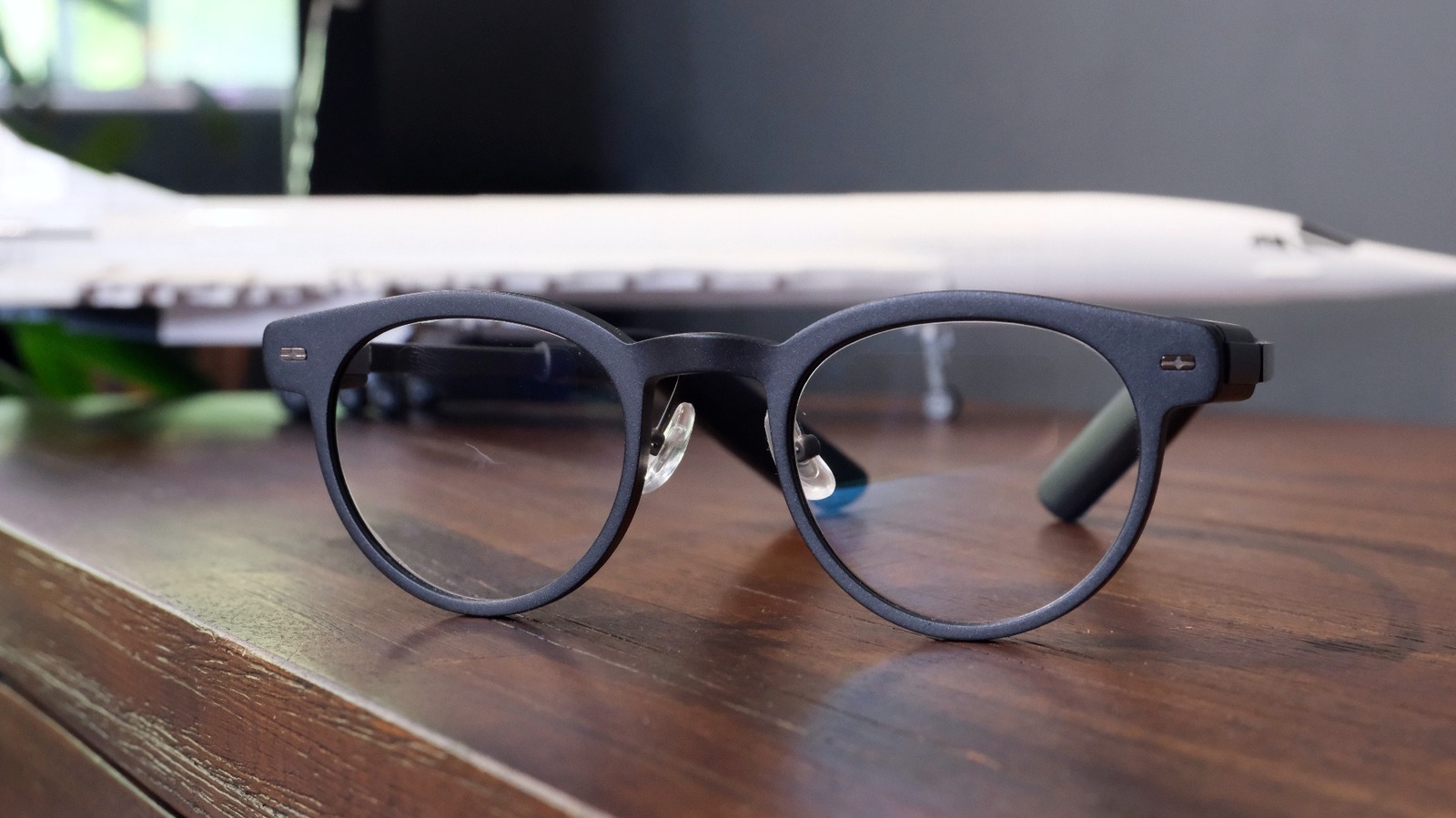
XGIMI MemoMind One review: Smart glasses, creepy AI
Key Points
XGIMI MemoMind One review: Smart glasses, creepy AI They're great in many ways, offensively bad in one or two. Last year, I reviewed Even Realities' G1, a pair of smart glasses that instantly won me over.
XGIMI MemoMind One review: Smart glasses, creepy AI
They're great in many ways, offensively bad in one or two.
Last year, I reviewed Even Realities' G1, a pair of smart glasses that instantly won me over. I liked the stripped-down feature set, quality hardware and ease of use as it seamlessly fit into my day. XGIMI, better known for its projectors, is stepping into the same waters with its new MemoMind One. My initial impression at CES was they were cut from a very similar cloth as the G1 (not that I'm implying anything). After spending a week with a pair on my face, I've seen nothing that changes my mind.
Much of what I liked about the G1 is evident here, and I've got plenty of praise for the things XGIMI sought to improve. Sadly, there are also a few silly design errors that you would have hoped the company would have caught and put right. Worse, there's one feature that is so wrong, so self-evidently creepy, I can't believe anyone at the company thought it was wise to include. You can probably already guess that it's an intrusive AI tool, one that only someone who had already ceded their critical faculties to an LLM could love. And it means while I do love wearing these glasses, my praise is tempered by a fair measure.
Hardware
The MemoMind One is a pair of smart glasses acting as a second screen for your smartphone. Each lens has a transparent waveguide prism tied to a micro-LED projector. When active, information is beamed to a screen you'll perceive as floating in front of you. It can display notifications, real time captions, translation, AI responses to your questions and turn-by-turn directions. There's also a dashboard you can trigger by tilting your head up at a user-defined angle. Do that, and you can see your notifications, calendar, to-do list, ideas, stock tracker, news headlines, notes, teleprompter script or even song lyrics. It's a swiss army knife for your eyes.
Weighing in at 47 grams (1.6 oz), the MemoMind One isn't heavy enough to put noticeable strain on your head and ears. They're comfortable enough to wear all day, with the weight split between the end pieces (hinges) and the temple tips behind your ears. They're not so ostentatious as to call attention to themselves, but do expect to have people ask you about your new thick glasses. One of the major differences between these and Even Realities' specs is the inclusion of speakers. Each temple tip has a Harman EFX module so you can take calls and listen to Bluetooth audio.
The MemoMind has a single button on the right end piece which has to pull quadruple duty when in use. You'll experience plenty of trying to reach one feature, only for the system to identify your input as something else, with plenty of accompanying sighs. You'll use it to activate the dashboard and cycle through its pages, while a long press wakes up the conversational AI. Meanwhile, a double click will send you to the quick options menu. There, you can activate one of three additional options you set in-app, such as the voice recorder, captions and translation. You'll select one of these three by tilting your head to favor each option (left, center, right) which is mostly reliable. Mostly.
The glasses charge with a USB-C adapter which clips onto the right side temple tip. Call me paranoid, but I'm fairly sure the metal charging contact rubbing on the back of my head irritated my skin in that area. As for the battery life, the company promises 16 hours of "mixed" use on a charge, but I found the glasses were happy to take my fairly punishing use without complaint. That included using the display for constant notifications, playing music, taking calls and chatting to the AI. Plus, there's the creepy, as-it-turns-out-always-on-feature I'll get into later, which didn't seem to hurt the battery's stamina.
In-use
If there's one thing the better part of two decades in this job has taught me, it's that you always need one more button than you think. That's especially true if you're building a product with a lot of features you might want quick and easy access to. With just one button, it's pretty easy to misclick the option you want in favor of something else. What I wouldn't give for a second button, or even a tactile surface letting me swipe and double tap through the options.
The limited controls are a bear, but I found MemoMind to be pretty useful just using it as a second screen for my phone. Being able to triage messages, notifications and glance at both my calendar and to-do list were all tremendously useful. I'm impressed with the audio, given the small package and lightweight hardware, which is more than acceptable for listening to music and taking calls.
As for the translation and captioning, they're effective enough but there's still that momentary delay that will likely slow down any conversation you have with them. I'm not sure how well the latter will pick up the low talkers in your life, but it might prove useful. One thing that did shock me is that the translation censors any profanities uttered against you. If you're trying to work out what you did that so offended whoever is around you, you might find yourself stuck. Because whatever they say, it's likely much of it will be replaced with a series of asterisks.
I am forced to concede the AI is very good, and is clearly able to pull from up to date sources for its answers. Just 21 hours after Tunisia sacked Sabri Lamouchi for giving up five goals in the first game of the World Cup, I asked the glasses who was managing the nation's football team. It didn't just tell me that it was Herve Renard, but that he was a fresh hire after Lamouchi's firing. Don't take this for granted, I've asked questions of other glasses-based AIs where such an answer was beyond them.
Unfortunately, the turn-by-turn navigation wasn't available to test at the time of writing this review. I will, however, update this paragraph when the feature is available.
Moments and Wishes
XGIMI says the MemoMind One doesn't have a camera as the company is focused on the privacy of both its users and the general public. That's the right idea, as I object to the concept of walking around with a camera attached to my face. However, this pitch is undermined by the Moments feature, which outrages and confuses me in equal measure. In essence, it's a journal of your day: The glasses' built-in microphones are recording what you're doing at all times.
Yeah... I know.
The data is then processed by an AI to generate a summary of what it perceives you have done to create a summary of your day.
Yeah... I know.
At the risk of being glib, the whole self-enrolling into such a dystopian process isn't even the worst part of this whole thing. The journal entry it produces is like hearing a record of your own life being recounted back to you after it's been twisted and contorted after a centuries long game of Telephone conducted by the permanently baffled.
During a lunch break, I watched my friend's YouTube video as he'd told me about it in the pub a few days earlier. He reviews model airplane kits, and had gone early to pick up a limited edition set before they'd sold out. This, of course, piqued my curiosity. Memories, however, told me that I'd bought and unboxed the kit, unaware I was watching a video featuring someone else's voice. It even noted the pre-roll advert for Sage accounting software, telling me that I'd been involved with an issue at work as I'd forwarded along an invoice to "the wrong Sarah."
That's not an isolated incident. It's the default, and most days I'd look through the record to try and find a single thing that actually happened. It told me I'd applied for a job at a psychology practice (my friend mentioned his interest in doing so), hung out with someone called Charles (no idea) and been visited by a married couple called Paul and Zoe (nope). Troublingly, the weekly recap I received wasn't even in English but arrived in Simplified Chinese, the system forgetting which languages I can and cannot read.
Wishes is a second feature branching off from Memories where the system logs any time you offer an opinion that could be coded as yearning. If you use the phrase "I really want" or similar, it'll log it. And like Memories, if you hear someone else say that, or hear it on TV, it'll get equal treatment. For instance, I was watching an episode of Babylon 5 ("Messages from Earth") where Garibaldi wanted to read a translated version of the Book of G'Quan. I shudder to think what would happen if the authorities got hold of my logs the day after I'd watched a crime drama.
To add insult to injury, XGIMI expects users to pay $19.99 a month for the privilege of using this journaling feature. Or, if you pre-order the glasses with a $30 deposit, you'll get a year's worth of the service for free. Which, to me, is reason enough to not pre-order it.
Price and the competition
XGIMI is opening pre-orders via Kickstarter, complete with various offers and discounts if you put $30 down right now. Unlike many smart glasses on the market, the MemoMind One will retail in a variety of styles including Nomad (Wayfarer), Gotham (Clubmaster) and Archive (Panto). If you pre-order, you can pick them up for $399, or $499 with prescription lenses, while the retail price will be $599 au natural and $749 with the RX lenses.
The obvious competitor are the Even Realities glasses, with the latest G2 model selling for a much higher price. They'll set you back $599 without prescription lenses, $758 with them, plus an additional $89 for the sunglasses clip. This model also now comes with an optional smart ring for control, which is priced at $224, making the overall bundle a pretty pricey proposition all in. Otherwise, you've got Captify's glasses which are priced at $700, and I suspect we'll see plenty more waveguide smart glasses popping up across the next year or two.
Wrap-Up
The irony is that I actually quite like using MemoMind One as my glasses, because I find having a second screen to be tremendously useful. XGIMI's concept here is rock solid, and there's plenty to like about the execution. What lets all of this down is the finer margins that just need a little more time in the oven before they're fully baked. Perhaps that could be a wish the creepy Wishes app could capture and fulfil, deleting itself from the product before it launches.
I'm sure there are plenty of early adopters who will want to get a pair of these as soon as possible, but I'm preaching patience. I'd love the company to refine all of the issues I encountered and find a way to get the price down by at least a hundred dollars or more. Because, and I'm genuinely sincere when I say this, the company that perfects this form factor and makes it broadly affordable is going to dominate the smart glasses world far more than Meta ever will.