
Science
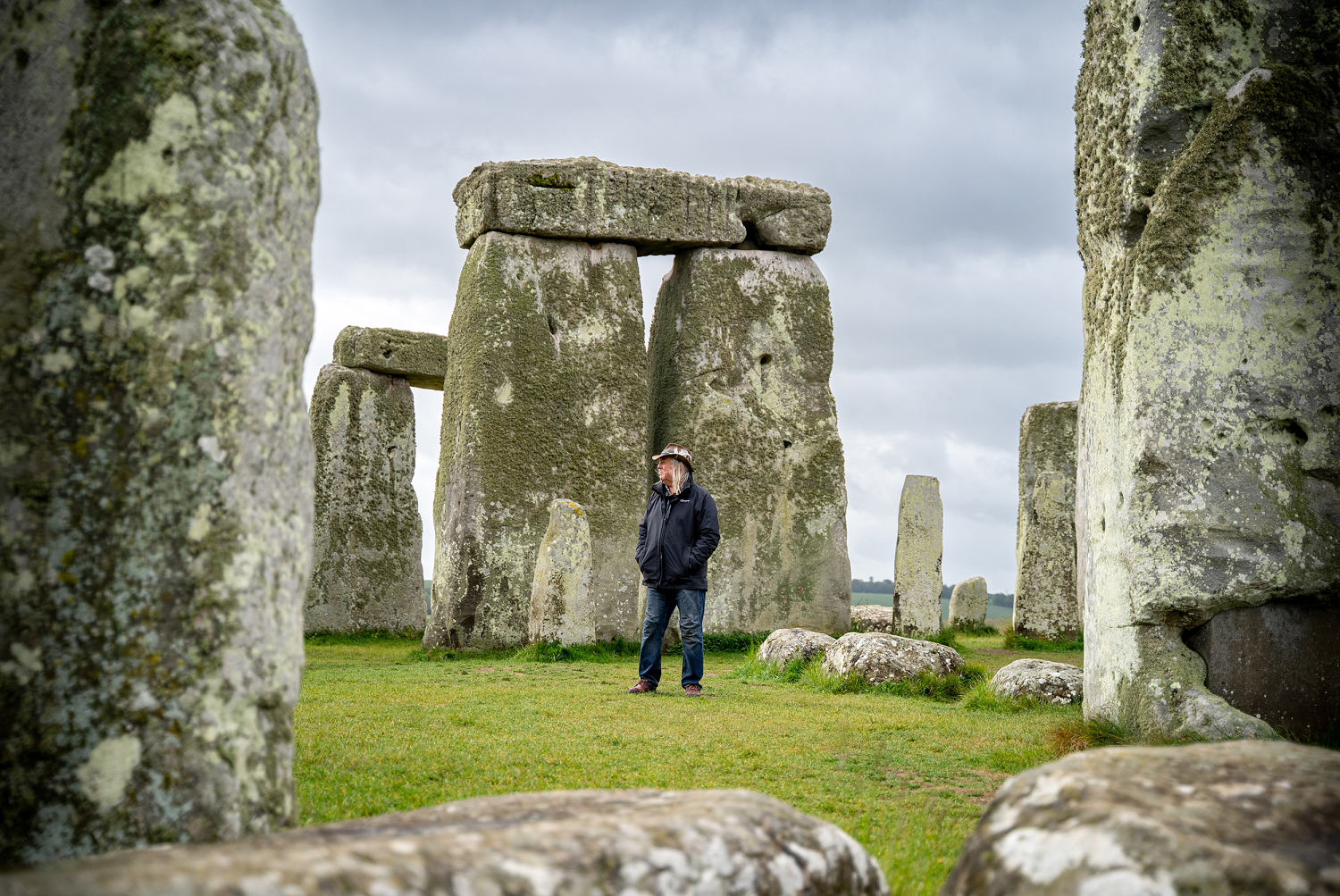
Early prototype of Stonehenge unearthed 3 miles away from prehistoric landmark
Key Points
LONDON — It’s just a stone’s throw away, but archeologists have discovered an earlier and simpler version of Britain’s iconic Stonehenge that predates the ancient landmark by around 500 years. Researchers uncovered two large pits that they believe once held towering wooden posts in the village of Bulford 3 miles to the east of Stonehenge in southern England, according to a news release from Wessex Archaeology, whose team made the discovery. “Up till now, our knowledge of this ancient feat of...
LONDON — It’s just a stone’s throw away, but archeologists have discovered an earlier and simpler version of Britain’s iconic Stonehenge that predates the ancient landmark by around 500 years.
Researchers uncovered two large pits that they believe once held towering wooden posts in the village of Bulford 3 miles to the east of Stonehenge in southern England, according to a news release from Wessex Archaeology, whose team made the discovery.
“Up till now, our knowledge of this ancient feat of astronomy was based on Stonehenge and other monuments of a similar period,” Phil Harding, who led the excavation, said in the news release Thursday. “But what we’ve discovered at Bulford is 500 years earlier than the famous stones we know so well.”
While the timber has long since rotted away, the posts lined up to point directly at the rising sun during the summer solstice and the setting sun at the winter solstice — in the same way as Stonehenge.
In an interview with NBC News, Harding said he was “ecstatic, but cautious,” as the team had to be “absolutely certain” their interpretations were correct.
Researchers also uncovered pottery, flint tools and animal bones at the site, suggesting it may have been a focal point for ceremonies and gatherings.
“The ancient people had quite a sophisticated knowledge about the sky, and the movements of the moon and the sun,” said Jennifer Wexler, curator of history at English Heritage, a charity that manages Stonehenge and around 400 other historic sites across England.
“But they had religious ideas about it too,” she said in a telephone interview Thursday.
Although the excavation took place between 2015 and 2017, archaeologists spent years analyzing the artifacts before concluding that the site dates to around 3000 B.C., when Stonehenge was at its earliest phase of construction.
This suggests that communities in the area were using this much simpler wooden construction to celebrate celestial events 500 years before Stonehenge’s massive stones were fully erected and carefully aligned with the movements of the sun.
“Those kinds of monuments were built by early farmers, who had to grow crops and sustain their animals,” Wexler said. “And for that, they needed the sun to do its job.”
Because the sun played such a crucial role in people’s livelihoods, she said, “celebrations linked to the solstices likely carried deep symbolic meaning.”
The Bulford discovery comes just ahead of this year’s U.K. summer solstice on Sunday, when thousands of people are expected to gather at Stonehenge to celebrate the longest day of the year.
“What few will realize is that 5,000 years ago on a nearby hillside overlooking modern-day Bulford, people were doing the exact same thing,” said Harding, who is well known in the U.K. for his appearances on the “Time Team” TV show.
Like their ancient ancestors, visitors standing at the center of the stone circle on Sunday will be able to watch the sun rise above the Heel Stone to the northeast — weather depending, of course.
During the winter solstice, the setting sun aligns with the monument’s central stone in the opposite direction.
One of Britain’s most recognizable landmarks, Stonehenge is among the country’s most popular tourist attractions. Designated a World Heritage Site by UNESCO in 1986, the organization had called it “the most architecturally sophisticated prehistoric stone circle in the world.”
Exactly who built Stonehenge — and how they transported some of its stones, weighing up to 40 tons, across vast distances — remains a mystery.
Its purpose is also debated. Some believe the monument was linked to death and burial rituals, while others argue it may have served as a place where communities gathered to mark important moments in the seasonal calendar.
“The regenerative power of the sun could have been connected with ideas about the afterlife,” Wexler said. “But social cohesion and bringing people together could also have been one of the purposes for such monuments.”
“People gather from all over the place to have massive feasts and celebrate these key moments in the seasonal calendar at a really grand scale,” she said.
“Perhaps people were doing it in Bulford, long before they put up the big stones of Stonehenge.”