
Education
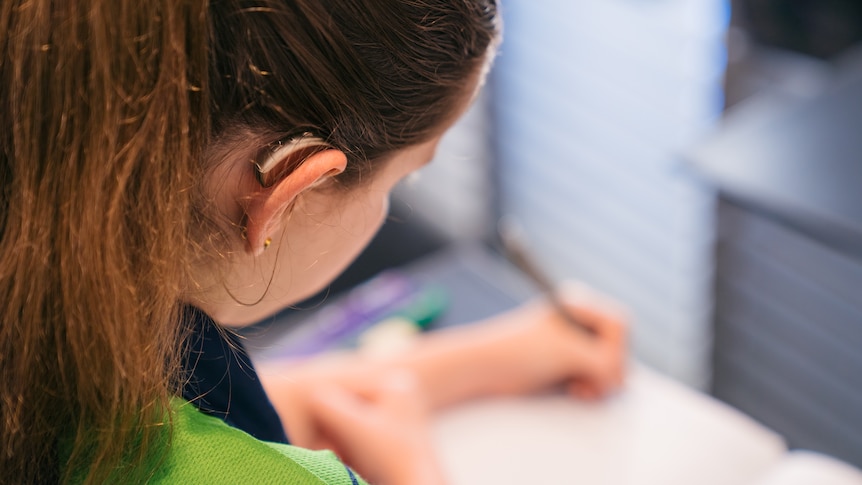
Concerns raised about special education training as schools operate below allocation
Key Points
Concerns raised about teacher training for special schools as allocations are unfulfilled Fri 19 Jun 2026 at 5:33am In short: Data from the education minister shows state-run special schools are operating with fewer teachers than recommended. Queensland Association of Special Education Leaders president Andrew Thompson said recruitment has become more challenging since some universities stopped specific special education degrees. The LNP state government plans to open seven new special...
Concerns raised about teacher training for special schools as allocations are unfulfilled
Fri 19 Jun 2026 at 5:33am
In short:
Data from the education minister shows state-run special schools are operating with fewer teachers than recommended.
Queensland Association of Special Education Leaders president Andrew Thompson said recruitment has become more challenging since some universities stopped specific special education degrees.
What's next?
The LNP state government plans to open seven new special schools in the coming years despite the 2023 disability royal commission recommending a phase-out.
A former special school principal has raised concerns around training and recruitment, as data from the education departments shows state-run special schools have fewer than their allocated number of full-time teachers.
The data, provided by Education Minister John-Paul Langbroek in response to a question on notice about staffing allocations, showed out of the 2049.2 full-time equivalent (FTE) teachers allocated to special schools across the state in April, 1,896.1 of those roles had been filled — 92.5 per cent of the allocation.
For comparison, mainstream primary schools have 102.8 per cent of the allocation filled, secondary schools have 97.8 per cent and mixed primary-secondary schools have 99 per cent.
Central Queensland, which has four special schools, has the lowest fulfilment with 93.4 full-time equivalent (FTE) teachers out of the 110.7 allocated — 84.4 per cent.
The region also has the lowest teacher allocation fulfilment across all schooling types in the state at 96.7 per cent.
In the question response, Mr Langbroek said the variance was not a direct measure of workforce shortage and that schools had the autonomy to make resourcing decisions within their allocation.
Queensland Association of Special Education Leaders president Andrew Thompson said being down even one teacher, particularly in small schools, could have a flow-on effect.
"It can have a bit of an impact [where] you've got kids with complex needs, ASD kids who struggle with a change of environment or a change of teacher or teacher aide with that class," Mr Thompson said.
But he said in mainstream schools, which typically had classroom sizes upwards of 20 students, being down teachers also had a great impact, especially if those shortages were of specialised subject high school teachers.
However, during flu season, when schools relied on relief teachers, special school relief teachers were less widely available than mainstream, he said.
"Work does become a problem when you engage a relief teacher who has very little or no special education background or understanding," he said.
"More often than not, the teacher aide in that class [carries] a fair load of the day."
University challenges
Mr Thompson, a former special school principal, said recruitment had been a challenge for special schools for several years.
"Up until about maybe three years ago, a number of universities ran specific special education degrees as part of their initial teacher education programs," Mr Thompson said.
"Those have since stopped. So people now studying initial teacher education programs have very little exposure to special education and students with complex needs."
Mr Thompson said it was also difficult for student teachers to complete their practical assessment in special schools.
"One of the challenges we have with some of our universities at the moment is that if you do get a teacher to do a practicum in a special school, they're often not allowed to finish their last practicum in that school," he said.
"There's some talk or consideration or some thought around that the curriculum delivery might not be as robust or as rigorous as it could be in a mainstream school.
"So, often, [student teachers] would have to go off to a mainstream school to finish their last practicum. And of course, if that school's got some vacancies, they're more than likely to find [a way] so that person can stay within that school."
Across the state, there are 46 special schools in operation, with an additional seven due to be built in the coming years.
The plan to build more schools comes despite a recommendation from the 2023 disability royal commission to phase out segregated special schools by 2051.
The commissioners were split on that recommendation; however, they agreed the current system could not continue.
Mr Langbroek said the new special schools were to help increase enrolment demand, which has risen 47 per cent since 2019.
"To attract and retain teachers, the department offers a range of initiatives including incentive programs, relocation packages, and other support for both new and experienced teachers," Mr Langbroek said.
"The Crisafulli Government is also delivering a new professional learning program in partnership with two universities for teachers to gain more qualifications to confidently manage students with diverse learning needs."
Mr Thompson added that the commission also recommended deepening the content of special education in teacher education programmes for teachers in both mainstream and special schools.
"Let's have a look at the content that sits within the initial teacher education programmes and just make sure that we have some greater depth of special education, pedagogy and skills, and the things that really support people working with these very unique students to make sure that when they hit the ground, they're much better prepared than they currently are," he said.