
Health
GPS interference from military jamming linked to fatal New Mexico plane crash, report finds
Key Points
GPS interference from military jamming linked to fatal New Mexico plane crash, report finds Four people died in the pre-dawn crash on May 14 that sparked a wildfire that burned for weeks - Bookmark - CommentsGo to comments A small medical plane that crashed into a New Mexico mountainside last month, killing four people, experienced a GPS malfunction due to military signal jamming in the area, federal investigators have revealed. Pilots had reportedly been warned to anticipate such...
GPS interference from military jamming linked to fatal New Mexico plane crash, report finds
Four people died in the pre-dawn crash on May 14 that sparked a wildfire that burned for weeks
- Bookmark
- CommentsGo to comments
A small medical plane that crashed into a New Mexico mountainside last month, killing four people, experienced a GPS malfunction due to military signal jamming in the area, federal investigators have revealed. Pilots had reportedly been warned to anticipate such interference.
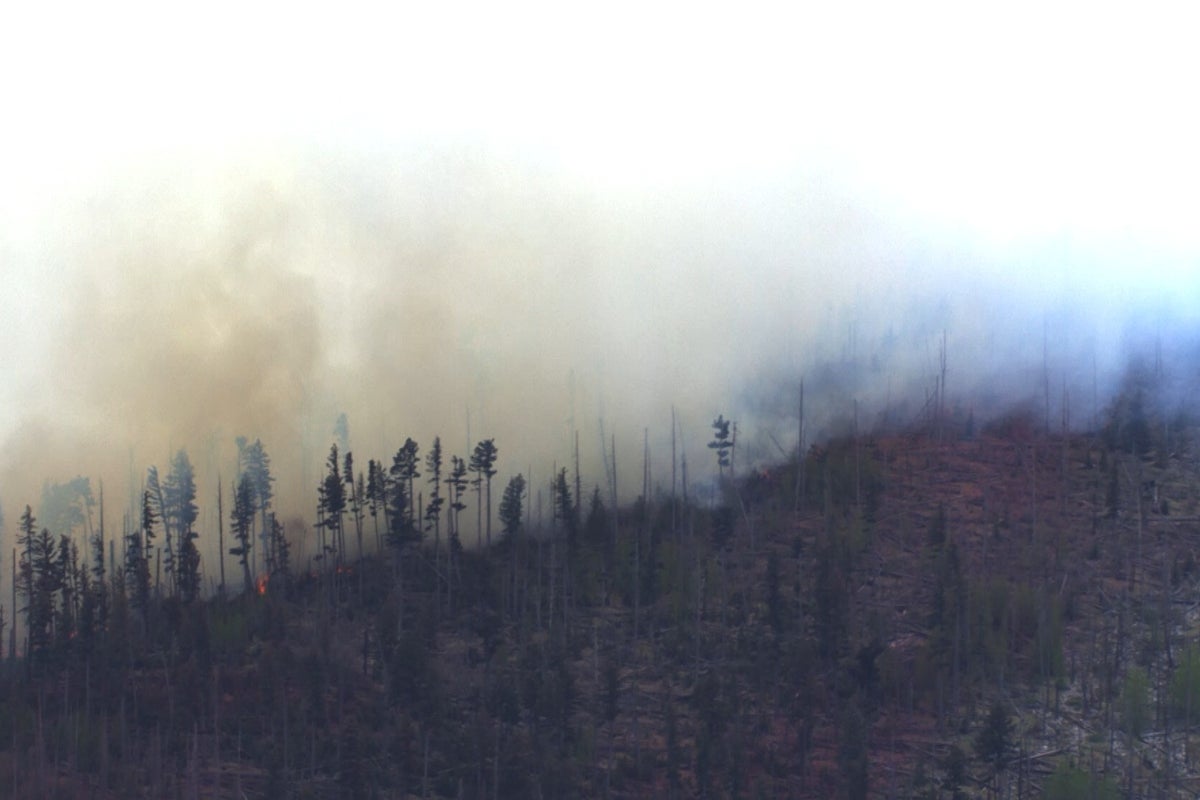
The pre-dawn crash on May 14 sparked a wildfire that raged for weeks in the rugged Capitan Mountains near Ruidoso, where the aircraft was attempting to land.
The National Transportation Safety Board (NTSB) released a preliminary report on Wednesday detailing the GPS issues encountered by the crew. However, the NTSB will not determine the definitive cause of the crash until its final report is issued next year.
Experts note that while pilots should be able to land using ground-based navigation or visual cues, GPS remains a popular choice for its precision.
“The loss of GPS should not result in the loss of an airplane, so there’s got to be more to it than that,” said retired airline pilot John Cox, who is now CEO of Safety Operating Systems.
The NTSB said that when the pilots of the plane operated by Trans Aero MedEvac started having problems, the air traffic controller gave them headings to follow into the airport so they could get lined up for an approach relying on the airport's instrument landing system. Three other planes in the area also reported GPS problems around the same time.
At one point, the controller even contacted the military and got it to shut down the jammers. But then shortly before the crash, the pilots told controllers they had the airport in sight and planned to land visually, so controllers gave the military the OK to resume jamming.
“If you can see the runway, you can see the mountain. Why would you fly into it?” Cox asked, because even with the new details in this preliminary report, there are still many unanswered questions about the crash.
Ruidoso, a mountain town with a year-round population of less than 8,000, sits at the base of south-central New Mexico’s Sierra Blanca range. The surrounding area, which includes Lincoln National Forest, is heavily forested and rural. The wildfire that started after the crash burned 48.4 square miles (125.4 square kilometers), but officials said on June 12 that it was 100% contained.
The Federal Aviation Administration published a Notice to Airmen ahead of time warning any pilots flying into the area that the military would be jamming GPS signals, so aviation safety expert Steve Arroyo said the medevac pilots should have been prepared to rely on other navigation systems.
But Arroyo said pilots often rely on GPS because it can safely guide them even in challenging territory where there is a narrow margin for error while navigating around obstacles.
“GPS can bring you in precisely with a margin of safety that’s required and bring you down for landing. But if you don’t have GPS, you can’t make that approach within those margins and you may drift outside using conventional navigation,” said Arroyo, who was a longtime pilot for United Airlines.
But when the pilots decided to attempt a visual approach they were taking responsibility to avoid any obstacles on their way into the airport.
The NTSB said the airplane descended to 9,400 feet (2,865 meters) as it approached the airport before climbing several hundred feet. But then the plane struck a mountainside at 9,950 feet (3,000 meters). The point of impact was about 230 feet (70 meters) below the Capitan Mountains Summit Radio Facility.
Trans Aero MedEvac has operated in southeastern New Mexico and west Texas since 1966. The victims who died in the crash were identified as pilots Keelan Clark and Ali Kawsara with the company Generation Jets and flight nurses Jamie Novick and Sarah Clark with Trans Aero MedEvac. The plane was en route from Roswell Air Center to Sierra Blanca Regional Airport when it crashed.
Join our commenting forum
Join thought-provoking conversations, follow other Independent readers and see their replies
Comments
New Mexico (LOCATION)
Capitan Mountains (LOCATION)
Ruidoso (LOCATION)
The National Transportation Safety Board (ORG)
NTSB (ORG)
John Cox (PERSON)
Safety Operating Systems (ORG)
Cox (PERSON)
New Mexico’s (LOCATION)
Sierra Blanca (ORG)
Lincoln National Forest (ORG)
The Federal Aviation Administration (ORG)
Steve Arroyo (PERSON)
Arroyo (PERSON)