
World News
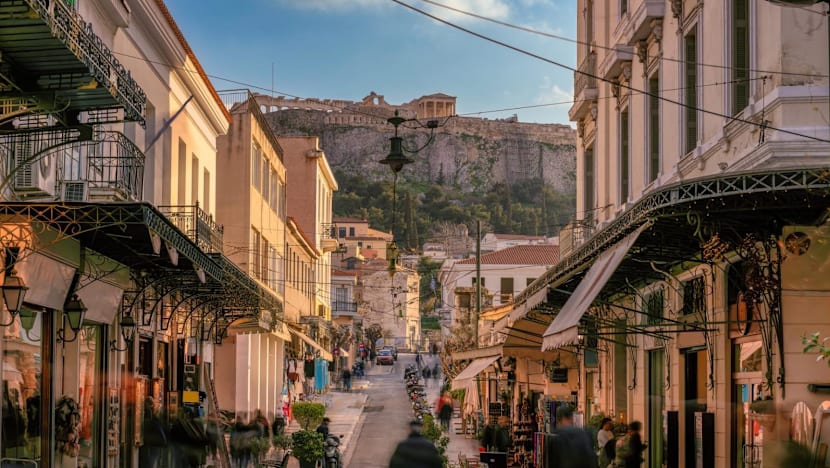
Where to eat, drink and explore in Athens, from ancient landmarks to modern tavernas
Key Points
Where to eat, drink and explore in Athens, from ancient landmarks to modern tavernas Beyond the Acropolis, Athens reveals a dynamic side shaped by contemporary art, inventive tavernas, lively wine bars and neighbourhoods buzzing with creative energy. Like a clock keeping time, the face of Athens is marked by the past, the minutes ticking by in ancient Greek ruins, remnants of Roman architecture and an assortment of gilded, Byzantine-era churches. But the city, so vigorously loved and...
Where to eat, drink and explore in Athens, from ancient landmarks to modern tavernas
Beyond the Acropolis, Athens reveals a dynamic side shaped by contemporary art, inventive tavernas, lively wine bars and neighbourhoods buzzing with creative energy.
Like a clock keeping time, the face of Athens is marked by the past, the minutes ticking by in ancient Greek ruins, remnants of Roman architecture and an assortment of gilded, Byzantine-era churches. But the city, so vigorously loved and lived-in — and which today braces against the strain of overtourism — is no open-air museum. Since emerging less than a decade ago from a brutal financial crisis, a story told in sprawling murals and tangled graffiti tags, Athens is finally eyeing its next Golden Age, fuelled by the fresh energy of locals and foreigners alike. With dozens of world-class museums and galleries, a refreshingly experimental food scene and innumerable buzzy bars, all set to a backdrop of music that courses through packed squares and leafy neighbourhoods, this age-old metropolis feels as alive as ever.
FRIDAY
2pm | Try a taverna with a twist
Hidden behind the church of Agioi Anargyroi in Psyrri, a graffiti-clad neighborhood with a gritty charm and a long history, the restaurant LS&Sia offers a fresh take on the classic Greek taverna. While some dishes like kakavia (€18, around US$21 or S$27), a fisherman’s soup, skew traditional, others, like raw langoustines served with bone marrow (€26), surprise the unsuspecting palate. The tension between old and new extends outward from the plate, to the sleek industrial steel tables and the open-concept kitchen. The charming in-house candle counter offers one final nod to conventional customs with its natural beeswax tapers (20 pieces for €10), the likes of which you’ll see in churches around the city.
4pm | Let ancient footsteps lead to antique treasures
For nearly 500 years, beginning in the 6th century BC, the heart of ancient Athens beat at the Agora (timed-entry tickets, €20), the city’s then-civic centre. Among other marvels, it’s home to the dazzlingly intact Doric Temple of Hephaestus. Under later Roman rule, it expanded into the nearby Roman Agora (€10). Both sites sit in what is now Monastiraki, a maze-like neighbourhood that more recently has also become known for its antique shops. The sprawling flea market in Abyssinia Square offers a still wider selection of goods — bring cash and come ready to bargain. The antiques emporium and fine art gallery Martinos, founded in 1895, is another destination for eclectic (if pricey) pieces, from 17th-century Turkish serving ware to mid-century lounge chairs.
7.30pm | Find a taste of the islands downtown
Strolling west from the agoras will take you through Anafiotika, a warren of narrow pathways and 19th-century whitewashed houses, and downhill to Plaka, an area that has been inhabited for more than 3,000 years. There, you’ll see Tripodon Street — so named for the bronze tripods that once lined the road to honour the winners of theatrical and musical contests — where street musicians play rebetika, a form of Greek folk music, on the guitar and the bouzouki, a stringed instrument resembling a lute. At Finewine, a wine bar just off the road, reward your wanderings with a pour of something local (from €8) and a charcuterie platter (€12). The elevated staples at Thespis, set just beneath the Acropolis, are slightly more substantial, like mastelo cheese (€12) from the island of Chios, served with a homemade tomato jam; and moussaka (€16) in a decadent bechamel sauce.
9pm | See stars onscreen and in the sky
Cine Paris has been a fixture in the city since the 1920s, when a cinephile hairdresser who’d spent years in the French capital decided to return home and open a movie theatre. Showings play on the rooftop terrace as the moon rises over the Acropolis, and run the gamut, from Greek classics to current releases (€10, book in advance). End the night at Dexameni, an unassuming kafenio, or coffee house, built over the ruins of a Roman reservoir. The restaurant doesn’t take reservations, so prepare to wait. But the cold beer (from €4); tsipouro, a strong Greek spirit (from €5); and assorted mezze, including Cretan dakos, a salad of tomatoes, feta and twice-baked bread (€7.50) will make it worth your while.
SATURDAY
8am | Wave to the gods
Grab a flaky cheese pie (€2) loaded with feta from Elassona, a town nestled at the foot of Mount Olympus, from the beloved bakery Lycabettus in Kolonaki. Take it to go — from here, it’s about a 15-minute cab ride or a 40-minute walk southwest to the Acropolis (€30). If you decide to trek it, wear comfortable shoes, sunscreen and a hat — and pass through the National Garden en route. Take your time admiring the marble marvels on the hill, in particular, the Parthenon, the ancient temple dedicated to the goddess Athena; and the Erechtheion, most famous for its South Porch, the roof of which is supported by six draped female statues known as caryatids. The current dames are replicas — you can see five of the originals nearby at the Acropolis Museum (€20).
12pm | Shop, then drop at the top
Over in Koukaki, where the scent of bitter orange trees fills the air, the cafe and concept shop Ere Athens stocks handmade ceramic tableware by Greek potters, Mediterranean textiles, natural candles and even oregano blossoms, used as a garnish, from organic farms on the Aegean Islands. Pick up a translated work of Greek fiction or poetry from Little Tree Books and Coffee and head over to Philopappos Hill, a hilly, historic park southwest of the Acropolis. You can plop down and read it on the grass at the Pnyx, one of three hills forming the pine-covered area — and upon which orators like Pericles once spoke — or climb the Hill of the Nymphs for spectacular views of the sea. Exit on the other side, in the understated Petralona neighbourhood.
2pm | Go for the food, stay for the art
Everything about Taverna Oikonomou, which has been churning out hearty meals since the 1930s, makes you feel at home. There’s the food, of course — cosy, comforting dishes like imam (€12), made of eggplants stuffed with onions, garlic, tomatoes and olive oil, and slowly simmered in tomato sauce; fried saganaki cheese (€9); and meaty mains like roast lamb (€17), all served with baked potatoes, rice, pasta or cooked vegetables. Then there’s the building itself, which is warmed from the outside by sun-yellow walls; inside, original works by Greek artists like Spyros Vassiliou and Alekos Fassianos pop against the buttery backdrop.
4pm | See boundary-pushing creations and sit for a spritz
Take a taxi (about €6) or walk off lunch (about 25 minutes) to the National Museum of Contemporary Art Αthens, known as EMST (€10). In a pioneering post-war building that first housed a brewery, it’s now a go-to for conceptual and avant-garde art by Greek and international artists, such as the Greek-American neon pioneer Chryssa and the Belgian artist Kasper Bosmans. A 10-minute walk south is Neos Kosmos, which is fast becoming one of Athens’s hippest neighbourhoods, and have a drink (from €7) at Bar Amore, a tiny, recently opened “spritzeria,” or at Epta Martyres, which touts an extensive wine list and a menu full of reimagined Greek mezze (from €7 per glass; €6 per mezze). You just tell them how many dishes you’d like to try — they’ll bring out a surprise selection.
8pm | Enjoy a meat-and-greet
In nearby Pangrati, one of Athens’s most lived-in neighborhoods, is Mavros Gatos, a picturesque tavern with red-and-white checkered tablecloths, known for its veal liver wrapped in lamb suet (€11). For lighter fare, the upscale Papadakis Restaurant in Kolonaki counts grouper fricassee (€33), stewed with lemon, lettuce and celery, and souma, a traditional spirit made in Paros, from which its head chef hails, among its offerings.
10pm | Keep the party going
Explore the nearby bohemian enclave of Exarcheia, long a haven for anarchists and artists, and have a cocktail at Warehouse (from €8.50) on the boisterous Valtetsiou Street. If you’re up for a late night and long to hear local tunes, Aggelos hosts live performances of Greek folk music, sans microphones.
WHERE TO STAY
Overlooking Syntagma Square and the Hellenic Parliament, the opulent, historic Grande Bretagne — since 1874, one of the city’s most storied stays — is an Athenian institution. (Rooms from about €800 during the high season.)
Set in the city centre, in the bones of the old Hilton Hotel, the recently refurbished Conrad Athens The Ilisian is an urban resort with 278 rooms, nine restaurants and bars and an impressive wellness space, as well as access to the gym and pool at House of Nynn, a relatively new private members’ club. (Rooms from €579 in the high season.)
On Patriarchou Ioakeim, Kolonaki’s main drag, Coco-Mat Hotel Athens features small rooms but extremely comfortable beds. It’s modern, affordable and eco-friendly — guests sleep on biodegradable mattresses and can borrow wooden bikes to explore the city. (During the summer, rooms start at €190.)
As part of a broader effort to address both overtourism and a national housing crisis, the Greek government has taken measures to limit the establishment of new short-term rentals in central Athens. Still, plenty can be found on platforms like Airbnb.
SUNDAY
8am | Come around the mountain
Mount Lycabettus, the highest point in central Athens, has the best panoramic views of the city. It’s an almost 20-minute hike from the bottom of the hill to the Church of St. George, which teeters at the top; you can also take the cable car from Kolonaki (cars run every half hour from 9am until 1.30am; €13 round-trip). On the way down, treat yourself to an unfiltered Greek coffee with your desired level of sugar — sketos, or none; metrios, a bit; or glykos, a lot — at Filion (€3.20), an institution favored by locals. Add an omelette (from €7) to your order if you’re feeling peckish.
10am | Do the time warp again
Complete your odyssey through Greek history in leafy Kolonaki, at the Benaki Museum of Greek Culture (€12). Its permanent collection, which is housed in a neo-Classical building, includes artifacts from the prehistoric era to the 19th-century Greek Revolution, including gold jewellery from the third century BC and the Nobel Prize medal awarded to the Greek poet George Seferis in 1963. If there’s time, stop into the nearby Museum of Cycladic Art (€12), which displays Bronze Age figurines, vases and other objects from around the island group. On view through August, the exhibit “‘Venus’ Lespugue” — which centres around a balloon-like orange sculpture by the artist Jeff Koons — puts a contemporary artwork in dialogue with the museum’s clutch of Paleolithic Venus figurines.
By Iliana Magra © The New York Times.
This article originally appeared in The New York Times.