
Politics
Commentary: PAS the party to watch in Johor and Negeri Sembilan polls
Key Points
Commentary: PAS the party to watch in Johor and Negeri Sembilan polls The break between Parti Islam Se-Malaysia (PAS) and Parti Pribumi Bersatu Malaysia could portend a major realignment of the country’s ethnic Malay-based parties, writes CNA’s Leslie Lopez. The formal severing of ties between Parti Islam Se-Malaysia (PAS) and its erstwhile ally, Parti Pribumi Bersatu Malaysia (Bersatu), has been pitched as a clash of personalities between its top two leaders, cleric Abdul Hadi Awang and...
Commentary: PAS the party to watch in Johor and Negeri Sembilan polls
The break between Parti Islam Se-Malaysia (PAS) and Parti Pribumi Bersatu Malaysia could portend a major realignment of the country’s ethnic Malay-based parties, writes CNA’s Leslie Lopez.
KUALA LUMPUR: The formal severing of ties between Parti Islam Se-Malaysia (PAS) and its erstwhile ally, Parti Pribumi Bersatu Malaysia (Bersatu), has been pitched as a clash of personalities between its top two leaders, cleric Abdul Hadi Awang and former Prime Minister Muhyiddin Yassin.
But this rupture runs far deeper.
A seismic shift is underway in the dynamics of ethnic politics in Malaysia.
The divorce, finalised on Jun 8 after months of public feuding, could signal the beginnings of a slow demise of the opposition Perikatan Nasional (PN) coalition. More consequentially, it could also presage a PAS-centric era in Malay political life - one with far-reaching implications for the country’s multiracial fabric.
PAS, the opposition force with the largest bloc of Members of Parliament in the lower house, now stands at an inflection point.
With a membership base exceeding 1 million and the control of four state administrations, PAS has transformed from a fringe political entity – once dismissed as a political phenomenon confined to the northern rice-bowl rural Malay states – into the pivot around which the future of Malay politics could revolve.
While several other Malay political entities – such as United Malays National Organisation (UMNO) and Bersatu – haemorrhage support among the community they claim to represent, PAS is consolidating its position with the country’s conservative Malay-Muslim.
Consider the individual trajectories of UMNO and PAS in recent years: The decline of UMNO, once considered the preeminent guardian of ethnic Malay interests, has been the most dramatic. The party that won 102 seats in the 222-member lower house in the 2004 general election took a mere 26 seats in the last national polls in 2022.
PAS’ ELECTORAL TRAJECTORY
By contrast, PAS has demonstrated one of the most remarkable electoral trajectories.
In the 2013 General Election, it won 21 seats before this tally dipped slightly to 18 seats in the 2018 poll. Then in 2022, PAS emerged as a serious national contender when it won 43 parliamentary seats, capturing roughly 54 per cent of the popular vote among the Malay electorate on the peninsula.
The question is no longer whether PAS matters, but rather whether the party can parlay its current dominance and turn itself into a lasting national political force.
The upcoming state assembly polls in Johor and Negeri Sembilan - both highly urbanised states with ethnic Malays accounting for 60.1 per cent and 58 per cent of the general populations respectively - are set to serve as laboratories that will provide clues to the changing voter sentiment.
PAS is expected to contest in both state elections, and they present a crucial challenge and opportunity for the party.
These contests will provide the first major test of whether PAS can lay the foundations outside of the four mainly rural Malay-belt states of Kelantan, Terengganu, Kedah and Perlis that it now governs.
Both Johor and Negeri Sembilan offer different dynamics.
WILL JOHOR REMAIN UMNO FORTRESS?
Johor, currently an UMNO fortress, will go to the polls first on Jul 11. The results will reveal whether UMNO remains the unassailable guardian of Malay interests in the strategic southern gateway of Peninsular Malaysia or whether the party has hollowed out beneath the surface.
The UMNO-led Barisan National (BN) coalition is hoping for a big win in Johor to build momentum when it does battle in Negeri Sembilan, which goes to the polls on Aug 1. Wresting control of the Negeri Sembilan state government away from Prime Minister Anwar Ibrahim’s Pakatan Harapan coalition, would embolden UMNO’s push for early national elections.
This assumption, however, ignores the quiet transformation of PAS from a northern curiosity to a serious participant in the upcoming state polls.
For years, UMNO and its BN allies successfully portrayed PAS as a party full of turbaned clerics who practice a dogmatic brand of Islam that allows for severe corporal and criminal punishments for certain crimes.
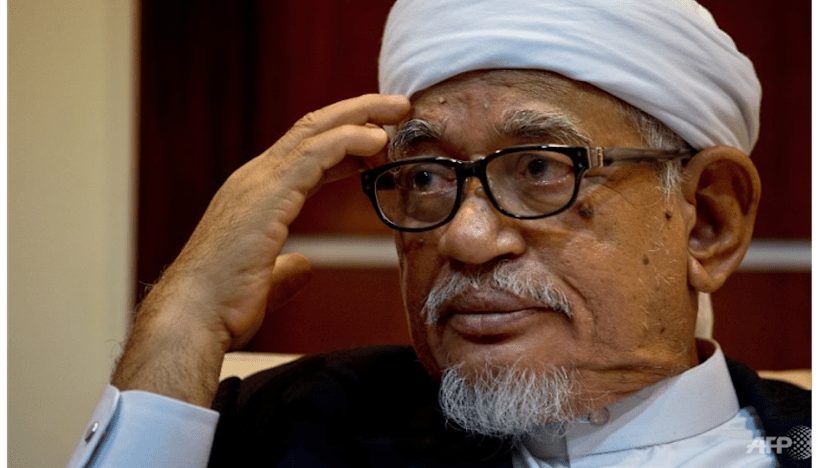
That stereotype no longer holds. While Hadi still regularly sports a white turban and a long, flowing ankle-length garment that reinforces his identity as a veteran cleric, the Islamic party’s current leaders are more partial to suits that exude executive authority.
PAS is already bulking up for this new political challenge by exploiting the turmoil in former Prime Minister Muhyiddin’s Bersatu.
Hamzah Zainuddin, previously Bersatu’s Number 2, fell out with his boss early this year and was expelled for allegedly breaching the party constitution. But his expulsion only damaged Muhyiddin and Bersatu more.
Hamzah took 19 of Bersatu’s 25 MPs and most of the party’s division chiefs nationwide with him. On Jun 13, he launched his so-called “Wawasan” or Vision political movement in the heartland of Kelantan - at an event graced by PAS chief Hadi himself.
The grafting of Hamzah is significant because it offers PAS a partner who is a moderate Malay face with solid administrative experience and an appeal beyond the Malay heartland.
Hamzah, who is 69 years old, is a seasoned political journeyman. He is a former UMNO "warlord" who served as a minister in the BN governments under the late Abdullah Ahmad Badawi and now-jailed Najib Razak. He joined Bersatu in 2016 and before his expulsion, he was already wooing PAS leaders to create a new political force.
RISK FOR PAS
There is also a flipside risk for PAS by teaming up with Hamzah.
Hamzah brings with him the baggage of an UMNO-era career and a reputation as a defector rather than a vote winner. Critics could also argue that PAS is importing a recycled establishment figure who is unlikely to win over the younger and urban Malay voter.
The PAS-Hamzah alignment was not part of the political calculus when the Johor and Negeri Sembilan administrations dissolved their assemblies on Jun 1 and Jun 5 respectively.
But now, at minimum, the PAS-Hamzah combination could emerge as serious spoilers in both the state polls.
How this new opposition partnership will present itself to the voters in two states will require some deft finessing.
In Johor, the new PAS-Wawasan ticket could offer itself as a Malay unity alternative to UMNO, and in the process peel away enough UMNO support to split the votes and cause electoral upsets.
Even if PAS only manages to win a few seats in Johor, it will represent the clearest sign yet that the party’s support base is expanding far beyond its northern strongholds.
Unlike Johor, where Malay-majority seats form the lion share of seats to be contested, the profile of the state constituencies in Negeri Sembilan are more mixed. That, in turn, will present the PAS-Wawasan with the challenge of crafting a message that will transcend its religious identity.
The Johor and Negeri Sembilan elections have been framed in many ways including being a potential referendum on Mr Anwar’s leadership.
But how PAS performs in these polls is also something to watch.
Johor (LOCATION)
Negeri Sembilan (LOCATION)
Islam Se-Malaysia (PERSON)
Pribumi Bersatu (PERSON)
Malaysia (LOCATION)
Malay (ORG)
CNA (ORG)
Leslie Lopez (PERSON)
KUALA LUMPUR (LOCATION)
Bersatu (ORG)
Abdul Hadi Awang (PERSON)
Muhyiddin Yassin (PERSON)
Perikatan Nasional (ORG)
Parliament (ORG)
PAS (ORG)