
World News
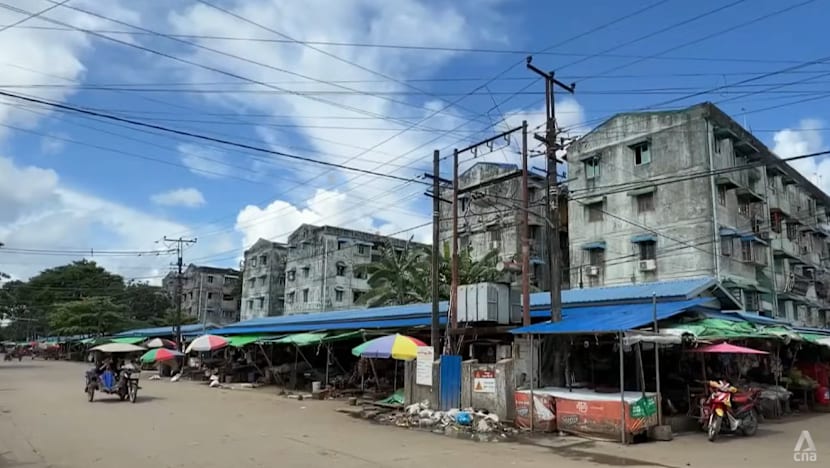
Experts urge Yangon to step up building inspections after unusual earthquake aftershocks
Key Points
Experts urge Yangon to step up building inspections after unusual earthquake aftershocks Parts of Myanmar – including areas further south – have continued to experience seismic activity since a devastating earthquake struck Mandalay last year. An earthquake monitoring body has called on authorities in Yangon to intensify building inspections, following a series of unusual aftershocks triggered by an earthquake that struck Myanmar's largest city last month. The Myanmar Earthquake Committee...
Experts urge Yangon to step up building inspections after unusual earthquake aftershocks
Parts of Myanmar – including areas further south – have continued to experience seismic activity since a devastating earthquake struck Mandalay last year.
YANGON: An earthquake monitoring body has called on authorities in Yangon to intensify building inspections, following a series of unusual aftershocks triggered by an earthquake that struck Myanmar's largest city last month.
The Myanmar Earthquake Committee proposed a pilot project with the Yangon City Development Committee (YCDC), aimed at assessing the structural integrity of buildings and strengthening the city's disaster preparedness.
On May 18, Yangon was hit by a 5.2-magnitude quake, followed by several aftershocks within a day – an event experts described as unusual for the city.
“The plan is to conduct a comprehensive visual screening of a single street or ward and present our findings,” noted Saw Htwe Zaw, vice-chairman of the committee.
“Once we demonstrate the practical value of this pilot study to senior officials, the project can be scaled up systematically across townships and districts.”
According to Saw Htwe Zaw, many of Yangon's high-rise buildings have generally been constructed in accordance with safety standards, with quality-control measures incorporated from the early stages of development.
But significant gaps remain, particularly among older and smaller buildings, he said.
Past limitations in inspection capacity meant mandatory building reviews were only required for structures with at least eight or nine storeys, leaving smaller buildings largely unregulated.
Many older low- and mid-rise buildings were constructed before formal inspection processes were introduced, with earthquake resilience not factored into their design, added Saw Htwe Zaw.
Among the YCDC’s priorities now are assessments of existing buildings, including hospitals, schools and public markets.
Saw Htwe Zaw outlined a three-stage evaluation process.
"First, we conduct a basic visual screening to estimate the building's age, construction type, and structural layout to evaluate its initial resilience," he said.
"Second, if a building shows signs of distress during this phase, we move to a slightly more detailed inspection.
"Third, if the condition remains critical, we carry out full structural engineering calculations – just as we would for a new building – to identify exactly what needs to be retrofitted or repaired."
RESIDENTS REMAIN CONCERNED
The inspections could help reassure residents after smaller earthquakes struck parts of Yangon in June.
"There are visible cracks and minor damage in the Yuzana housing structures," said one resident.
“It is not that people do not understand what needs to be done or that they are unaware the building could be unsafe. They know the risks, but many people have no choice but to continue to live there.”
The resident added that economic hardship remains a major obstacle for many families.
“The reality for many Myanmar people is severe poverty. In ordinary neighbourhoods, you can find families living in homes patched together with plastic woven sacks. They are simply that poor.”
This comes as the Southeast Asian nation ramps up disaster preparedness efforts nationwide.
In March last year, a devastating 7.7-magnitude earthquake struck the country’s second-largest city of Mandalay. It killed more than 3,800 people and caused widespread destruction.
Parts of Myanmar – including areas further south – have continued to experience seismic activity since then.
While the Mandalay disaster remains one of Myanmar's deadliest natural disasters in recent history, experts say it has also provided important lessons on how the country can better prepare for future earthquakes.
“For Yangon, we now have the benefit of hindsight from Mandalay's disaster," said Saw Htwe Zaw.
“Because we know what went wrong, we have already established networks and mapped out connections with organisations in Yangon that have heavy machinery,” he noted.
He added that authorities now have a clearer understanding of available emergency resources.
"We now know exactly which team has which equipment. Keeping this inventory ready means that if an earthquake occurs, we can immediately mobilise and coordinate.”
Myanmar's government, led by former army chief Min Aung Hlaing, has also taken steps to strengthen disaster management capabilities.
These include the establishment of an emergency operations centre in Yangon with support from India.
India has provided equipment and assistance aimed at helping Myanmar respond more effectively to future disasters.