
Business & Finance
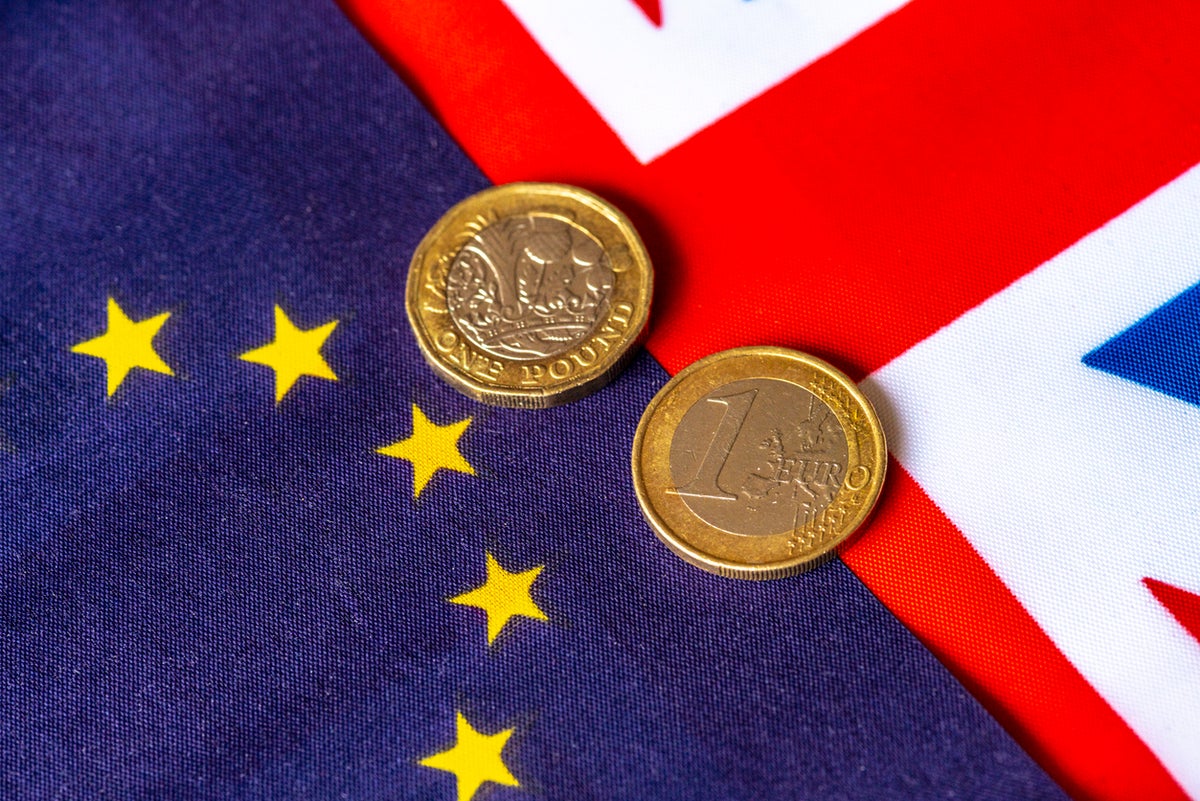
What Brexit did to the economy, inflation and housing market ten years on
Key Points
What Brexit did to the economy, inflation and housing market ten years on Houses rose in value after Brexit - but economic growth stalled. How much of each was down to leaving the EU? - Bookmark - CommentsGo to comments It is a decade since the Brexit vote and the ramifications are still being felt. The EU referendum took place on 23 June 2016 when the UK voted to leave the political bloc, ending the country’s membership of the customers union and the single market.
What Brexit did to the economy, inflation and housing market ten years on
Houses rose in value after Brexit - but economic growth stalled. How much of each was down to leaving the EU?
- Bookmark
- CommentsGo to comments
It is a decade since the Brexit vote and the ramifications are still being felt.
The EU referendum took place on 23 June 2016 when the UK voted to leave the political bloc, ending the country’s membership of the customers union and the single market.
At the time, the Treasury warned that there would be an economic shock if the UK voted to leave the EU and outlined some severe scenarios that were labelled “project fear” by Leave supporters.
So, ten years on, how has Brexit really affected household finances?
Economic growth
The Treasury predicted that UK GDP could drop 3.6 per cent in a shock scenario and six per cent in a severe one over two years if the UK voted to leave the EU.
Economic growth did indeed slow after the referendum, averaging around 1.5 per cent in the post-vote pre-pandemic years between 2017 and 2019, according to JM Finn, versus 2.2 per cent in 2015.
Meanwhile the UK now sits near the bottom of its G7 peers in terms of post pandemic GDP growth and a recent data analysis from Bank of England economists showed a 6 per cent loss of UK GDP over a 10-year period attributable to Brexit, driven by trade frictions, supply chain disruptions, and persistent inflationary pressures.
Europe: The Way Back
We're campaigning to rebuild Britain's future in Europe
There have of course been other factors though.
Russ Mould, investment director for AJ Bell, said: “So much has happened since the EU membership referendum of June 2016, in the shape of Covid and lockdowns, Russia’s attack on Ukraine, and this year’s war in the Middle East – to name but three. That means it is very hard to fully assess the long-term impact of Brexit upon the UK economy.”
Inflation
Forecasts of high inflation proved accurate, rising 0.5 per cent year-on-year in June 2016 to a peak of three per cent in late 2017. Two years after the vote the consumer prices index still stood at 2.4 per cent and since surged after the pandemic and the Russian invasion of Ukraine.
The cost of living measure has been slower in recent months but there are fears that the Iran conflict could push it higher again.
The recent inflationary changes can’t be solely blamed on Brexit though.
Get a free fractional share worth up to £100.
Capital at risk.
Terms and conditions apply.
ADVERTISEMENT
Get a free fractional share worth up to £100.
Capital at risk.
Terms and conditions apply.
ADVERTISEMENT
Andy Oury, owner partner at accountancy firm Oury Clark, said: “Brexit isn’t responsible for every problem. Wars, inflation, and global economic shocks have all put pressure on living standards.
“Brexit supporters would also point to the fact that we still have our own currency, which gives us greater control over monetary policy.”
Housing market
Rather than crashing since the Brexit vote, the housing market boomed, thanks to a stamp duty holiday.
This boosted demand but also pushed up prices and growth has been slower in recent years due to high mortgage rates in the aftermath of the cost of living crisis.
Scott Clay, a director at property lender Together said: “While it's difficult to isolate Brexit from other major events we've experienced over the past decade, including the pandemic, inflation surge and rapid increases in interest rates, and, more recently, tensions in Iran cooling buyer confidence - the reality for many households has been higher borrowing costs and greater affordability pressures over the past decade.”
He suggests new trade barriers, supply chain friction and a reduction in EU workers have directly affected the costs of new builds and may have hampered the viability of many housing developments.
Clay added that London in particular has seen cooling due to a drop in international buyers and EU nationals, adding: “This has led many developers, investors and home buyers to look to the North and Midlands for better value.
“Over the past year, mortgage rates have become more stable and lenders are continuing to support borrowers with a wider range of flexible products. Ultimately, the long-term health of the housing market will depend on affordability, housing supply and economic confidence.”
Investments
The performance of equities since the Brexit vote is an important lesson in time in, rather than timing, the markets.
In the immediate aftermath of the vote, the more UK-focused FTSE 250 stock index fell by 12 per cent, while the blue-chip FTSE 100 closed the day 3.15 per cent lower.
But the major indices such as the S&P 500 and the FTSE 100 have hit record highs in recent months, although UK stocks have lagged the more technology-focused US markets.
Angeline Ong, senior technical analyst for IG, said: “A decade after the referendum and some six years since Brexit became official, UK investors got solid returns and doubled their money, but if you were chasing the decade’s defining growth wave, you needed exposure to chips, data-centre networking and AI infrastructure - that’s where the profit monsters were hiding.”
How to react
There have been growing calls for a new customs union with the EU and Labour leadership contender Andy Burnham has even said he would like to rejoin one day.
But none of that is certain and there are steps you can take to protect your wealth.
Rather than attempting to second-guess how political or economic developments will play out, Craig Rickman, personal finance expert at interactive investor said, investors are usually better served focusing on what they can control.
“This includes maintaining an emergency fund, making the most of tax-efficient wrappers such as ISAs and pensions, investing regularly where possible, and staying diversified rather than making knee-jerk decisions based on headlines.”
He highlights that while periods of uncertainty can be uncomfortable, history shows that investors who maintain a long-term perspective and stick to a plan are generally better placed than those who try to predict political or economic outcomes.
“The biggest risk is often allowing events beyond our control to stop us taking action on the things that are within our control,” he added.
“If the last 10 years have taught investors anything, it’s that unexpected events will always come along. Financial resilience isn't about predicting what's next – it's about putting yourself in the strongest possible position to deal with whatever comes next.”
When investing, your capital is at risk and you may get back less than invested. Past performance doesn’t guarantee future results.
Join our commenting forum
Join thought-provoking conversations, follow other Independent readers and see their replies
Comments