
Business & Finance
Florida man, 84, sues after becoming ‘distracted’ by Waffle House ad and tripping on ‘abnormally high’ curb
Key Points
Florida man, 84, sues after becoming ‘distracted’ by Waffle House ad and tripping on ‘abnormally high’ curb Exclusive: Edward Bowlds, 84, ‘feels strongly that Waffle House was negligent, and he is eager to have his day in court to prove it,’ his attorney told The Independent - Bookmark An 84-year-old Waffle House customer is suing the chain after becoming “distracted’ by window signage for its limited-edition Strawberry Shortcake Waffle and stumbling over an “abnormally high” curb, smacking...
Florida man, 84, sues after becoming ‘distracted’ by Waffle House ad and tripping on ‘abnormally high’ curb
Exclusive: Edward Bowlds, 84, ‘feels strongly that Waffle House was negligent, and he is eager to have his day in court to prove it,’ his attorney told The Independent
- Bookmark
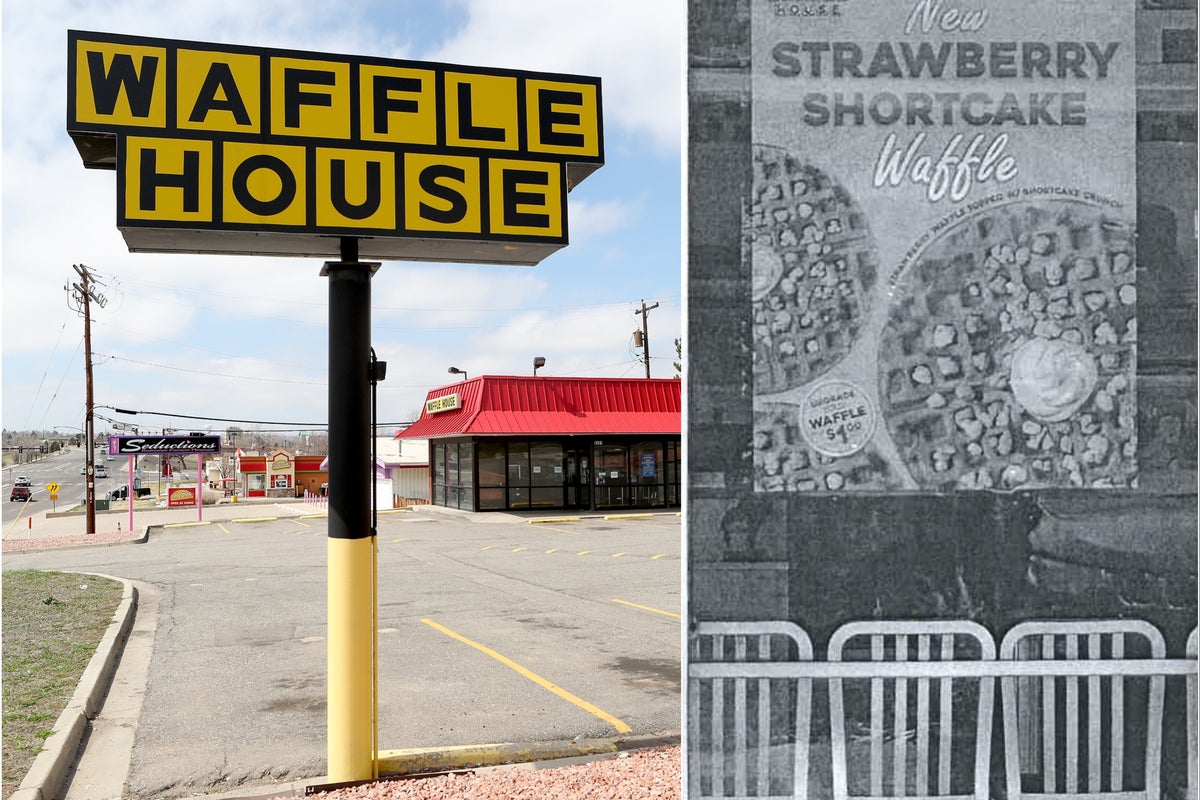
An 84-year-old Waffle House customer is suing the chain after becoming “distracted’ by window signage for its limited-edition Strawberry Shortcake Waffle and stumbling over an “abnormally high” curb, smacking face-first into the concrete pavement, according to federal court filings reviewed by The Independent.
“While navigating the parking lot and stepping up the abnormally high curb, Plaintiff Edward Bowlds' attention was distracted by the advertisements, and he unknowingly tripped and fell over the curb which resulted in severe and permanent injuries,” the complaint states.
It accuses the Waffle House in Bartow, Florida, of “[i]ncreasing the risk of harm beyond ordinary conditions by prioritizing marketing and visual appeal over pedestrian safety,” claiming the window ads were “intended to attract and hold the attention of patrons approaching on foot,” while maintaining they were entirely unnecessary.
“In other words, these advertisements were for customers already at the restaurant who were already pre-disposed to dining at the restaurant but were still ambulating across the parking lot and onto the sidewalk,” the complaint argues.
The combination of curb height, a lack of warning paint, and the “distraction created by the window advertisements… all amount to unreasonably dangerous conditions” at the Waffle House in question, the complaint contends.
“Waffle House, by providing signs in the windows, is inviting its customers to take their attention away from the hazards of the parking lot and curb to read the displays,” according to a pre-suit demand letter filed in court as an exhibit.
It would be “disingenuous for Waffle House to suggest that Mr. Bowlds should have been watching where he was walking when it was Waffle House who distracted his attention away from where he was walking,” the letter said.
Bowlds, who lives in the area, suffered a torn rotator cuff in the tumble, the filings state.
Attorney W. Lee Clark, who is representing Bowlds, told The Independent that his client “is recovering from his injuries, but unfortunately he will deal with pain and limitations the rest of his life.”
“Mr. Bowlds feels strongly that Waffle House was negligent, and he is eager to have his day in court to prove it,” Clark said.
A Waffle House spokesperson did not respond to a request for comment.
On April 17, 2025, Bowlds and his wife, Dorothy, arrived and parked at their local Waffle House, according to the complaint, which was initially filed in state court before being removed in March to Tampa federal court.
As the couple headed from their car to the restaurant’s front door, Bowlds found himself fixated on “large advertisements in the windows facing the parking lot where customers entering the restaurant would be coming from,” the complaint states.
“However, there is no need for the advertisements to be displayed in such a manner as it unreasonably increases the risk of a trip and fall by a customer already going to enter the restaurant,” it goes on.
Waffle House should have known that guests heading inside “would be viewing the advertisements in the windows as [they are] navigating the step up from the parking lot to the sidewalk,” the complaint continues. Further, it describes the “abnormally high” curb as “devoid of any paint or markings which would draw a pedestrian's view to the change in elevation.”
In the pre-suit demand letter, Clark pointed to a series of yellow bollards installed outside the restaurant after Bowlds’ accident, saying that had Waffle House put them up earlier, or had painted the curb yellow, that the retiree “would have been able to perceive the curb and avoiding tripping.”
At Bowlds’ age, a shoulder replacement – which would purportedly bring his total medical costs from about $25,000 at the moment to roughly $100,000 – is not a viable option, according to the letter, which describes Bowlds as now living a “sedentary lifestyle at home in his recliner, [u]nable to assist his wife with grocery shopping, doing lawn care that he used to do, and ordinary everyday tasks around the house.”
Bowlds and his wife, who is his co-plaintiff in the suit, would have accepted a settlement of $300,000, the letter said. When Waffle House declined the offer, the pair filed suit.
In a March 15 answer to the allegations, Waffle House denied culpability, asserting that the premises “are maintained in a reasonably safe condition,” and that Bowlds “failed and neglected to use reasonable care to protect himself.’ The raised curb was “open and obvious” to all, the filing states.
“Therefore,” it says, “Defendants did not have a duty to warn Plaintiff Edward Bowlds of the alleged condition described in Plaintiffs’ operative Complaint.”
Waffle House, which is open 24 hours a day, 365 days a year, has developed a reputation for late-night mayhem on the premises.
“I’ve probably cleaned blood off of every surface of a Waffle House,” one server told The Independent in a 2023 interview.
Last year, a customer was pummeled by a Waffle House’s entire staff after taking a swing at a cook who he believed was responsible for burning his hash browns, according to reports.
Bowlds, according to his complaint, has endured “serious bodily injuries and resulting pain and suffering, disability. physical impairment, disfigurement, mental anguish, inconvenience, embarrassment, humiliation, loss of capacity for the enjoyment of life. expense of hospitalization, and medical care and treatment.”
For her part, Dorothy Bowlds has sustained ‘loss of comfort, companionship, fellowship, company, cooperation, aid, affection, solace, society, assistance, and consortium of her husband,” the complaint states.
Bowlds and his wife are now seeking a money judgment for damages, plus interest, as well as lawyers’ fees and court costs.