
Science
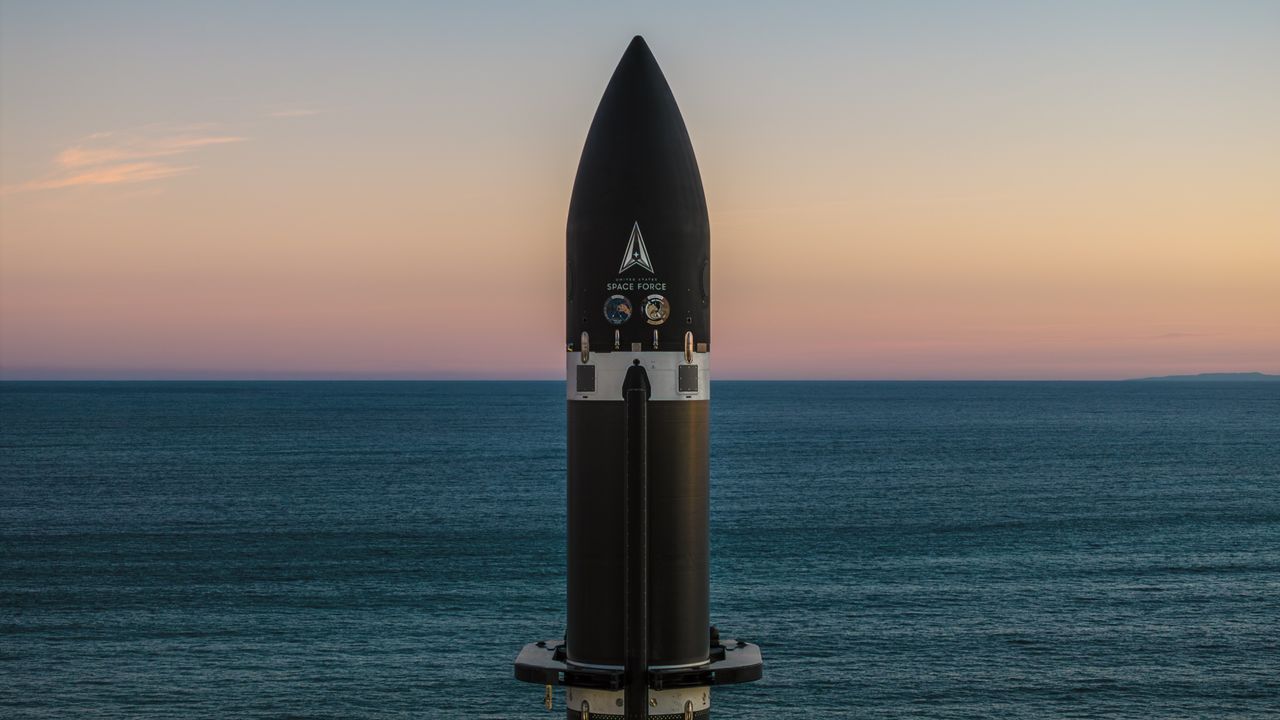
Rocket Lab launches US Space Force mission with less than 17 hours' notice — a new record
Key Points
Rocket Lab launches US Space Force mission with less than 17 hours' notice — a new record It's a thrilling chase in space! Rocket Lab has successfully launched the second spacecraft for the U.S. Space Force's Victus Haze Tactically Responsive Space (TacRS) mission, setting a new readiness record in the process. Only 16 hours and 42 minutes passed between Rocket Lab receiving the Notice To Launch from the Space Force's Space Safari Program Office and liftoff of the company's Electron launch...
Rocket Lab launches US Space Force mission with less than 17 hours' notice — a new record
It's a thrilling chase in space!
Rocket Lab has successfully launched the second spacecraft for the U.S. Space Force's Victus Haze Tactically Responsive Space (TacRS) mission, setting a new readiness record in the process.
Only 16 hours and 42 minutes passed between Rocket Lab receiving the Notice To Launch from the Space Force's Space Safari Program Office and liftoff of the company's Electron launch vehicle, beating the previous TacRS record set by Firefly Aerospace on the September 2023 Victus Nox mission by more than 10 hours.
Liftoff occurred on Friday (June 19) at 6:19 a.m. EDT (1019 GMT, 10:19 p.m., local time), from Rocket Lab's Launch Complex-1, in New Zealand, beginning a rapid-response demonstration designed to simulate a real-world orbital threat scenario.
Electron delivered a Rocket Lab-built Pioneer spacecraft to low Earth orbit (LEO), where it has begun pursuit of another Victus Haze spacecraft that was launched by SpaceX in May and serves as the target vehicle for the demonstration — True Anomaly's Jackal satellite. According to a June 22 Rocket Lab statement, "[Pioneer] is now fully commissioned and conducting complex orbital maneuvers to chase down another spacecraft on orbit and conduct Rendezvous and Proximity Operations (RPO)."
Victus Haze is a TacRS mission managed by Space Systems Command's Space Safari Program Office, with the objective of demonstrating the rapid acquisition, launch and operation of spacecraft in response to orbital threats and "non-compliant satellites," the Rocket Lab release said.
"Rendezvous and Proximity Operations on such short timelines are certainly not trivial, especially in a crisis or conflict scenario, but this demonstration of our ability to commission a complex and capable space vehicle within less than 72 hours, and immediately begin an RPO scenario thereafter, shows that we can field capability to deny adversaries first-mover advantage into novel orbits,” said Lt. Col. Lincoln Miller, Space Safari system program manager, in the statement.
Rocket Lab and True Anomaly teams are now managing their respective spacecraft in orbit. They will soon enter the RPO phase of Victus Haze, conducting space domain awareness (SDA) threat-response scenarios and "dynamic engagements with the other," according to a separate statement from the U.S. Space Force (USSF).
The VICTUS HAZE mission explained. Phase 1: Launch on demand 🚀 The @USSpaceForce's @USSF_SSC called, told us to launch, and just 16 hours 42 minutes hours later, Electron successfully left the pad from LC-1.Phase 2: 🛰️ With Pioneer spacecraft checkouts complete 34 hours… pic.twitter.com/lJK226LhzTJune 23, 2026
Space Force officials have increasingly looked to commercial providers to develop new capabilities and technologies to address potential conflicts in space. “Victus Haze is primed to further demonstrate our readiness to lean on our commercial partners to deny, disrupt, and counter any adversarial advantage — no matter where they try to operate in space,” acting Space Force portfolio acquisition executive Col. Bryon McClain said in the USSF statement.
With its Electron rocket and Pioneer spacecraft both vertically integrated into Rocket Lab's manufacturing processes, this Victus Haze launch marks the first TacRS mission to be carried out by a single prime contractor, providing the spacecraft, launch vehicle and on-orbit operations.
"This is what modern space power looks like: the ability to reinforce and reimagine national security space architecture at will," said Rocket Lab CEO Peter Beck. "We’re proud to be providing the nation with those next-generation space capabilities, today.”
You must confirm your public display name before commenting
Please logout and then login again, you will then be prompted to enter your display name.
Josh Dinner is Space.com's Spaceflight Staff Writer. He is a writer and photographer with a passion for science and space exploration, and has been working the space beat since 2016. Josh has covered the evolution of NASA's commercial spaceflight partnerships and crewed missions from the Space Coast, NASA science missions and more. He also enjoys building 1:144-scale model rockets and spacecraft. Find some of Josh's launch photography on Instagram, and follow him on X, where he mostly posts in haiku.
Rocket Lab (ORG)
US Space Force (ORG)
the U.S. Space Force's (ORG)
Victus Haze Tactically Responsive Space (PERSON)
the Space Force's (ORG)
Space Safari Program Office (ORG)
Electron (ORG)
Firefly Aerospace (ORG)
Victus Nox (ORG)
Rocket Lab's (ORG)
New Zealand (LOCATION)
Pioneer (ORG)
Earth (LOCATION)
LEO (ORG)
Victus (ORG)