
Entertainment
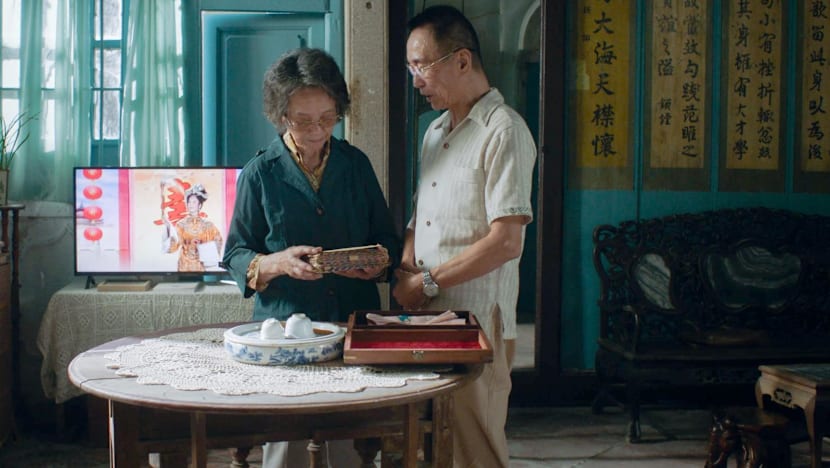
Commentary: Dear You shows it’s time to rethink Singapore’s dialect ban in public media
Key Points
Commentary: Dear You shows it’s time to rethink Singapore’s dialect ban in public media This is not a call to promote dialects or introduce them into the public education system, but to no longer treat them as something that requires special approval, says NTU linguistics professor Luke Lu. The commercial release of Dear You has become about so much more than just one Chinese movie.
Commentary: Dear You shows it’s time to rethink Singapore’s dialect ban in public media
This is not a call to promote dialects or introduce them into the public education system, but to no longer treat them as something that requires special approval, says NTU linguistics professor Luke Lu.
SINGAPORE: The commercial release of Dear You has become about so much more than just one Chinese movie.
After Singapore’s Infocomm Media Development Authority (IMDA) initially permitted only the Mandarin-dubbed version for general release, there was a steady outcry for more audiences to be allowed to watch it in its original Teochew language, beyond festivals or niche events.
The authorities have since said they were open to more Teochew screenings of the movie and said it would take a “more flexible approach” in considering applications for screenings of dialect films in cinemas.
This development is welcome. But this episode has reopened a broader discussion that keeps coming back: How should Singapore update how it manages dialect content today?
SINGAPORE HAS CHANGED
The Ministry of Digital Development and Information (MDDI) reiterated the government’s stance of promoting Mandarin as an official language with a unifying role among Chinese community, while acknowledging the connection between dialects and Singapore’s cultural heritage.
This has been a consistent position since Singapore’s independence in 1965. The initial intentions of the Bilingual Policy were intertwined with the aims of nation building. English was framed as a tool for economic development, racial equality and national unity, while the three official Mother Tongues – Malay, Tamil and Mandarin – rooted Singaporeans to their cultural heritage.
Only 0.1 per cent of Singapore’s population spoke Mandarin most frequently at home, according to the 1957 census. The promotion of Mandarin was also meant to improve communication and help achieve social cohesion across the diverse Chinese linguistic groupings.
After more than 60 years of the Bilingual Policy and 47 years since the launch of the Speak Mandarin Campaign, Singapore’s sociolinguistic milieu and circumstances have drastically changed.
DIALECTS DO NOT IMPEDE LEARNING OF MANDARIN
I believe that the broad policy objectives are themselves sound, but we are long overdue a review of how these policies are implemented. This is especially regarding the restrictions on dialects in media such as film, radio and free-to-air TV, where dialects only exist in news bulletins and specifically approved programmes.
It has to be emphasised from a linguistic perspective that there is no empirical evidence that being exposed to Chinese dialects will impede one’s learning of Mandarin, more so than any other language that the individual is already aware of.
Any suggestion that this is the case is borne of ideological belief rather than actual linguistic study. Language interference effects when learning a new language do exist, but these effects are due to pre-existing languages in an individual’s repertoire, and interference can be from any language, not just dialects deemed to be culturally more similar.
In the case of young Singaporeans today, English is more likely to interfere with their learning of Mandarin, not dialects.
Allowing the public to consume cultural products in dialects is likely to improve and deepen their appreciation of Chinese culture.
This is completely aligned with the objectives of the Bilingual Policy and Speak Mandarin Campaign, both of which seek to promote Chinese culture. This is especially when the actual cultural heritage of the Chinese community is connected to the diverse linguistic and ethnic practices of forefathers from Southern China.
DYING LANGUAGES AT RISK OF EXTINCTION
Chinese dialects are actually dying languages in Singapore, and this trend is already irreversible. A key metric for language vitality is intergenerational transmission. that is, parents speaking the language to their children. This is now practically non-existent for dialects in Singapore today.
If the fear is about competition between languages within domains, that people might somehow shift to using dialects again from Mandarin, then this is nigh impossible due to the lack of intergenerational transmission.
The most recent census on languages most spoken at home (in 2020) found that the vast majority of young Chinese families in Singapore only speak English and Mandarin.
Consequently, the position of Mandarin will not be undermined even if dialects become freely available on broadcast media, nor will dialects pose a threat to community cohesion. In fact, a case might even be made that localised Chinese dialects deserve preservation or be completely eliminated in Singapore within the next generation of speakers.
Localised forms of Hokkien and Teochew are culturally unique to Singapore and Malaysia, a blend and result of our community’s multiculturalism and multilingualism. Yet for many young Chinese today, these are in effect foreign languages.
Lastly, elderly speakers for whom dialects were their first or only language, have become disconnected from the wider, largely English-dominant society. This includes the sad fact that many grandparents were unable to communicate with their grandchildren who are only fluent in English and Mandarin.
My research interviewing prominent members of the Chinese community found that many continue to view the Speak Mandarin Campaign as too extreme. Giving up dialects was a sacrifice they made in the name of nation building. This small step to allow dialects to be used more freely in public media will go a long way to healing these wounds and allow our elderly to reconnect with a language they once enjoyed freely.
AS FOREIGN AS KOREAN
The opinions I express here should not be seen as lobbying the state to promote Chinese dialects with public funding. It is not a call for revitalisation or introduction in the public education system.
It is simply a suggestion that we should reconsider the restrictions on dialects in media such as public radio; to treat these languages on the same playing field as any other foreign language like Korean.
Ironically, Teochew has become as foreign as Korean to the ears of many young Singaporeans today. Yet, we have a ludicrous situation where K-pop songs are aired on local Chinese radio stations, while Cantopop continues to be restricted.
Moreover, the decision to import films like ‘Dear You’ in their original language is a purely commercial decision for operators based on public demand. The restrictions on dialects appears especially anachronistic given that audiences can easily circumvent them by accessing such content online or through other means.
Persisting in this policy in light of the above would suggest a stubbornness that can only result in bad outcomes for all.
Luke Lu is Assistant Professor in linguistics and multilingual studies at the Nanyang Technological University, Singapore.
Singapore (LOCATION)
NTU (ORG)
Luke Lu (PERSON)
Dear You (ORG)
Chinese (ORG)
Infocomm Media Development Authority (ORG)
Teochew (ORG)
The Ministry of Digital Development and Information (ORG)
MDDI (ORG)
Mother Tongues (PERSON)
Malay (ORG)
Tamil (ORG)
Singaporeans (ORG)
the Speak Mandarin Campaign (ORG)