
Politics
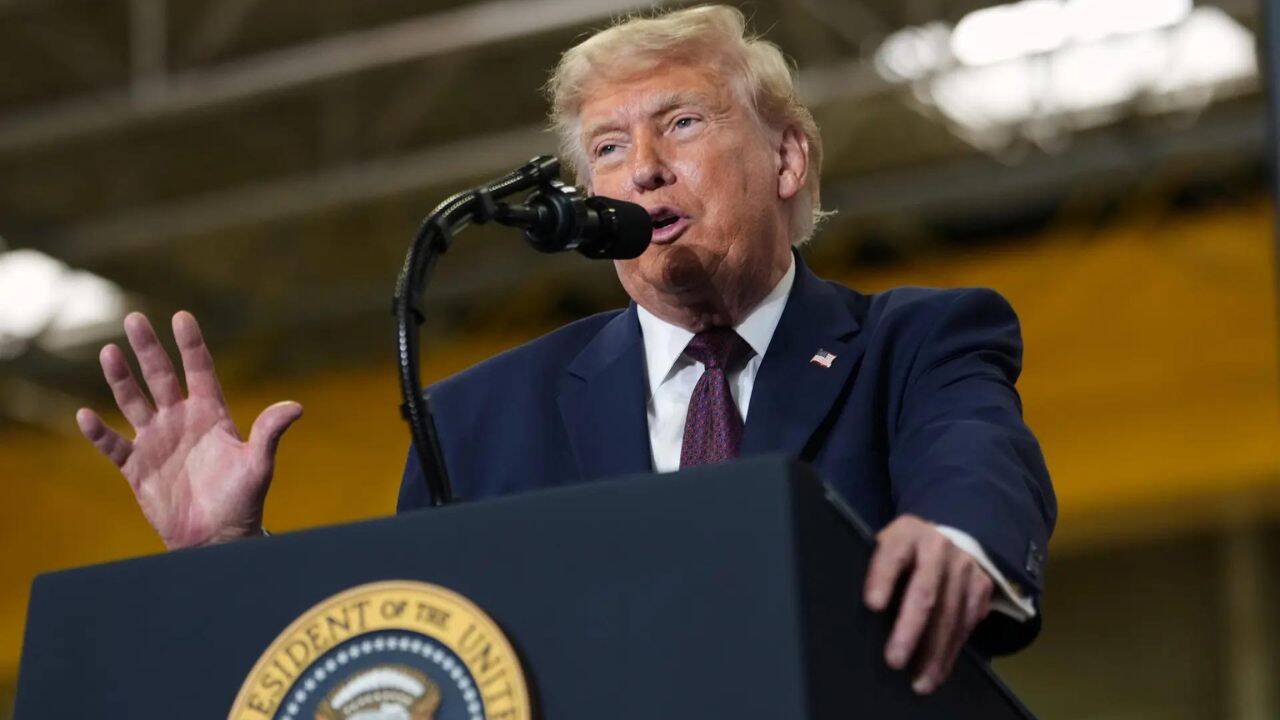
In a first, US Senate votes to halt Trump’s Iran war; President fumes, calls move 'meaningless'
Key Points
In a significant rebuke, the US Senate on Wednesday (local time) passed a resolution seeking to halt further US military action against Iran unless explicitly authorised by Congress. The measure cleared the chamber by a narrow 50-48 vote after already receiving approval from the House of Representatives earlier this month. Although Republicans hold a majority in the Senate, four GOP senators crossed party lines to support the resolution.
In a significant rebuke, the US Senate on Wednesday (local time) passed a resolution seeking to halt further US military action against Iran unless explicitly authorised by Congress.
The measure cleared the chamber by a narrow 50-48 vote after already receiving approval from the House of Representatives earlier this month.
Although Republicans hold a majority in the Senate, four GOP senators crossed party lines to support the resolution. They included Bill Cassidy of Louisiana, Lisa Murkowski of Alaska, Susan Collins of Maine and Rand Paul of Kentucky.
Two Republicans, Mitch McConnell and Dave McCormick, did not vote. Pennsylvania Democrat John Fetterman was the only member of his party to oppose the measure.
Senate Democratic leader Chuck Schumer described the vote as a rejection of Trump’s Iran strategy, accusing the president of dragging the country into a costly conflict, Al Jazeera reported.
Trump lashes outUS President
Donald Trump lashed out at the Senate after the resolution was passed aiming at limiting further American military action against Iran without congressional approval.
In a post on Truth Social, Trump wrote, "Senate decides to have a poorly timed and meaningless War Powers Act Vote, telling the Number One Sponser of Terror in the World that the United States doesn’t like what I am doing to them, and I must stop, and by so doing has provided aid and comfort the Enemy."
What the resolution seeksThe legislation directs the President to remove US armed forces from hostilities against Iran unless military action is specifically authorised through a declaration of war or congressional approval.
However, the measure allows limited military deployments to continue in order to counter any imminent threats against the United States or its allies.
Supporters argued that Congress must reclaim its constitutional authority over decisions related to war and military intervention.
The vote comes amid mounting criticism of Trump's military campaign against Iran, which began after the United States joined Israeli strikes on February 28.
The conflict has also contributed to rising prices of oil, natural gas and fertilisers following disruptions in the Strait of Hormuz.