
World News
‘I’m not at peace’: 76 years after Korean War began, ex-prisoners still seek closure
Key Points
‘I’m not at peace’: 76 years after Korean War began, ex-prisoners still seek closure An armistice ended the fighting in the Korean War three years after it started, but the two sides have never signed a peace treaty. SEOUL: When Lee Seon-woo arrived at Incheon International Airport in 2006, he heard something he had not heard in more than half a century – his own name being called by his country. The former South Korean prisoner of war had spent 53 years trapped in North Korea after being...
‘I’m not at peace’: 76 years after Korean War began, ex-prisoners still seek closure
An armistice ended the fighting in the Korean War three years after it started, but the two sides have never signed a peace treaty.
SEOUL: When Lee Seon-woo arrived at Incheon International Airport in 2006, he heard something he had not heard in more than half a century – his own name being called by his country.
The former South Korean prisoner of war had spent 53 years trapped in North Korea after being captured during the Korean War.
Returning home should have been the end of his ordeal. Instead, it marked the beginning of another painful chapter – one shaped by loss, separation and unanswered longing.
Now aged 95, Lee lives quietly in South Korea, still carrying the scars of a conflict that began 76 years ago.
In the early hours of Jun 25, 1950, North Korean forces launched a surprise attack across the 38th Parallel, triggering the war with the South. Millions were killed or displaced in the years that followed, with families separated and communities destroyed.
While the fighting ended with an armistice on Jul 27, 1953, no peace treaty was ever signed, meaning both Koreas are still technically at war.
TOO LATE A HOMECOMING
For many who lived through the conflict, the war never truly ended.
Lee was 21 and serving as a South Korean soldier when Chinese forces captured him in Gangwon province on Jul 14, 1953, just 13 days before the armistice took effect.
He ended up losing three fingers in combat.
Like tens of thousands of South Korean prisoners captured during the war, Lee was never repatriated after the ceasefire. He was sent to North Korea's remote northeast instead, where he spent decades working in coal mines and labour camps.
Over the years, he married and raised three daughters, believing he might never return home.
That changed in 2006, when he escaped through China and eventually reached South Korea.
“Then I heard people calling my name: ‘Lee Seon-woo’. After 53 years, I finally felt that my country had recognised me for fighting in the Korean War,” he recounted emotionally.
The reunion he had imagined, however, came too late.
His parents, as well as two of his three siblings, died before he returned. His daughters – who are now in their 60s and 70s – chose to remain in North Korea, fearing punishment if they attempted to escape and were caught.
“I'm not at peace. It still hurts,” Lee told CNA.
According to estimates, tens of thousands of South Korean soldiers were captured during the war and remained in the North after the fighting stopped.
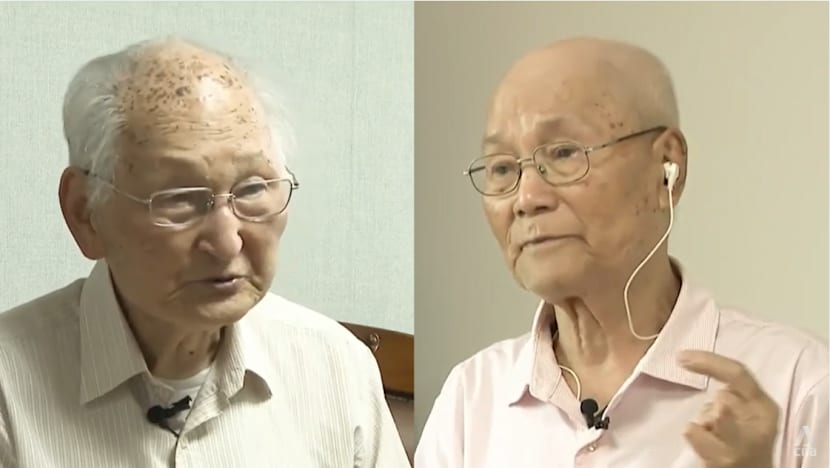
Lee is among only 80 former South Korean prisoners of war known to have escaped to the South. Only five, including Lee, are still alive today.
PRISONER ON THE OTHER SIDE
About 20 minutes from Lee's home lives another man whose life was also defined by the war – but from the opposite side of the ideological divide.
Ahn Hak-sop, now in his 90s, was born in Ganghwa near the inter-Korean border. As a young man, he travelled north to study in Kaesong city and embraced communist ideology.
Captured by South Korean forces during the war, Ahn spent 42 years in prison after refusing to renounce his beliefs. He was released in 1995.
When long-term prisoners were offered repatriation to North Korea following a landmark inter-Korean summit in 2000, Ahn chose to remain in the South.
“I couldn't accept leaving while American forces remained here. I had to stay here and keep speaking out,” he explained.
“If I went to the North, who would I say that to? There would be no one to say it to.”
Today, Ahn's conviction has softened. His final wish is to return to North Korea and die among his comrades, he said.
But repeated requests to establish contact through intermediaries in China and Russia have gone unanswered.
South Korean President Lee Jae Myung has said his government would not prevent such a move, but with relations between the two Koreas frozen, there is little Seoul can do.
Faced with the reality that a return may never be possible, Ahn has begun to come to terms with it.
“People have two kinds of life, the biological and the social. I feel my social life has already run its course,” he said.
“If I went to the North now, it might feel like I was running away from reality. Perhaps it's better to remain here for the time I have left, looking across the border towards my comrades until the day I die.”
Korean War (EVENT)
the Korean War (EVENT)
SEOUL (LOCATION)
Lee Seon-woo (PERSON)
Incheon International Airport (LOCATION)
South Korean (ORG)
North Korea (LOCATION)
Lee (PERSON)
South Korea (LOCATION)
North Korean (ORG)
the 38th Parallel (ORG)
South (LOCATION)
Koreas (PERSON)
Chinese (ORG)
Gangwon (LOCATION)