
World News
From Tijuana to hope born in Mexico, the Haitian family story challenging immigration myths
Key Points
From Tijuana to hope born in Mexico, the Haitian family story challenging immigration myths President Donald Trump has insisted that the United States is the only nation to guarantee citizenship to children born within its borders - Bookmark In Tijuana, Mexico, a brightly painted sign outside a small restaurant reads, “Every dish tells a story, every detail connects cultures.” It reflects the journey of Petit Frere, a Haitian migrant who has built a successful business in the city in just...
From Tijuana to hope born in Mexico, the Haitian family story challenging immigration myths
President Donald Trump has insisted that the United States is the only nation to guarantee citizenship to children born within its borders
- Bookmark
In Tijuana, Mexico, a brightly painted sign outside a small restaurant reads, “Every dish tells a story, every detail connects cultures.” It reflects the journey of Petit Frere, a Haitian migrant who has built a successful business in the city in just over five years.
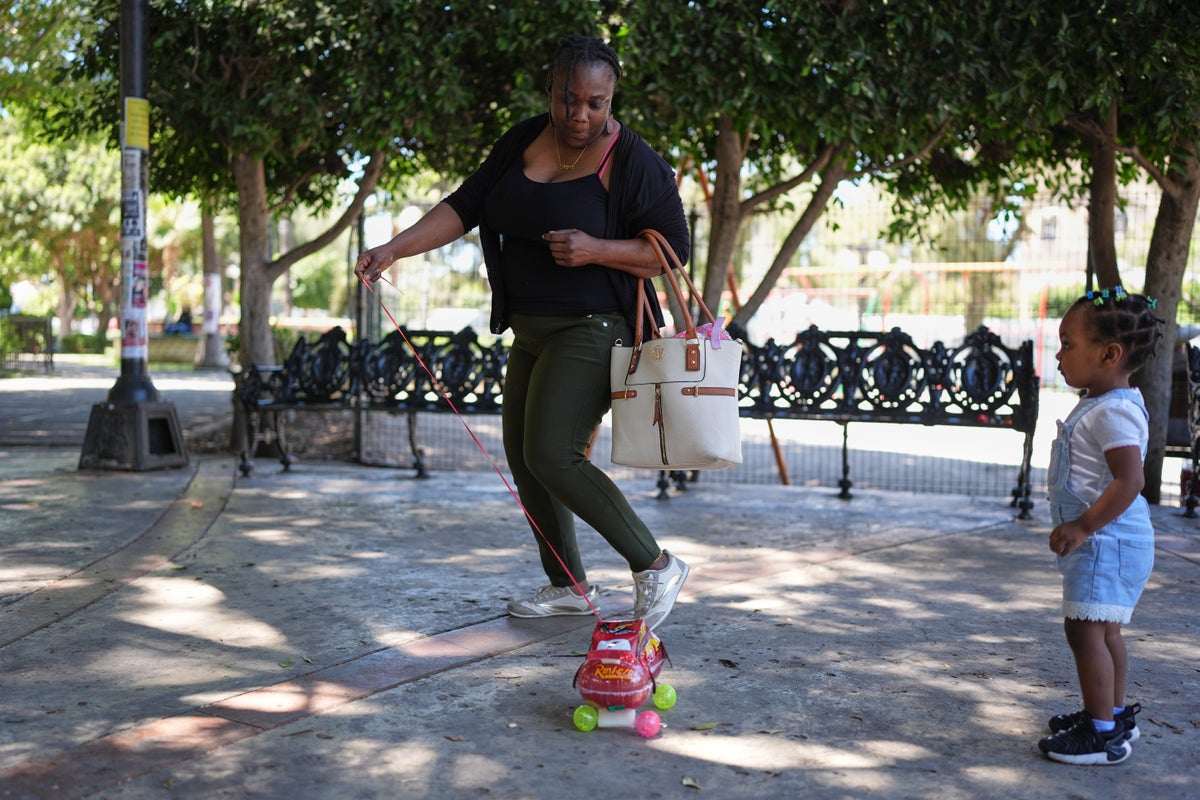
Frere now speaks Spanish fluently, is studying for a degree in social work, and recently welcomed a new member of the family, born into the next generation in Mexico, her granddaughter Alexca.
Her experience is part of a broader migration pattern in Mexico, where tens of thousands of Haitians have settled in recent years. In 2021, during a surge in Haitian migration, the United Nations’ International Organization for Migration reported that at least 10% of arriving Haitian women were pregnant, underscoring the number of children born to migrants in the country. While precise national data on citizenship outcomes is limited, the trend has drawn attention to how birthright citizenship shapes migrant communities.
Birthright citizenship has deep legal and historical roots in many countries. In the United States, the 14th Amendment was ratified after the Civil War to secure citizenship for formerly enslaved people. It was later extended through court rulings in the late 1800s to cover nearly anyone born on U.S. soil, regardless of parental status.
Legal historians trace similar principles back to 17th- and 18th-century colonial rule, when European monarchs tied citizenship to territory to encourage settlement.
Not all countries follow this model. The Dominican Republic, for example, moved in 2007 to deny citizenship to children born to parents without legal status, a decision later applied retroactively to 1929. Despite later reforms, studies by the Center for Migration Studies of New York estimate that as many as 130,000 people remained stateless, with lasting consequences for access to rights and residency.
Frere’s own life reflects the stakes of these policies. Born in French Saint Martin, which does not grant automatic birthright citizenship, she and her Haitian mother were deported to Haiti when she was six. Years later, she left Haiti in search of stability. Her teenage daughter later reunited with her in Tijuana, pregnant at nearly five months.
Frere says she had hoped for a different path for her daughter, having been a teenage mother herself. But she now focuses on her granddaughter, Alexca, a toddler she describes as full of joy. She is grateful the child was born in Mexico rather than Haiti, where violence has displaced large portions of the population and created severe humanitarian pressures.
A Mexican passport, she says, opens opportunities that are largely inaccessible to Haitian citizens, who face strict global visa restrictions. “As a Mexican citizen, she will have more opportunities,” Frere said, adding that similar benefits apply to other relatives born in countries such as Brazil that grant citizenship by birth.
Frere and her daughter already held permanent residency in Mexico before Alexca’s birth. However, Mexican law allows parents of citizen children to apply for residency based on their child’s status, a pathway that has helped many Haitian families in Tijuana regularize their status over time.
“There are a lot of children in Tijuana who are 6, 7, 8 years old now who are Mexican and their parents who were Haitian without legal status have become permanent residents because their children were born here,” she said.
Frere is now pursuing Mexican citizenship herself, hoping it will help expand her business and deepen her community work. She volunteers with the Haitian Bridge Alliance and is considering further studies in international migration, potentially in the United States.
Reflecting on the broader debate, she said, “The children of immigrants are proving to be the most outstanding in the world,” adding that efforts to restrict birthright citizenship “could just be out of jealousy.”
Tijuana (LOCATION)
Mexico (LOCATION)
Haitian (ORG)
Donald Trump (PERSON)
the United States (LOCATION)
Petit Frere (PERSON)
Frere (PERSON)
Alexca (PERSON)
Haitians (ORG)
the United Nations’ International Organization for Migration (ORG)
the Civil War (EVENT)
U.S. (LOCATION)
European (ORG)
The Dominican Republic (LOCATION)
the Center for Migration Studies of (ORG)