
Politics
Bridget Phillipson hits out at ‘deeply unpleasant targeting’ of trans people in wake of Supreme Court ruling
Key Points
Bridget Phillipson hits out at ‘deeply unpleasant targeting’ of trans people in wake of Supreme Court ruling Bridget Phillipson admitted that the EHRC’s guidance will not satisfy everyone, but admitted that the wider debate has become ‘deeply unpleasant’ - Bookmark - CommentsGo to comments The minister for women and equalities has hit out at the “deeply unpleasant targeting” of trans people in the wake of the Supreme Court’s ruling on biological sex, but insisted that the government’s...
Bridget Phillipson hits out at ‘deeply unpleasant targeting’ of trans people in wake of Supreme Court ruling
Bridget Phillipson admitted that the EHRC’s guidance will not satisfy everyone, but admitted that the wider debate has become ‘deeply unpleasant’
- Bookmark
- CommentsGo to comments
The minister for women and equalities has hit out at the “deeply unpleasant targeting” of trans people in the wake of the Supreme Court’s ruling on biological sex, but insisted that the government’s position is “the right place to be”.
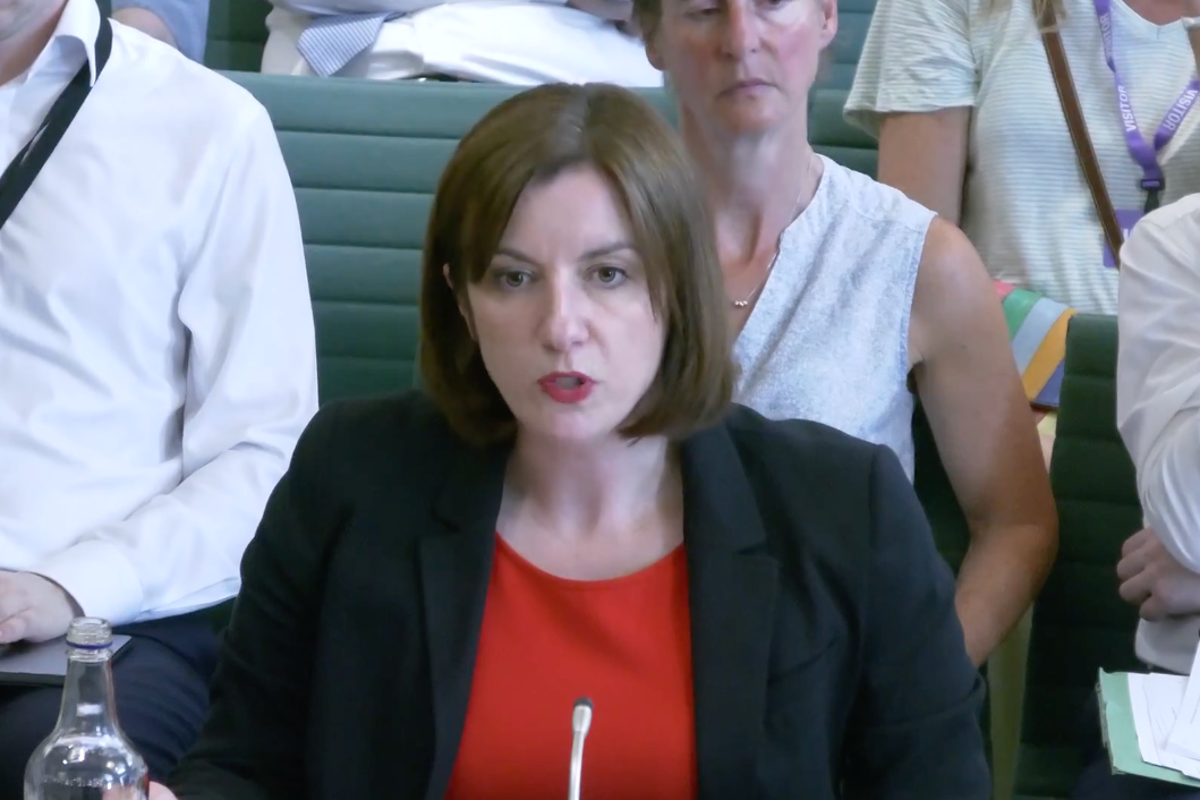
Bridget Phillipson made the remarks during her first appearance before the Women and Equalities Committee since the Equality and Human Rights Commission (EHRC) published its updated guidance on single-sex spaces last month.
The code - which was intensely criticised by trans campaign groups and charities - confirmed a service must be used on the basis of biological sex in order for it to be classed as single-sex under the Equality Act, as per the Supreme Court ruling in 2025.
This means single-sex toilets, changing rooms, hospital wards and refuges must be used based on a person’s birth sex, rather than the gender with which they identify.
Ms Phillipson admitted that the guidance will not satisfy everyone and said she expected further debate, legal challenge and scrutiny of it – but she also admitted that the wider debate has deteriorated.
Appearing before the committee on Wednesday, she also suggested the rights of women and trans people should not be in conflict.
In some of her strongest language on the issue yet, the minister for women and equalities said: “I think it is a statement of the obvious that this is an issue that is not going to go away, regardless of the intent that I have, in terms of laying out the code. I would like us to be able to move forward on that basis.
“The reason I would like that to happen is not just because of a dry legal argument or a draft code. It's because, in two important respects - firstly, I don't want trans people to be constantly on the front pages of newspapers.
“I don't want trans people to be constantly pilloried on social media for being who they are and wanting to live the lives that they want to lead.
“But also I want women to be able to access the services and service providers to be able to deliver the services that they believe are necessary on a single sex basis for women who have experienced male violence. I don't think those two things ought to be in conflict.”
She added: “My belief has always been that we can deliver appropriate single-sex services, whether that's rape crisis, women's refuges, good access to sporting activity for girls, without that meaning that we have to engage in what has become, I think, deeply unpleasant targeting of people who simply wish to live their lives without causing any harm to anyone else."
Ms Phillipson also repeated her belief that the new code provides clarity for service providers such as gyms, leisure centres and cafes.
She told MPs: “The EHRC wanted to be confident that the draft code that they were bringing forward provided everyone with what they needed, and I believe that the position that we have arrived at – whilst I understand, you know, will not satisfy everyone in terms of what it offers – I believe is the right place to be, and that is why I laid the code on behalf of the government.”
The minister said it is her expectation that “because this is a very contested space, there will continue to be further debate, challenge, scrutiny, legal challenge”, adding: “That would be the case, whatever the draft code said.”
Ms Phillipson said while she understands organisations, particularly smaller ones without access to big budgets, might find this area “difficult”, she believes the draft code “provides for what is needed across the protected characteristics”.
It comes just weeks after the government was accused of mimicking Donald Trump’s America when the newly-published guidance confirmed single-sex services must be on the basis of biological sex, sparking concerns that trans people will be pushed out of public life.
The Trans+ Solidarity Alliance (TSA) warned it will be a "Section 28 moment for this Labour government, defining their legacy on LGBTQ+ rights”, saying it is "worryingly similar to a US bathroom ban condemned by the UK foreign office in 2016.”
They added that more than 100 MPs had signed an early day motion (EDM) to reject the code, describing it as “unjust, unworkable and unacceptable”.
The group said: “We hope this shows the strength of feeling on this in Parliament and that it helps force a rethink on trans equality.”
An EDM can be lodged by MPs to highlight an objection to an issue but does not automatically lead to a debate or a vote on the matter.
Join our commenting forum
Join thought-provoking conversations, follow other Independent readers and see their replies
Comments