
World News
‘Alien stuff’: How Iran’s ‘jellyfish drone’ formation fooled US jets — do China & Russia have it?
Key Points
A previously undisclosed account from a US fighter pilot shot down over Iran has sparked fresh questions about the capabilities of Tehran’s drone warfare programme and whether it is benefiting from technologies already being developed by China and Russia. According to a CNN report, the pilot of an F-15E Strike Eagle recalled seeing a bizarre formation of Iranian drones moments before his aircraft was brought down during the Iran conflict. The pilot later described the sight during...
A previously undisclosed account from a US fighter pilot shot down over Iran has sparked fresh questions about the capabilities of Tehran’s drone warfare programme and whether it is benefiting from technologies already being developed by China and Russia.
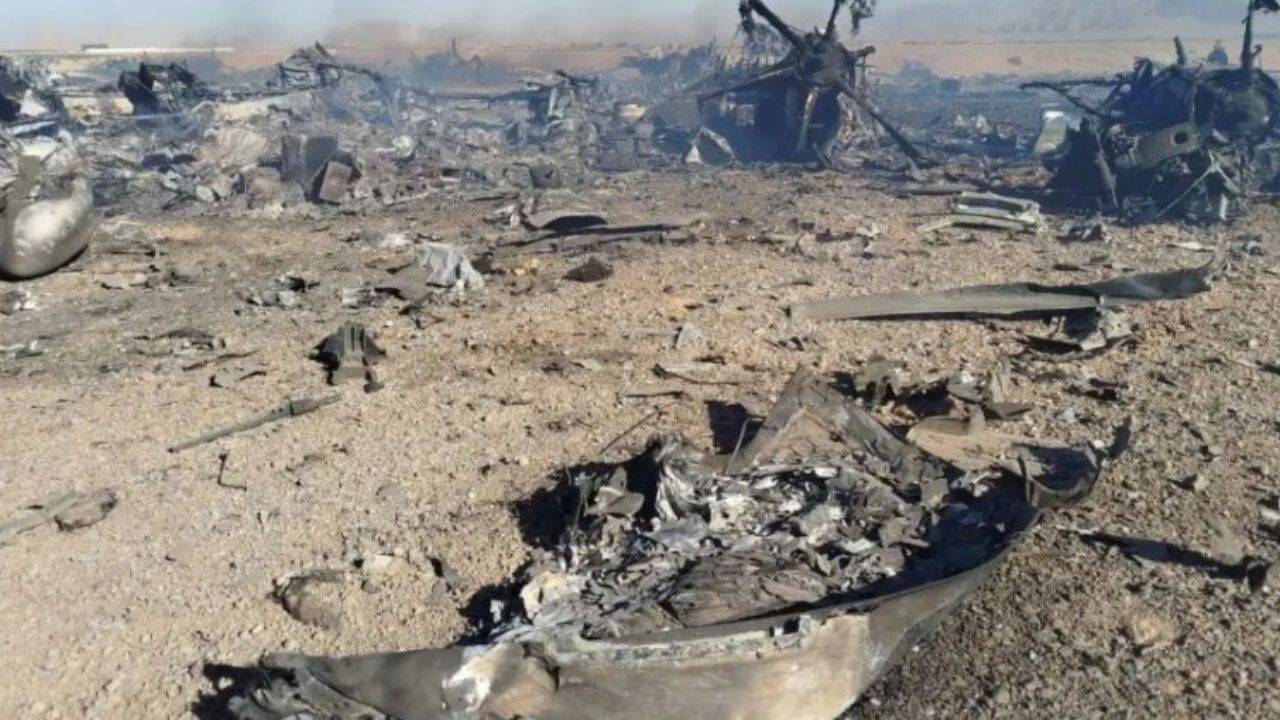
According to a CNN report, the pilot of an F-15E Strike Eagle recalled seeing a bizarre formation of Iranian drones moments before his aircraft was brought down during the Iran conflict. The pilot later described the sight during intelligence debriefings after being rescued.
“Multiple drones interconnected and moving as one, with smaller drones below the larger ones like legs — real alien stuff,” CNN quoted an official present at the briefing as saying.
Another official said the pilot described the formation as a “minefield of drones” suspended in the air.
The account drew scrutiny from intelligence officials because the pilot had suffered a concussion after ejecting from the aircraft. He was also flying after having previously survived another shootdown earlier in the conflict during a friendly-fire incident involving a Kuwaiti fighter.
The downing of the F-15 marked the first time an American fighter aircraft had been shot down over Iran during the war.
The pilot was rescued within hours, while the aircraft’s weapons systems officer evaded capture for several days before being recovered.
What could the ‘jellyfish drones’ be?
The exact role of the drone formation remains unclear and investigators have not publicly concluded that it directly caused the aircraft’s loss.
According to The War Zone (TWZ), one theory is that the formation may have acted as an aerial obstacle or “minefield”, positioned along a known flight route. An aircraft flying into such a screen could potentially be damaged by collision, proximity detonations, or even interconnected cables between drones.
TWZ cautioned that there is no public evidence proving such a tactic was used. However, it noted that the concept resembles a modern version of barrage balloons, offering a flexible and rapidly deployable defensive barrier.
Do China and Russia have similar capabilities?
The capability described by the pilot aligns with what military experts call “one-to-many meshed networking”, which allows multiple drones to operate cooperatively under a shared control architecture.
While US intelligence had not previously assessed Iran as possessing the exact capability described by the pilot, there have been longstanding reports of Iranian drone development receiving support from both Russia and China.
TWZ noted that drone swarming has become a major focus for both countries. China, in particular, has repeatedly demonstrated large-scale swarms of loitering munitions launched from vehicle-mounted containers and helicopters. It has also invested heavily in advanced cooperative drone systems and unmanned combat aircraft.
Russia has similarly prioritised swarming technologies as part of its evolving drone warfare doctrine.